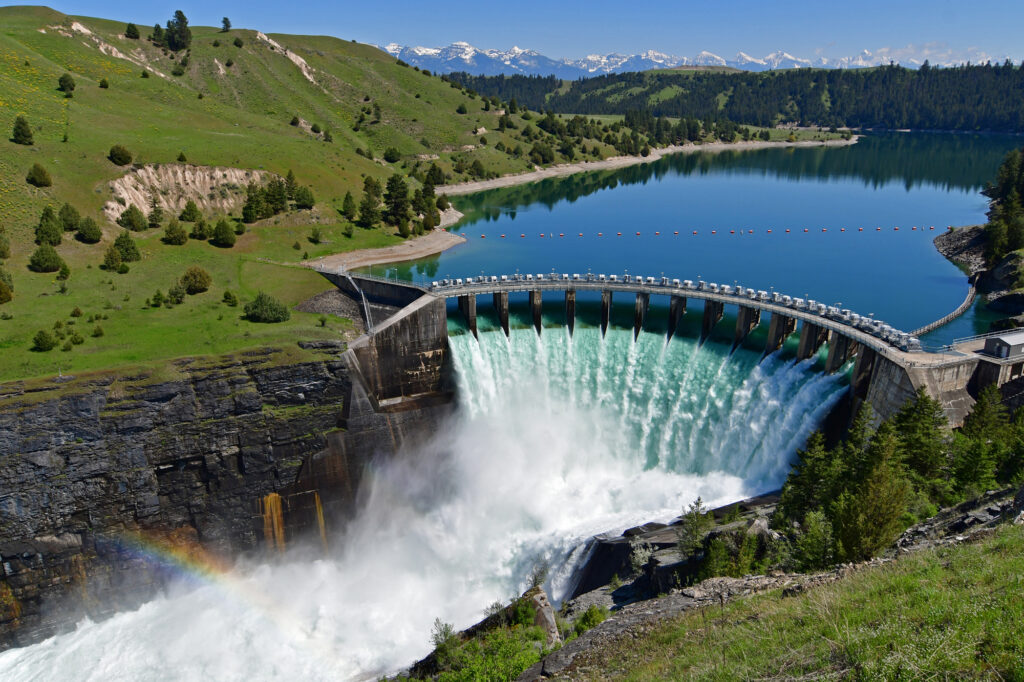
Throughout the last 6,000 years, human civilization has been marked by a significant transformation of the hydrosphere. This transformation includes capturing, damming, and exploiting water resources primarily for human benefit, often at the detriment of various species that also rely on these resources. From ancient times to the modern era, water has been adapted to meet human needs, powering infrastructure like superdams and canals.
The harnessing of water has not only shaped societies but also led to significant environmental costs, sometimes contributing to societal collapse. Unlike historical instances, the Industrial Revolution’s water-energy nexus has had far-reaching impacts, contributing to the sixth extinction of life on Earth.
Today, as global temperatures rise, the hydrosphere is beginning to change in unpredictable ways. As a response, there is a growing movement towards freeing water systems and allowing them to evolve naturally, reflecting a shift in how humans interact with water infrastructure.
Despite 70 percent of the Earth’s surface being covered by water, only 2.5 to 3 percent of it is fresh, and only a small portion is easily accessible. A 2021 analysis revealed that less than 19 percent of land remains untouched by human development. The intensifying hydrological cycle is reshaping the planet’s landscapes, requiring humanity to adapt.
In the industrial era, many urban developments occupied former floodplains, drastically altering natural water systems. In the U.K., 90 percent of wetlands have vanished due to urban expansion, leading to efforts to restore these natural environments. Citizen scientists and volunteers, alongside experts, are working to restore habitats and create systems that absorb carbon and reduce flooding.
While oceans and freshwater resources have been commercialized, a handful of corporations dominate the global water market. Historically, water was a public resource, but it has increasingly been privatized, often leading to higher costs and reduced incentives for infrastructure improvement. In the U.S., private utilities charge 59 percent more for water services than public utilities, highlighting the financial burdens of privatization.
Contrary to misconceptions, climate change does not signify a depletion of freshwater but rather a shift in precipitation patterns and water availability. The historical water cycle, suited to a temperate climate, is now misaligned with current global conditions, challenging humanity’s ability to access water reliably.
A paradigm shift is underway, advocating for adaptive water management that aligns with natural processes. Initiatives like “Slow Waters” and “Sponge Cities” promote decentralized systems responsive to the dynamic water cycle of the Anthropocene. This approach emphasizes community involvement and a philosophical shift from controlling water to stewarding it.
Journalist Erica Gies, who coined “slow water,” highlights the importance of allowing water to move naturally through ecosystems, stating that “the key to greater resilience… is to find ways to let water be water, to reclaim space for it to interact with the land.”
Modern urbanization often disrupts natural water absorption, leading to increased flooding and soil moisture deprivation. In China, less than 20 percent of precipitation infiltrates the soil due to urban sprawl, exemplifying the challenges of urban development on natural water systems.
Global efforts are underway to implement eco-friendly water management practices. Techniques like bioswales, rain gardens, and permeable pavements aim to restore the hydrological balance by facilitating natural water infiltration.
Green roofs can significantly reduce urban heat and enhance water absorption, as noted by the Environmental Protection Agency, which states they “provide shade, remove heat from the air, and reduce temperatures of the roof surface.”
Innovative strategies such as “sponge cities” in places like Izmir, Turkey, focus on natural water flow restoration to mitigate flood risks. Such methods aim for a substantial portion of urban surfaces to be permeable, enhancing stormwater absorption.
With climate change intensifying water cycle fluctuations, rainwater harvesting is becoming increasingly important. Initiatives like the UN’s One Million Cisterns for the Sahel are crucial for vulnerable communities facing erratic weather patterns.
In the U.S., states offer tax incentives for rainwater collection equipment, highlighting the growing recognition of decentralized water systems’ resilience against climate and infrastructure challenges.
Technological advances, such as IoT sensors in water systems, enable efficient management and predictive maintenance, addressing significant water losses due to infrastructure failures.
Pioneering on-site water purification systems mimic natural processes, enabling sustainable water use. Decentralized systems, when combined with renewable energy sources, democratize water access and reduce demand significantly.
As cities adapt to climate challenges, questions arise about the sustainability of megacities reliant on centralized water infrastructure. The future lies in rethinking humanity’s relationship with the hydrosphere, fostering a resilient coexistence with nature.
Original Story at www.resilience.org