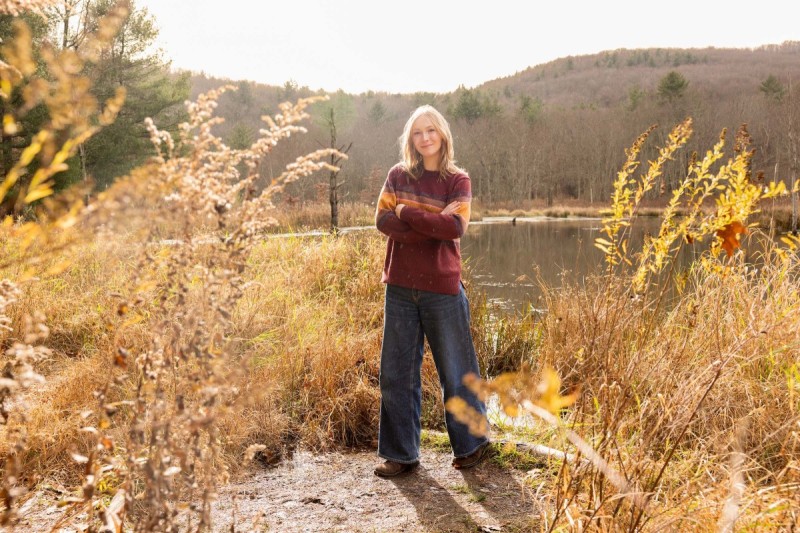
Rainwater in urban areas doesn’t just disappear; it takes a journey through a network of street drains called catch basins, eventually reaching nearby bodies of water. Reilly Johnson, an environmental science major at Binghamton University, who will graduate at the end of the fall 2026 semester, explains this process. Over the summer, Johnson gained hands-on experience as a stormwater technician and conservation intern with AmeriCorps and the Rockland Conservation & Service Corps.
Johnson’s role was crucial in helping the Village of Piermont comply with the New York State Department of Environmental Conservation’s State Pollutant Discharge Elimination System (SPDES) permit, which regulates stormwater discharges. The urgency of the project stemmed from the impaired status of Sparkill Creek, contaminated with pathogens. By mapping the village’s stormwater system, officials could more easily identify pollution sources.
As a native of Rockland County, Johnson felt a personal connection to the project. Working alongside a teammate, she inspected 242 catch basins, 15 outfalls, and 18 municipal facilities, documenting their locations on an ArcGIS map.
“This was my first time applying the things I learned in the classroom, and it was really cool to see how I could apply different concepts on a job site,” Johnson remarked. “I felt like I had a good amount of background knowledge that made it easier to kind of understand the greater purpose of what we were doing.” She had recently studied the SPDES permitting system, which added relevance to her work.
“It was really cool to see, especially in Rockland County where I’m from, how this specific permit is working towards bettering the environment of my area,” she added.
Honors Thesis
In her final semester, Johnson is tackling an undergraduate thesis on the ecological impact of ash tree deaths caused by the emerald ash borer in the northeastern U.S. Her research, conducted with guidance from Assistant Professor Amber (Amy) Churchill, focuses on soil microclimate, leaf litter decomposition, and nitrogen availability amidst climate stresses like heatwaves and droughts.
Johnson found inspiration for her thesis after witnessing the damage at the Nuthatch Hollow Outdoor Laboratory and Wildlife Sanctuary. “It was a forest of dead trees, and jarring for me to see — how widespread this invasion was, and how it could change this little ecosystem so drastically,” she said. This observation led her to question the broader consequences for forest ecosystems.
Churchill praised Johnson’s initiative, noting, “While Reilly’s project was conducted in the greenhouse, we hope to examine these questions in the field at Nuthatch over time as we work to restore the forest biodiversity with ongoing funded research.”
Looking ahead, Johnson is considering a career in environmental consulting, drawing on her internship experiences. “It seems like an environment I would thrive in, and you’re never out of tasks to work on,” she said. “There’s always something to do.”
Original Story at www.binghamton.edu