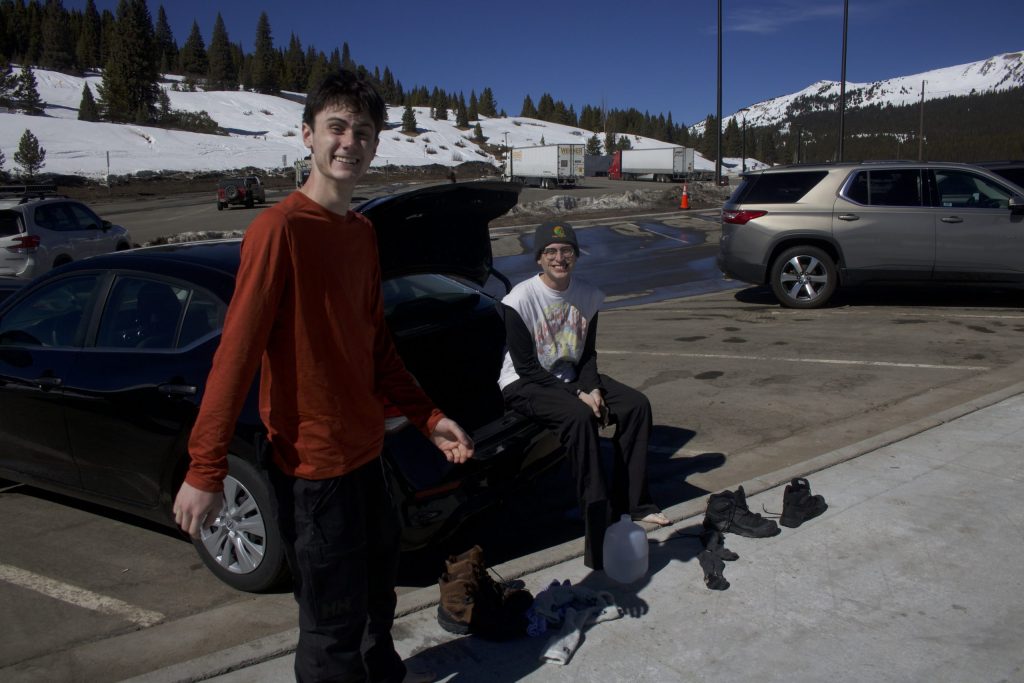
As the sun began to warm the snow-covered peaks of Colorado’s Vail Pass, two friends from St. Louis, Kevin Walsh and Sam Dees, took a spontaneous detour from their drive along Interstate 70. It was March 18, and despite the season, the weather was unseasonably warm.
Walsh and Dees ventured into the national forest, equipped only with hiking boots, T-shirts, and thermals. Initially, the snow supported their climb, but as temperatures rose, the snow became unstable, leaving them drenched by the time they returned to their car.
“Once the sun was at its peak, it started melting real fast. You could see the snow glistening everywhere,” Dees commented, expressing disbelief over the unusual weather. Walsh added, “That just proved to me that global warming is real for sure.”
Colorado is currently in the grip of an exceptional winter heatwave, a phenomenon climate experts attribute to human-induced climate change. This unusual warmth comes amid a record-hot winter and historically low snowpack levels across the state.
The National Weather Service reported that temperatures in the mountains have soared 20 to 30 degrees above normal, affecting much of the Western United States. Kaitlyn Trudeau, a senior research associate with Climate Central, noted the rarity of such a “widespread exceptional climate fingerprint,” highlighting the influence of human activities on global temperatures.
Colorado’s Unusual March Weather Patterns
Peter Goble, Colorado’s Assistant State Climatologist, described the recent temperature surge as “unprecedented for March.” A persistent high-pressure ridge over the southwestern U.S. has been deflecting cold air, leading to these skyrocketing temperatures.
Recent records in Dillon and Steamboat Springs shattered century-old temperature highs, with Dillon reaching 67 degrees and Steamboat Springs hitting 76 degrees. The state has seen an increase in average temperatures of about 2.3 degrees Fahrenheit since 1980, a change driven by human-generated greenhouse gases, according to the Climate Change in Colorado report.
Goble emphasizes the role of climate change in these extreme temperatures, stating, “Our winters — and all seasons for that matter — are getting warmer. Climate change does at least raise the probability of something like this.”
Climate Change’s Impact and the Way Forward
Climate Central’s Climate Shift Index tool indicates that the current temperatures in Colorado and the broader West were made significantly more likely due to human-caused climate change. The index, which measures the influence of climate change on weather patterns, has been at Level 5 across these regions, indicating a strong human influence.
Hannah Berman, Director of Sustainability for Aspen One, underscores the existential threat climate change poses to the ski industry, noting Aspen’s loss of a month of winter since 1970. The economic impacts of climate change on Colorado could reach up to $37 billion by 2050, as per a recent analysis.
Efforts to combat climate change are underway, with initiatives like Colorado’s climate action plan aiming for significant emissions reductions. Jess Hoover from the High Country Conservation Center encourages individuals to participate in local politics and advocate for policies such as those promoting renewable energy.
As awareness grows, so does the call for collective action. A poll from 2024 showed that 72% of U.S. adults acknowledge climate change, and Hoover stresses the importance of dialogue, saying, “Talk about it. Normalize it.”
Original Story at www.aspentimes.com