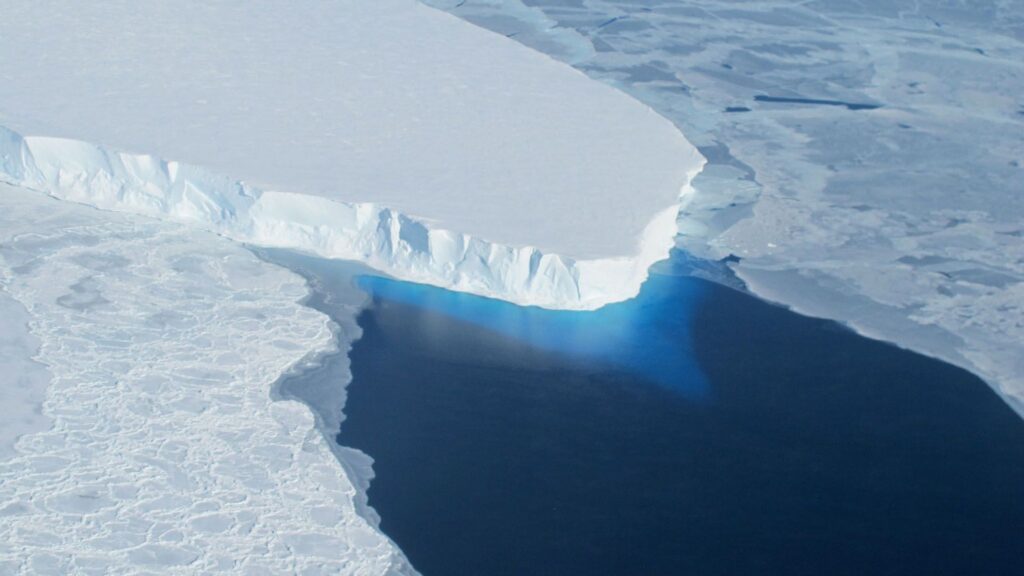
Unprecedented Ice Loss in Polar Regions: A Half-Century Overview
Since the 1970s, the polar regions of Greenland and Antarctica have lost an astounding 12.5 trillion tons of ice, according to recent research findings. This loss is primarily attributed to the rapidly changing climate and has significant implications for global sea levels.
A team of international scientists has compiled the most extensive satellite record to date, offering a detailed view of polar ice changes over the past 50 years. This record, which includes data from 42 satellite surveys and 27 satellite missions, traces the history of ice loss from Greenland starting in 1972 and Antarctica from 1979, extending up to 2023. The majority of this ice loss has occurred from Greenland’s ice sheets.
“By reaching back to the 1970s, we can now see how the ice sheets have changed across half a century,” explained Inès Otosaka of Northumbria University, who led the study.
Known as the Ice Sheet Mass Balance Inter-comparison Exercise (IMBIE), this new dataset not only illustrates the magnitude of ice loss but also links it to a 1.18-inch rise in sea levels over this period.
“Three centimetres of sea level rise may sound small, but that puts another six to nine million people at risk of coastal flooding and erosion,” stated Andrew Shephard, co-author and Head of the School of Geography and Natural Science at Northumbria University. “With the ice sheets set to lose much more ice in the decades ahead, global assessments like IMBIE are vital to protecting communities impacted by climate change.”
Researchers noted that 84% of the ice loss resulted from accelerated glacier flow, while 16% was due to surface melting. The primary driver behind this trend is climate change, which has led to a warming planet.
“More than four-fifths of the ice lost was discharged into the ocean by faster-flowing glaciers, rather than melted at the surface — which tells us the long-term trend is being driven by the dynamic response of the ice sheets to a warming ocean,” Otosaka added.
Interestingly, the study reveals that ice loss has intensified significantly since the 1990s. For instance, Greenland’s ice loss escalated from approximately 66 billion tons annually in the 1980s to about 291 billion tons per year in the 2010s. A similar pattern was observed in Antarctica, where ice loss increased from 53 billion tons annually in the 1980s to 222 billion tons per year in the 2010s.
Future Prospects and Climate Change Concerns
As ice continues to disappear and sea levels rise, the effects of climate change are expected to worsen, raising concerns globally. A recent United Nations report warns of exceeding the 1.5 degrees Celsius warming limit set by the Paris Agreement, potentially in the near future.
Moreover, this record underscores the critical role of space-based observations in understanding and addressing climate change. According to Tyler Sutterly of the University of Washington, “The added length of the record, the larger pool of participating teams, and our improved ability to assess uncertainties make this the most robust assessment of ice sheet mass balance produced so far.” He emphasized the importance of satellite data in narrowing uncertainties in future sea level rise projections.
ESA scientist Diego Fernández highlighted, “These findings show the fundamental importance of using satellites to monitor the ice sheets and to evaluate the models used to predict the effects of climate change. Sustaining missions such as CryoSat-2 and the Sentinels, and maintaining the long-term ice-sheet climate data record, is critical for the decades ahead.”
The study, supported by NASA and the European Space Agency, is detailed in the journal Scientific Data.
Original Story at www.space.com