Oregon Democrats Secure Road Funding, But Challenges Remain
In a pivotal moment for Oregon’s transportation sector, Democrats have succeeded in passing a much-debated road funding package. The state Senate, in a close 18-11 party-line vote, approved the tax and fee increases proposed by Governor Tina Kotek, marking the end of a month-long legislative push.
The vote was made possible by the presence of state Senator Chris Gorsek, who, despite health challenges, arrived in a wheelchair to cast his crucial vote. His participation underscored the slim margin by which the bill passed, highlighting the contentious nature of the legislation.
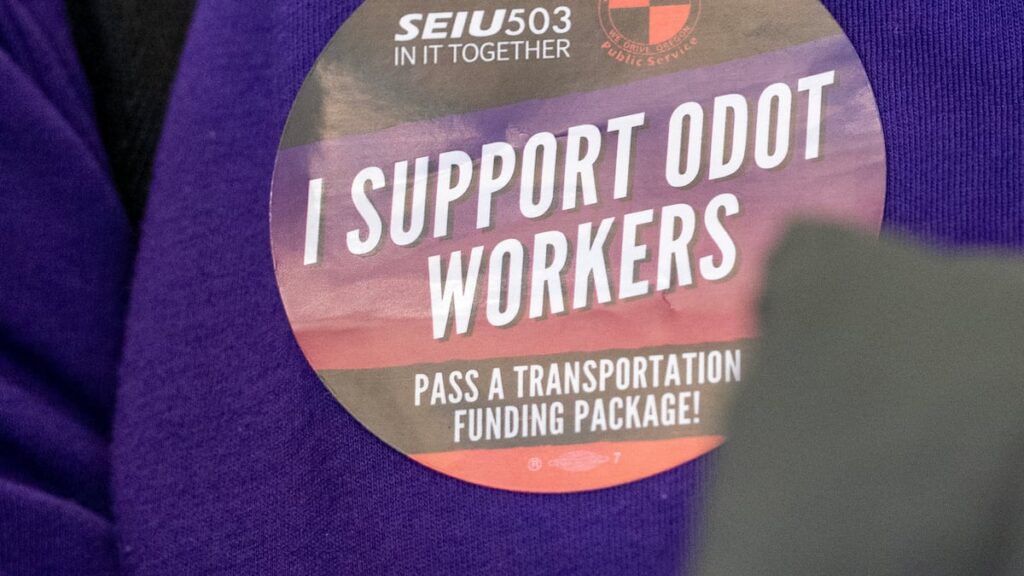
House Bill 3991 is designed to prevent the Oregon Department of Transportation (ODOT) from laying off hundreds of employees by securing an additional $300 million in the current budget. However, this legislative victory might face future obstacles, as Republicans are contemplating a campaign to refer the tax increases to voters in the November 2026 election.
“We stand squarely with Oregon taxpayers. The majority does not,” stated Senate Minority Leader Bruce Starr. He emphasized that if the bill goes to the ballot, it could influence the electoral prospects of Democrats who supported it.
Should a referral campaign succeed, it would delay the implementation of new taxes, potentially affecting ODOT services, including road maintenance and safety measures, especially during winter.
Governor Kotek expressed concerns over the impact of such a referral, urging Oregonians to consider the implications on road safety and infrastructure.
The Democrats, meanwhile, celebrated the passage as a necessary step to address immediate transportation safety concerns. “With this legislation, we are averting an immediate transportation safety crisis,” said Senate President Rob Wagner.
Key Elements of HB 3991
The bill encompasses several measures:
- Increasing the state’s gas tax from 40 cents to 46 cents per gallon, aiming to generate about $90 million annually.
- Raising vehicle title and registration fees, with additional charges for electric vehicles.
- Doubling the payroll tax for public transit funding for a limited two-year period.
- Mandating enrollment in the OReGo program for electric and hybrid vehicles.
- Enhancing auditing requirements for ODOT to ensure fiscal accountability.
- Removing statutory tolling requirements for certain highway projects, although tolling remains a possibility according to some officials.
- Reforming the taxation system for heavy trucks to align freight interests with the bill.
Expected to generate $4.3 billion over a decade, the financial implications of HB 3991 have sparked a significant political debate. Democrats argue that the tax hike is crucial to prevent service declines and infrastructure deterioration.
“We’re talking about substantially less money than many Oregonians spend a month on Netflix,” remarked state Senator Khanh Pham, emphasizing the importance of maintaining essential services.
Conversely, Republicans argue for a reprioritization of existing budget allocations, suggesting that rural communities may bear a disproportionate burden due to increased costs.
“We’re talking about people who are existing on minimum wage,” said state Senator Suzanne Weber, highlighting the financial strain on low-income families.
Despite Republican efforts to redirect funds from other areas towards roads and to refer the bill to voters, these motions were defeated along party lines.
A Long Road Ahead
Though HB 3991’s passage is a milestone, it is not the comprehensive solution needed for Oregon’s transportation challenges. Previous attempts to pass a more extensive funding package failed, highlighting ongoing legislative hurdles.
Senator Janeen Sollman criticized the timing and process of the legislative efforts, emphasizing the need for better governance.
Senator Mark Meek, whose prior opposition was pivotal, supported HB 3991 due to its lower cost and the removal of potential tolls in his district.
While the bill addresses immediate funding needs, advocacy groups and local governments stress that it falls short of long-term solutions. “HB 3991 is a short-term fix,” stated the Association of Oregon Counties, calling for a more comprehensive funding strategy.
The Street Trust echoed this sentiment, urging a broader approach to transportation funding.
Original Story at www.opb.org