Net-Zero Transition: A New Era for Employment in the Energy Sector
This article is part of an upcoming collection on good jobs by the Policy Hub for the Huth Initiative for a New Political Economy.
The race to achieve a balance between carbon emissions and removal is reshaping the global job market, particularly within the energy sector. While some industries face challenges, the drive towards net-zero carbon emissions is expected to create numerous high-skill and well-paying jobs.
With 77% of global GDP now tied to net-zero targets, countries are increasingly adopting strategies to mitigate climate change by balancing carbon emissions with removal efforts, such as afforestation and technology-driven air capture.
The transition towards net-zero is becoming more affordable, driven by technological advancements and behavioral shifts. Innovations like renewable energy, electric vehicles, and heat pumps are becoming increasingly economical, though the implications for jobs remain significant.
Employment Trends in a Zero-Carbon Economy
In 2022, clean energy jobs numbered 35 million globally, surpassing fossil fuel employment by three million. Nearly half of these were concentrated in renewable energy, with China leading the charge alongside Brazil, the European Union, India, and the United States.
Projections suggest that by 2050, 43 million jobs could exist in renewable energy, potentially surpassing job losses in other parts of the energy system.
Job creation is anticipated to accelerate during the early phases of the transition, particularly in construction roles related to establishing new energy systems. Over time, job demand is expected to stabilize as the focus shifts to maintenance and system upgrades.
The expansion in energy jobs aligns with the broader strategy to decarbonize the global economy, starting with the electricity sector’s adoption of cost-effective solar and wind power. These changes are expected to spur demand for diverse skill sets, including interdisciplinary expertise that combines engineering with environmental management.
Net-zero jobs encompass a wide array of roles, from explicit positions like carbon trading to conventional roles within zero-carbon companies. The broader net-zero economy also includes supply chain jobs and those indirectly supported by the sector.
Economic Benefits of Net-Zero Jobs
Evidence suggests that clean energy roles often offer higher wages than the market average. For instance, in South Africa, clean energy roles command an average premium of $215 per month. Similar wage premiums have been documented in Japan, Norway, and the United States, though definitions vary.
The so-called ‘green premium’ is partly attributed to the high skill demands in the sector. Approximately 36% of energy jobs require high skill levels, compared to 27% across the broader economy. Net-zero roles, in particular, demand a range of skills, often more than traditional high-carbon roles.
Factors such as employer size, union presence, and working conditions also influence wage premiums. Although fossil fuel workers often enjoy higher premiums due to these factors, the intrinsic wage differences between clean and conventional energy jobs are minimal when these factors are considered.
Bridging the Skills Gap
While the high skill requirements for net-zero jobs can boost wages, they also present challenges. Upskilling and reskilling initiatives will be crucial globally, with specific focus needed in fields like electrical engineering to meet increasing demand.
In the UK, around 10% of the workforce may require reskilling, with higher percentages in industries like construction and transport.
Many upskilling needs are not intensive and can be addressed via short courses or on-the-job training. However, for less adaptable workers and those in high-carbon-dependent communities, transitioning might be more complex.
Regional disparities in job losses and creation could exacerbate unemployment in affected areas, such as observed in Brazil.
Successful transitions, like Germany’s Ruhr Valley, highlight the importance of collaboration between government, industry, and communities, incorporating social protections and proactive labor market interventions.
Experts on Net-Zero Employment
- Joris Bücker
- Maria del Rio-Chanona
- Sam Fankhauser
- Misato Sato
- Aurelien Saussay
- Anna Valero
- Francesco Vona
Author: Sam Fankhauser
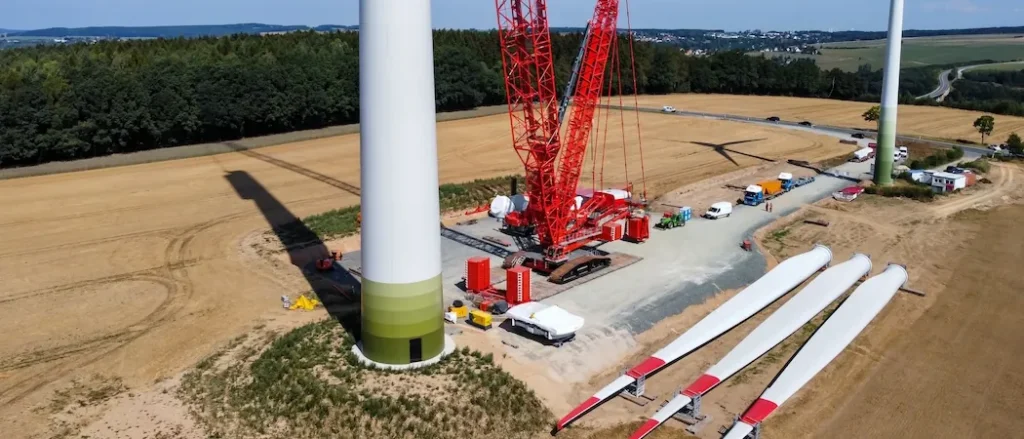
Photo: Construction of a wind turbine, Germany; Animaflora for iStock
Original Story at www.economicsobservatory.com