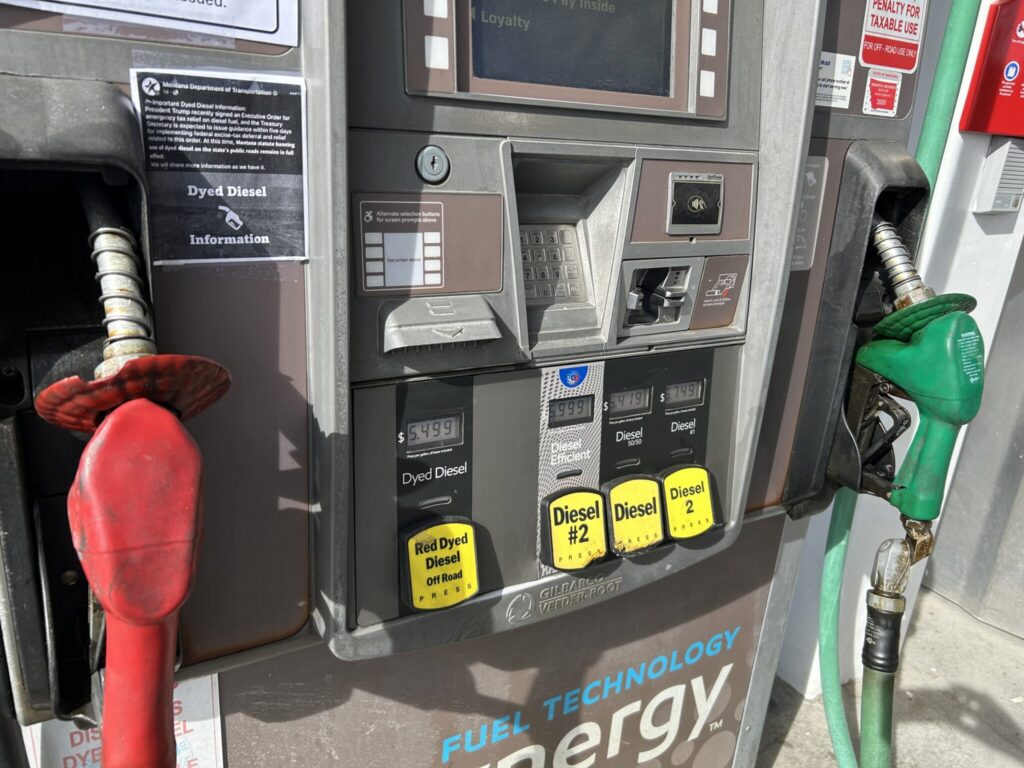
A quiet but significant shift in fuel enforcement is underway in Montana, affecting a range of vehicles that operate off public roads. State officials have temporarily suspended enforcement of dyed fuel regulations for certain vehicle categories, a move that could affect farmers, construction operators, and others who rely on off-road equipment.
Dyed fuel — typically diesel that has been marked with a red or blue dye — is a tax-exempt fuel intended for off-road, agricultural, and other non-highway use. Using it in vehicles that operate on public roads is illegal under federal and state law, as it allows users to avoid paying road-use fuel taxes. Enforcement of these rules ensures that those who use public infrastructure contribute to its upkeep.
Montana’s decision to pause enforcement means that, for the time being, operators of certain vehicles will not face penalties for dyed fuel use that might otherwise trigger fines or legal consequences. The suspension applies to a specific category of vehicles, though the state has signaled this is a temporary measure rather than a permanent policy change.
The development was first reported by the Daily Montanan, which covers government and policy issues across the state. Full context on the story and its background can be reviewed through the outlet’s republishing guidelines.
For those who work the land or depend on heavy equipment, even temporary relief from enforcement activity can carry real financial and operational weight. Dyed fuel is significantly cheaper than its taxed counterpart, and for small agricultural operations running on tight margins, the difference in cost can be meaningful during planting, harvesting, or construction seasons.
State enforcement agencies have not indicated a specific end date for the suspension, leaving some operators in a state of uncertainty about when normal enforcement will resume. Those affected are encouraged to stay informed about any updates from Montana’s relevant state agencies to understand how long this pause will remain in effect and which vehicle types are covered.