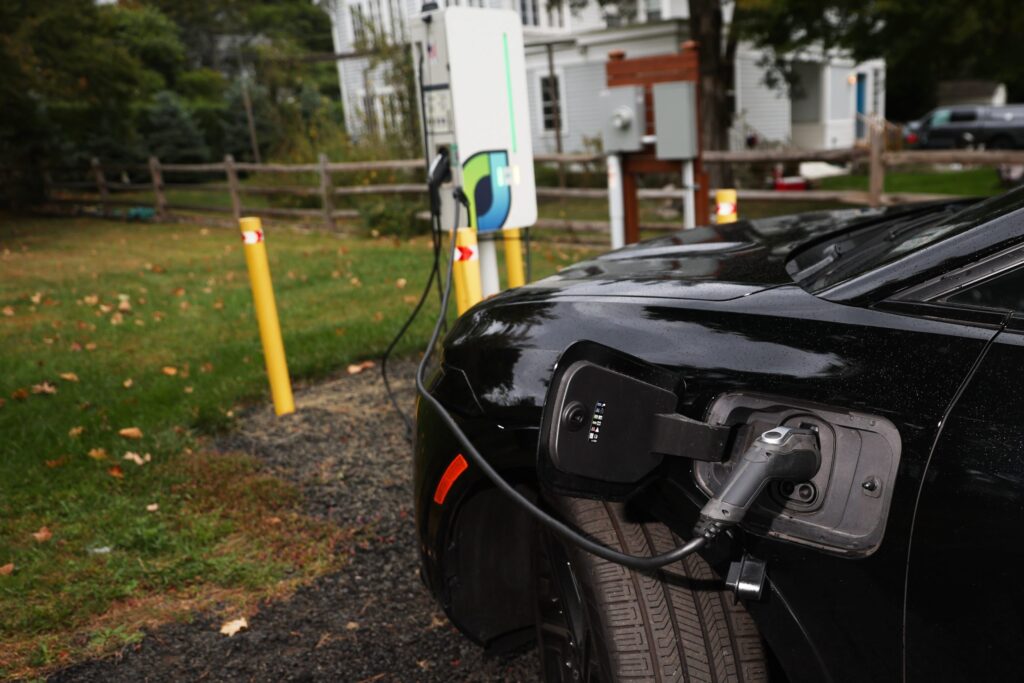
As electric vehicle (EV) adoption increases, the infrastructure supporting these vehicles is also evolving. For drivers like Melissa Birch, who frequently travels in her all-electric Chevy Bolt from north-central Minnesota to the Twin Cities, the journey has become noticeably more convenient. This is largely due to a significant boost in the number of fast-charging stations along her route.
Birch, who works with Minnesota Clean Energy Resource Teams, noted in a blog post that the availability of fast chargers has expanded six-fold in recent years. “It has gotten to be so that I can get pretty much anywhere I need to go,” she shared in a recent interview.
While most charging happens at home, the growing network of public charging stations in Minnesota is easing the range anxiety often associated with longer trips. The state boasted over 2,800 public charging plugs as of October, with 834 of those being direct-current fast chargers (DCFCs) capable of powering up most EVs in under an hour.
Despite this progress, the current number of DCFCs remains below the 4,000 needed by 2030 according to the Minnesota Department of Transportation. Efforts from local governments, utilities, and companies like Tesla continue to address this gap, especially in rural areas.
Federal support has played a crucial role in these developments. Initiatives from former President Joe Biden’s administration have allocated substantial funds to expand EV infrastructure, complementing private investments and settlements like the Volkswagen Clean Air Act settlement. However, policy shifts during the Trump administration have introduced uncertainties that have affected the pace of charger installations.
Bumps in the Road
Under President Trump, funding for key federal programs was frozen, disrupting plans for electric transportation infrastructure across states, including Minnesota. Although the National Electric Vehicle Infrastructure program was reinstated by court order, other programs remain paused due to legal challenges.
The rollback of federal tax incentives for EVs during Trump’s tenure led to a dip in EV sales. Car manufacturers like Ford have adjusted their strategies, focusing on smaller and more affordable EV models as opposed to larger vehicles like their electric F-150.
These changes have intensified competition within the EV charging industry, leading to financial difficulties for some companies. Complaints about unreliable charging stations and software issues have been common, as seen on platforms like the PlugShare app.
Rebecca Michael from Otter Tail Power highlighted a temporary “bump” in their network due to changes in third-party providers. To maintain reliability, Otter Tail offered free charging while resolving these issues.
Utilities and Automakers Stepping Up
Utilities such as Southern Minnesota Municipal Power Agency (SMMPA) and Otter Tail Power have been instrumental in expanding the charging network. SMMPA’s network, which started in 2020, has seen around 27,000 sessions to date, while Otter Tail began its expansion in 2023 to alleviate range anxiety.
Minnesota Power is working on a 16-station fast-charging network and has established agreements to ensure station reliability. These efforts are part of a broader push to enhance infrastructure and meet future EV demands.
The industry is also moving towards the North American Charging Standard (NACS), a Tesla-developed plug type, which is becoming more prevalent in new models from major automakers. This shift, along with advancements like “plug and charge” technology, aims to improve the EV charging experience by reducing technical issues and simplifying payments.
Filling Infrastructure Gaps
Despite these advancements, Minnesota still requires more charging ports to eliminate range anxiety, particularly in rural areas. The Minnesota Department of Transportation plans to address these needs through upcoming funding opportunities, focusing on high-traffic routes in less-served regions.
The state remains committed to developing a reliable charging network, even as new challenges arise, such as a proposed tax on fast chargers. Stakeholders like Katelyn Bocklund from the Great Plains Institute emphasize the need for continued investment and policy support to ensure that infrastructure keeps pace with EV adoption.
Original Story at www.minnpost.com