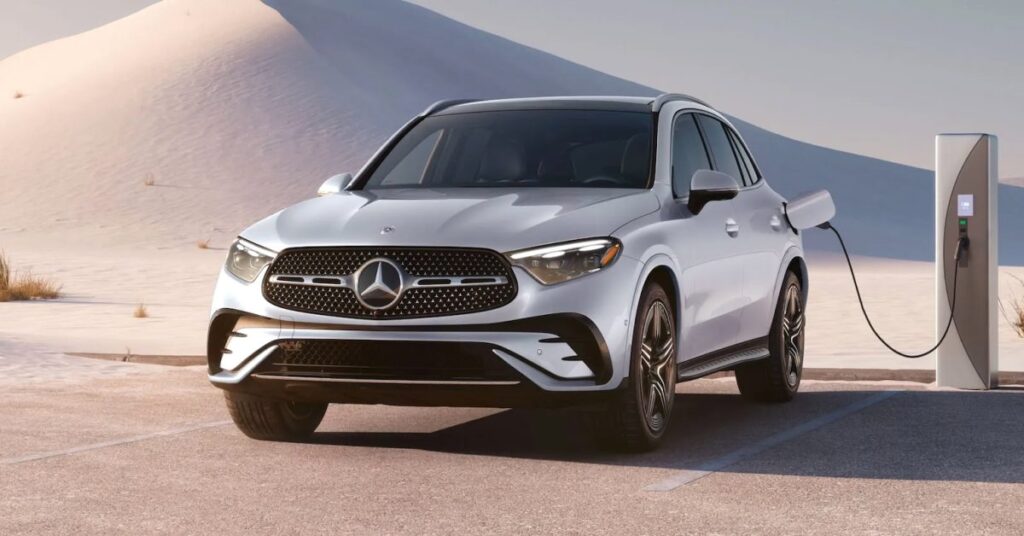
In the evolving landscape of hybrid vehicles, battery longevity has emerged as a critical factor. A recent analysis by Germany’s ADAC underscores the importance of brand reputation, revealing notable disparities in how PHEV batteries endure over time. Mercedes-Benz leads the way, while Mitsubishi lags, the study shows.
The study, conducted by ADAC in collaboration with Austrian battery experts AVILOO, assessed over 28,500 state-of-health (SoH) evaluations of PHEV batteries spanning six years across various brands. Interestingly, the findings indicate that the vehicle brand significantly influences battery longevity, despite most batteries maintaining performance within an average lifespan.
Luxury brands like Mercedes-Benz, BMW, and Volvo demonstrate superior battery resilience compared to more mainstream brands such as Volkswagen, Ford, and Mitsubishi. ADAC’s breakdown highlights these differences:
“In terms of brand comparison, Mercedes-Benz models generally show very stable battery performance up to a mileage of 200,000 kilometers. This contrasts with Mitsubishi, whose PHEVs already exhibit significant degradation even at low mileages, although this stabilizes somewhat over the course of their lifespan.”
Vehicles from Volkswagen Group and Volvo maintain unremarkable degradation rates, even with increased electric use. BMW shows variation based on electric usage, while Ford’s battery capacity diminishes early, irrespective of usage. Further predictions are limited due to scarce data on higher mileages.
ADAC | GOOGLE TRANSLATE
Overall, the study suggests that while PHEV batteries from premium brands tend to last longer, most maintain over 80% of their SoH even after 200,000 km (approximately 120,000 miles), with some exceeding this benchmark.
Still totally fine
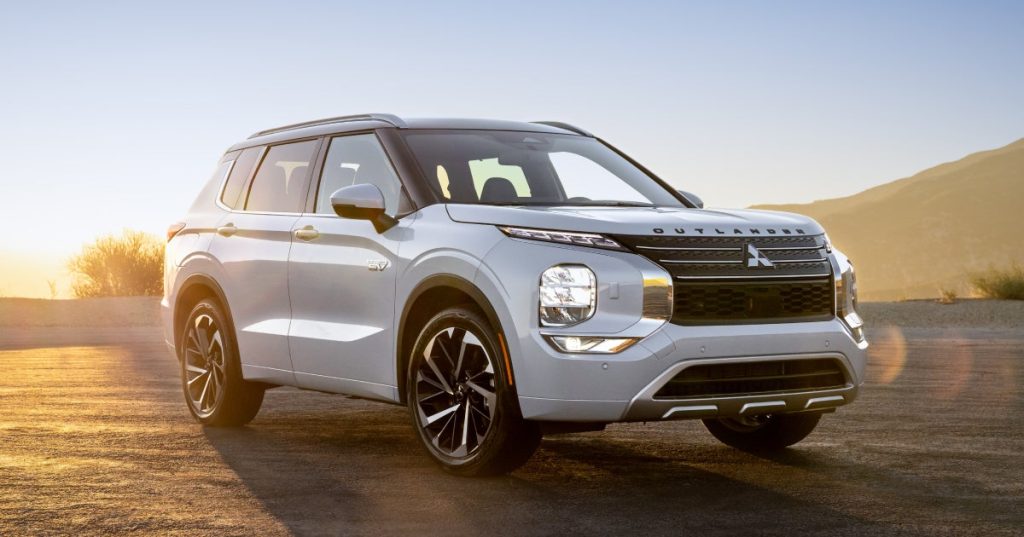
It’s crucial to note that these findings do not imply Mitsubishi’s PHEVs are unreliable; they simply highlight that pricier models tend to offer longer-lasting battery performance under typical driving scenarios.
For those who frequently undertake electric-only trips, fully battery-electric vehicles might be preferable due to their fewer charging cycles, which typically extends battery lifespan compared to PHEVs.
The key takeaway for consumers is straightforward: select a powertrain that matches your daily driving needs to ensure extended and reliable battery life.
SOURCES: ADAC, AVILOO; via Motorpasión.
Original Story at electrek.co