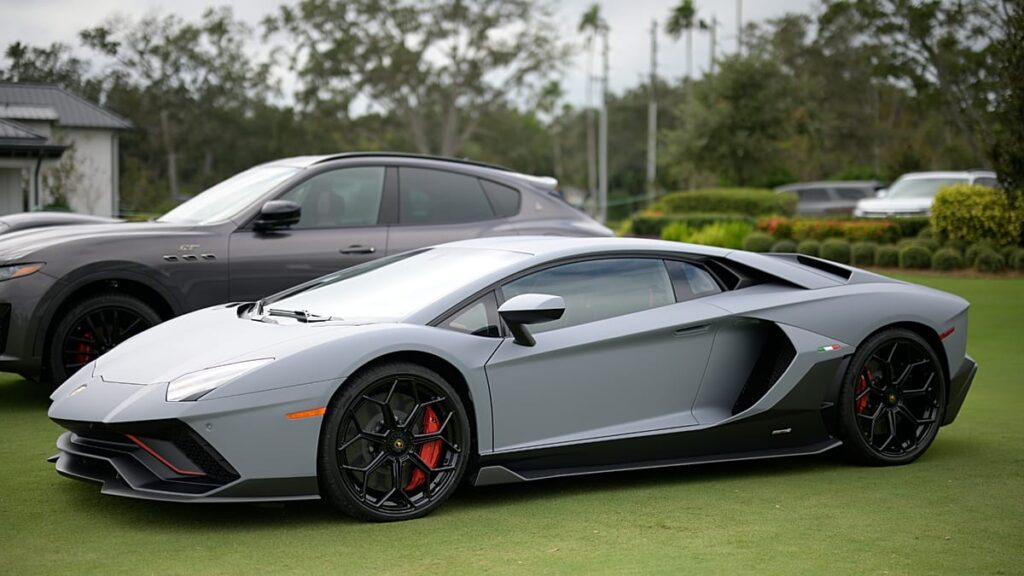
In a strategic shift, Lamborghini has decided to forgo its initial plan to launch its first all-electric supercar, choosing instead to focus on plug-in hybrid models. This decision comes as a response to the tepid interest from its luxury clientele.
The renowned luxury car maker confirmed that its Lanzador model, which was introduced as a concept car in 2023, will not enter production. This announcement was made by Lamborghini’s CEO Stephan Winkelmann in an interview with The Sunday Times.
With this change in direction, Lamborghini aims to have its entire lineup go hybrid by the decade’s end, replacing the anticipated fully electric offering with a plug-in hybrid vehicle (PHEV).
Rethinking the Electric Supercar Strategy
This move highlights the caution among high-end car manufacturers regarding the speed of electrification in the luxury sector. According to Winkelmann, the anticipated demand from Lamborghini’s exclusive customer base has not met expectations.
As Winkelmann explained to The Sunday Times, “The acceptance curve” for battery-electric Lamborghinis in the company’s target market is “close to zero.” He further emphasized the financial risks associated with pursuing full-EV development prematurely, describing it as potentially “an expensive hobby, and financially irresponsible towards shareholders, customers [and] to our employees and their families.”
The CEO also noted that traditional vehicles continue to provide the sensory experience that their customers prefer. He remarked, “EVs, in their current form, struggle to deliver this specific emotional connection.”
Hybrid Models as a Strategic Balance
Lamborghini is now positioning plug-in hybrids as the ideal middle ground between regulatory requirements and preserving brand identity. Their current range, which includes models like the Revuelto, Urus, and Temerario, has already integrated hybrid technology.
Winkelmann stated, “Plug-in hybrids offer the best of both worlds, combining the agility and low-rev boost of electric battery technology with the emotion and power output of an internal combustion engine.” He also mentioned that they intend to maintain the production of traditional engines “for as long as possible.”
This pivot is significant as Lamborghini had previously indicated plans for a fully electric model by the end of the decade, with the Lanzador expected to spearhead that strategy.
Implications of the Decision
The shift by Lamborghini, a prominent name in the supercar industry, underscores a broader challenge in the automotive sector’s transition. Regulatory demands are increasing, yet consumer interest, particularly in the luxury segment, remains inconsistent.
Lamborghini’s sales hit a record 10,747 vehicles in 2025, driven by robust hybrid sales. Europe and the Middle East were the strongest markets, while sales were less robust in the Americas.
Industry experts view Lamborghini’s decision as a practical response to current market dynamics. Unlike mainstream manufacturers, luxury brands rely heavily on emotional connections and brand allure, areas where electric vehicles have yet to make significant inroads.
Nevertheless, Winkelmann did not entirely dismiss the possibility of an electric Lamborghini in the future. He stated, “Never say never, but only when the time is right. For the foreseeable future, only PHEVs.”
Regulatory Challenges Ahead
This strategic adjustment comes amidst the EU’s push for a 2035 cessation of new combustion-engine vehicles, with the UK adhering to a 2030 ban for most petrol and diesel cars. As a smaller manufacturer, Lamborghini currently enjoys emission exemptions until 2035, which they are likely to seek to extend.
Winkelmann warned of the challenges the industry faces during this transition. He remarked, “The times we are living in are fast moving; if you don’t react fast, you risk going out of business or losing momentum.”
Original Story at www.euronews.com