
Los Angeles Power Plant Undergoes Significant Transformation with Hydrogen Integration
In a landmark decision, the Los Angeles Department of Water and Power (DWP) board has approved a plan to partially convert the Scattergood Generating Station into a facility that can utilize hydrogen, marking a pivotal step in the city’s clean energy transition. The board’s unanimous vote on Tuesday greenlights an $800-million upgrade aimed at modernizing Units 1 and 2 of the power plant, located in Playa del Rey.
Originally constructed in the late 1950s, the Scattergood power plant faces a mandated shutdown by the end of 2029. The upcoming modifications will see the installation of advanced turbines capable of running on a blend of natural gas and at least 30% hydrogen, with aspirations of eventually operating solely on hydrogen.
The hydrogen to be used is classified as “green,” as it will be produced through electrolysis, a method that involves splitting water molecules. This is crucial because, unlike natural gas, hydrogen combustion does not emit carbon dioxide, a major greenhouse gas.
Unit 2, one of the two original 1950s-era General Electric gas steam generators cooled with Pacific Ocean water and set to be phased out by 2029 at the Scattergood Generating Station in Los Angeles, March 17, 2022. (Jay L. Clendenin / Los Angeles Times)
The DWP emphasizes that this conversion is essential for Los Angeles to achieve its ambitious target of 100% renewable energy by 2035. “This project is critical to LADWP’s clean energy transition as it helps us preserve a key power system asset, meet our clean energy goals, and ensures reliability for our customers,” stated Senior Assistant General Manager David Hanson.
Despite the promising potential, the plan has faced opposition from several environmental groups. Critics argue that it could extend the city’s reliance on fossil fuels when investments in existing clean technologies like solar and wind should be prioritized. Julia Dowell from the Sierra Club expressed skepticism, noting that “there likely won’t actually be any hydrogen in the mix” initially, leading to continued methane combustion.
At the recent board meeting, nearly 50 participants voiced their concerns, highlighting issues such as water usage and potential pollution from burning gas. While hydrogen combustion avoids carbon dioxide emissions, it could still produce nitrogen oxides, known contributors to smog.
DWP officials clarified that they plan to procure green hydrogen from external suppliers, ensuring readiness for when the hydrogen becomes widely available. “What we want to do is make sure that when hydrogen infrastructure is available, that we don’t have an obsolete unit,” said Jason Rondou, the DWP’s assistant general manager of power planning and operations.
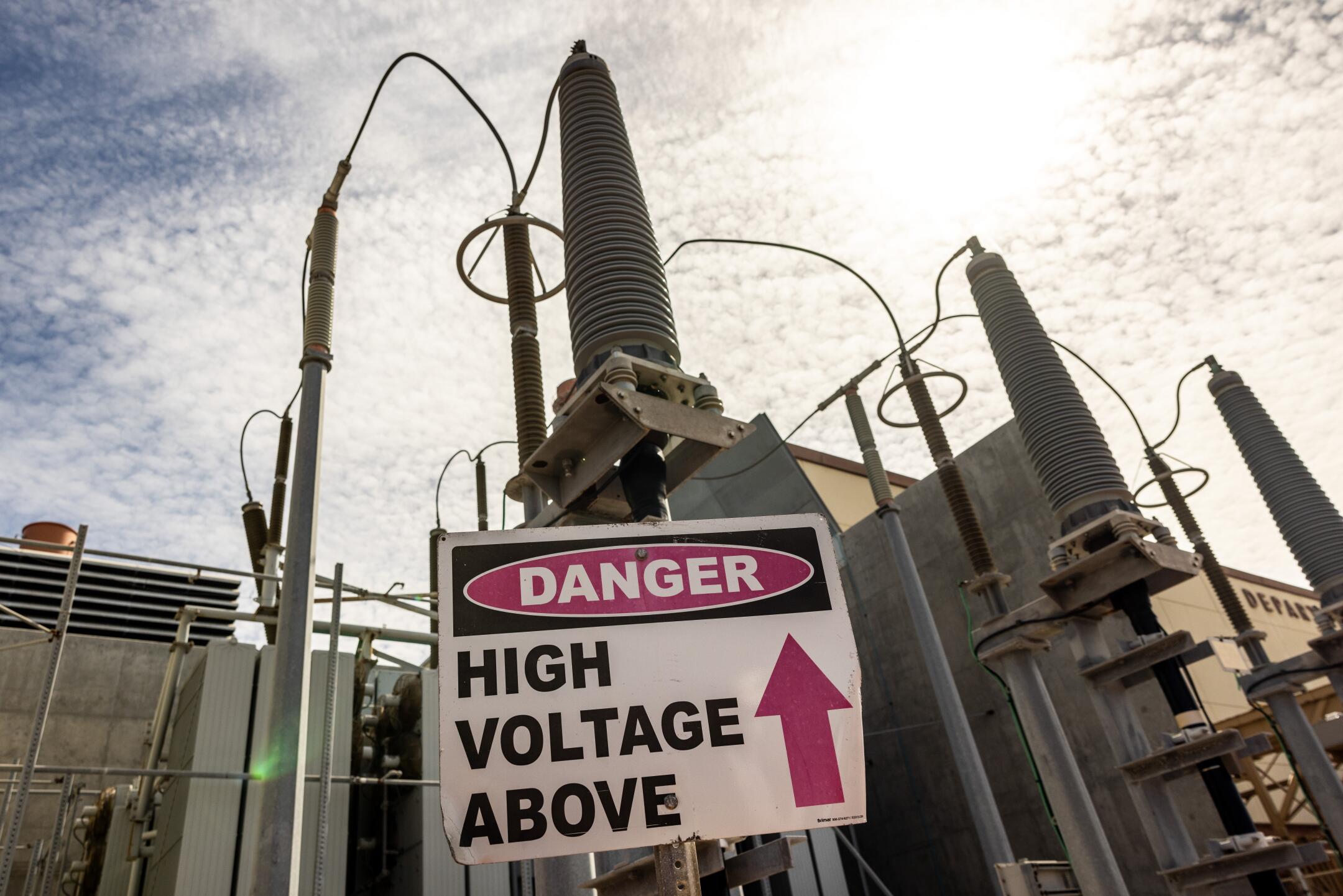
Signs reading “Danger, High Voltage Above,” near the Scattergood Generating Station in Playa del Rey on March 17, 2022. The gas-fired power plant is operated by the Los Angeles Department of Water and Power and is one of the city’s largest power sources. (Jay L. Clendenin / Los Angeles Times)
The plan, however, lacks specifics on hydrogen sourcing and logistics. As the environmental report states, “The green hydrogen that would supply the proposed project has not yet been identified.” Nonetheless, the initiative is expected to catalyze hydrogen production development. Lorraine Paskett of the First Public Hydrogen Authority remarked, “It gives developers, investors and communities confidence that Los Angeles is ready to lead on clean hydrogen at scale.”
Industry veteran Paul Browning highlighted the role of hydrogen, asserting that while solar and wind are indispensable, “you can’t finish the job without green hydrogen or some other long-duration energy storage technology.” Browning dismissed concerns that the project might prolong natural gas usage, calling it “the final nail in the coffin of natural gas power generation.”
The project faces financial uncertainty due to federal funding cuts under President Trump’s administration, which affected the $1.2-billion ARCHE hydrogen hub initiative. Despite losing $100 million in funding, the DWP has assured that the Scattergood project remains fully funded through its power fund.
Critics argue that the $800-million estimate might be outdated, especially with tariffs affecting the cost of key materials. Theo Caretta from Communities for a Better Environment expressed concerns that the project might end up as “an $800-million project to reinvest in burning methane.”
The DWP maintains that it is pursuing a multifaceted renewable strategy, including projects like the Eland solar and battery plant in Kern County. A National Renewable Energy Laboratory analysis supports the Scattergood plan, underscoring the challenges of finding economically viable alternatives by the 2029 deadline.
Jack Brouwer from UC Irvine’s Clean Energy Institute noted that the Scattergood facility is “part of the required infrastructure to enable L.A. 100 to become completely decarbonized and depolluted,” emphasizing the importance of hydrogen in the city’s energy strategy.
With the Scattergood conversion set for completion by December 2029, Los Angeles continues its ambitious journey towards a cleaner energy future, even as it navigates the complexities of technological and environmental challenges.
Original Story at www.latimes.com