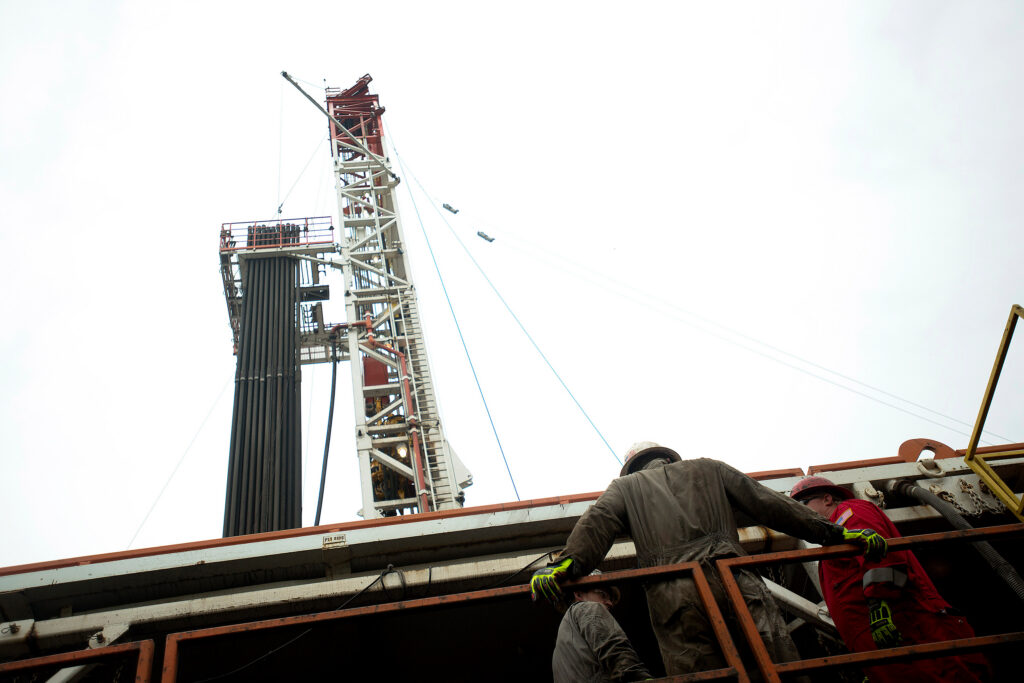
Nearly 20 years ago, geoscientist Terry Engelder from Penn State University published a significant estimate of gas volumes beneath Pennsylvania, sparking the state’s fracking boom. Today, Pennsylvania ranks as the second-largest gas producer in the U.S., following Texas.
Initially, Engelder believed his findings would aid in reducing greenhouse gas emissions by facilitating a shift from coal. However, he now sees natural gas as a more permanent part of the energy mix rather than the “bridge fuel” he once envisioned.
Engelder, now a Penn State emeritus geology professor, is writing a book about his estimates, revealing that the Marcellus Shale, which also extends into West Virginia, New York, and Ohio, could meet U.S. energy needs for 20 years based on past consumption rates.
His estimate of 489 trillion cubic feet (tcf) of recoverable gas, published in 2009, convinced bankers to invest billions in gas extraction via hydraulic fracturing. Critics argue this process harms the environment, impacts public health, and hinders renewable energy growth.
The U.S. Energy Information Administration supported Engelder’s estimate, reporting 410 tcf in 2011, while the University of Texas later revised it to 560 tcf in 2018.
Engelder imagined natural gas, which emits about 55% less carbon than coal, would transition towards renewables. Instead, gas now fuels nearly 60% of Pennsylvania’s electricity.
Natural gas demand is rising, driven by planned data centers in Pennsylvania.
“I was hopeful wind and solar would dominate, with gas as a bridge,” Engelder told Inside Climate News. “But it’s become more permanent than transitional.”
Engelder recounted how he estimated the Marcellus reserve size, hoping its use would curb climate change by favoring gas over coal. This conversation has been edited for clarity.
JON HURDLE: Were you driven by reducing carbon emissions when estimating Marcellus gas?
TERRY ENGELDER: Absolutely. The switch from coal to natural gas was a key step in reducing CO2 emissions, especially in Pennsylvania.
HURDLE: Any regrets about enabling industry exploitation of these reserves?
ENGELDER: My concern about climate change was evident in a TED Talk in 2013. It’s a difficult choice between advancing fossil fuel use and addressing climate change.
HURDLE: How did the initial estimate come about?
ENGELDER: Companies needed billions, requiring confirmation of their reserves. I presented to banks in 2007, leading to my calculation.
HURDLE: How was the 489 tcf figure calculated?
ENGELDER: Using 2008 production data from Pennsylvania, Ohio, and West Virginia. It has remained relevant for years.
HURDLE: Were there earlier estimates?
ENGELDER: Yes, initially 363 tcf, but I proposed 50 tcf in 2008 due to lack of production data.
HURDLE: How was the public interest at the time?
ENGELDER: I received over 500 media inquiries due to a lack of technical understanding elsewhere.
HURDLE: How did politics impact the fracking surge?
ENGELDER: My regret lies in the political choice. While natural factors provided gas, political decisions influenced its use. My role was to present an option.
Original Story at insideclimatenews.org