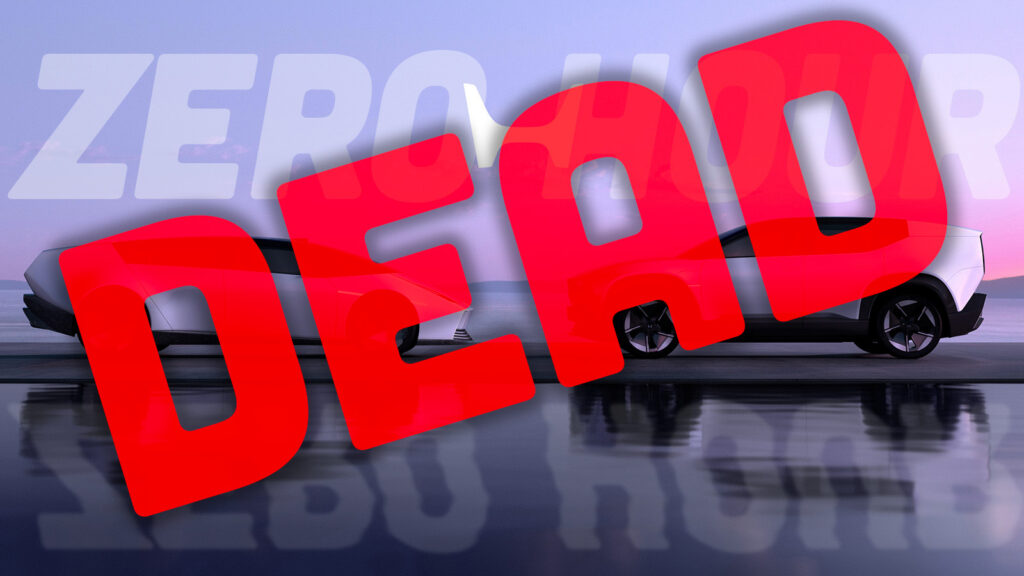
In a surprising move, Honda has announced a significant change in its electric vehicle (EV) strategy, taking a $15 billion charge and canceling three key models planned for the U.S. market. This decision comes amid a broader trend of automakers reevaluating their EV offerings due to shifting market conditions.
Last year, Honda had unveiled prototypes for two futuristic electric vehicles—the Honda 0 Saloon and Honda 0 SUV. These models, along with the 2026 Acura RSX, were set to be produced at the Marysville, Ohio plant to capitalize on Inflation Reduction Act incentives. However, Honda’s recent financial report indicates these plans have been shelved.
“In order to improve the current earnings situation as early as possible, Honda considered various options; however, after careful consideration, the company made the decision to cancel the development and market launch of three EV models that had been planned for production in the U.S., namely the Honda 0 SUV, Honda 0 Saloon, and Acura RSX,” the company stated. “Honda determined that starting production and sales of these three models in current business environment where the demand for EVs is declining significantly would likely result in further losses over the long term.”
The decision reflects concerns about the viability of these models given the current economic climate. The Honda 0 Saloon and SUV were seen as innovative but potentially costly endeavors that might not have been profitable without substantial governmental support.
The cancellation of the Acura RSX is particularly unexpected, as dealers had been eagerly anticipating new products. The Ohio plant’s future role remains uncertain, though Honda hinted at a pivot towards hybrid vehicles, noting, “In light of the recent slowdown in the growth of the EV market in the U.S., Honda will reassess its resource allocations and further strengthen its hybrid models.”
This strategic shift raises questions about Honda’s long-term commitment to the U.S. market and the fate of its “EV Hub” in Ohio. With the global energy landscape changing and demand for efficient vehicles potentially increasing, Honda’s most popular hybrid, the CR-V, remains a key player in the market.
Honda CEO Toshihiro Mibe acknowledged the disappointment felt by stakeholders, stating in Nikkei Asia: “I’m fully aware of the passion poured in by many employees, business partners and sales staff, as well as the high expectations expressed by our customers.”
While Honda appears to be recalibrating its approach to EVs, the industry watches closely to see if the company will continue to pursue projects like the Afeela 1 EV with Sony, or if this too will be reconsidered.
Original Story at www.theautopian.com