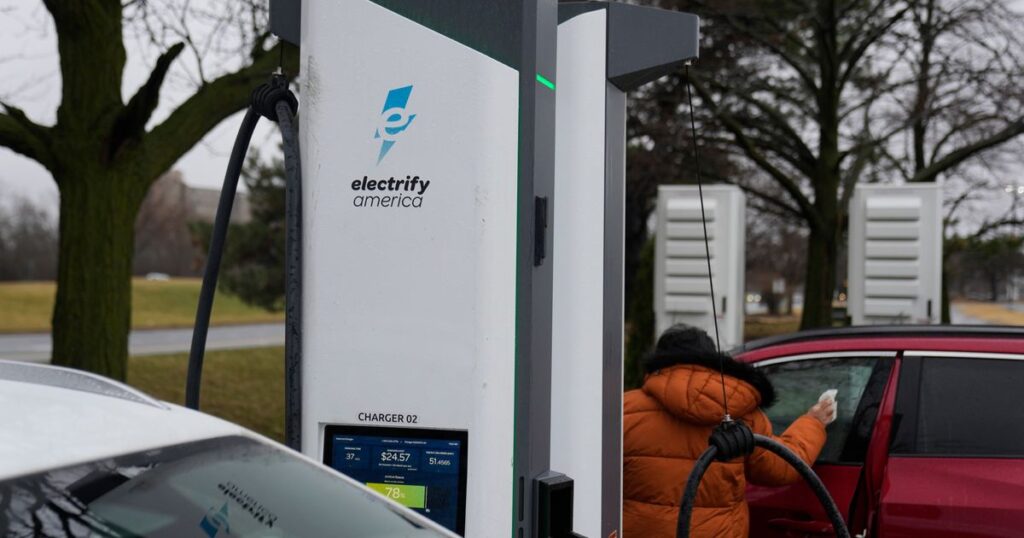
As global tensions impact fuel prices, electric vehicle (EV) owners like Kevin Ketels find themselves relatively shielded from the unpredictability of gasoline costs. Ketels, who resides in Detroit, invested in an electric 2026 Chevrolet Blazer last year, not just to escape gas prices but to embrace a sustainable future. Now, with rising gas prices influenced by the Iran conflict, Ketels appreciates his decision even more.
“Electricity can go up, but it won’t go up nearly as much as gas will and it won’t go up nearly as fast, either,” Ketels stated. This insight comes from his background as an assistant professor of global supply chain management at Wayne State University.
Do EV Owners Benefit from Stable Electricity Prices?
While gas-powered vehicle owners confront fluctuating prices due to global disruptions, EV owners generally experience more stable costs. The average price for a gallon of gas in the U.S. has risen to $3.57 from $2.94 a month prior, as reported by AAA. In contrast, according to Erich Muehlegger, an economics professor at the University of California, Davis, “residential electricity prices are regulated and are much less volatile than gasoline prices.” This regulation offers EV users a buffer against oil price shocks.
However, electricity prices have been on the rise due to increased power demand, among other factors. Holt Edwards, of Bracewell’s Policy Resolution Group, remarked that while the war contributes to inflation, it may not be the primary driver of electricity price increases, though its impact is evident.
How Do Power Grids Influence EV Charging Costs?
The cost of charging an EV is largely contingent on the power sources within a local grid. Typically, residential electricity rates are set annually, insulating consumers from frequent price hikes. Despite this, rising natural gas prices can still affect electricity generation costs, though not as drastically as oil prices have.
“The energy component varies depending on the energy you’re using and the price of the energy that you’re using to generate electricity,” explained Pierpaolo Cazzola from Columbia University’s Center on Global Energy Policy. He noted that U.S. energy price fluctuations tend to be less pronounced compared to other regions.
Experts suggest that ongoing conflicts could eventually impact electricity costs, further highlighting the need for a transition to clean energy. “Clean power and electrification combined is what provides the most security,” asserted Euan Graham from the energy think tank Ember.
Will Rising Gas Prices Boost EV Demand?
The surge in gasoline prices is a significant motivator for increased EV interest. According to Edmunds, following the onset of the Iran conflict, there was a noticeable spike in research on hybrids and EVs, rising to 22.4% from 20.7% of all vehicle research activities on their site.
However, future EV purchases depend on consumer expectations of long-term savings. Euan Graham pointed out that a sudden rise in EV demand could inflate prices, and further noted the potential impact of government policies on EV taxation and tariffs on fostering a reduced reliance on fossil fuels.
Do EVs Offer Cost Savings?
According to Peter Zalzal from the Environmental Defense Fund, EV buyers can expect “really substantial” savings on gas over their vehicle’s lifetime, even without government incentives. He highlighted that “as gas prices increase, those savings are only greater.” Despite this, the initial purchase price of an EV remains higher than that of gasoline vehicles, averaging $55,300 compared to $49,353 according to Kelley Blue Book.
Kevin Ketels expressed that EVs and renewable energy should be prioritized to mitigate reliance on fluctuating global markets. However, he criticized the withdrawal of government incentives for sustainable energy, arguing it places the U.S. at a disadvantage globally.
For further insights, read more of AP’s climate coverage.
The Associated Press’ climate and environmental coverage receives financial support from multiple private foundations. AP is solely responsible for all content. Find AP’s standards for working with philanthropies, a list of supporters, and funded coverage areas at AP.org.
Original Story at www.wral.com