The Impact of Heat Waves on U.S. Roads: Challenges and Solutions
This summer has seen intense heat waves sweeping across the eastern United States, causing significant damage to infrastructure, particularly roads. The Fourth of July weekend saw temperatures soar, leading to pavement failures and traffic disruptions.
One of the most notable incidents occurred on a stretch of Interstate 97 south of Baltimore. The extreme heat caused the concrete pavement to warp, necessitating the closure of a lane. A similar incident was reported on a city street in Chicago, and several state transportation departments issued advisories about potential heat-related road damage. More details on the Baltimore incident can be found here.
Understanding Road Failures During Heat Waves
According to experts, the combination of heat and moisture weakens pavements, causing them to expand, buckle, and eventually warp. Charles Marohn of Strong Towns explains that when water infiltrates roadways, it softens the pavement, leading to cracking under prolonged heat.
“You take that prolonged period of just intense heat, a lot of traffic on top of it, and that’s when you have something like this happen,” said Charlie Gischlar, a spokesperson for the Maryland Department of Transportation, regarding the I-97 incident.
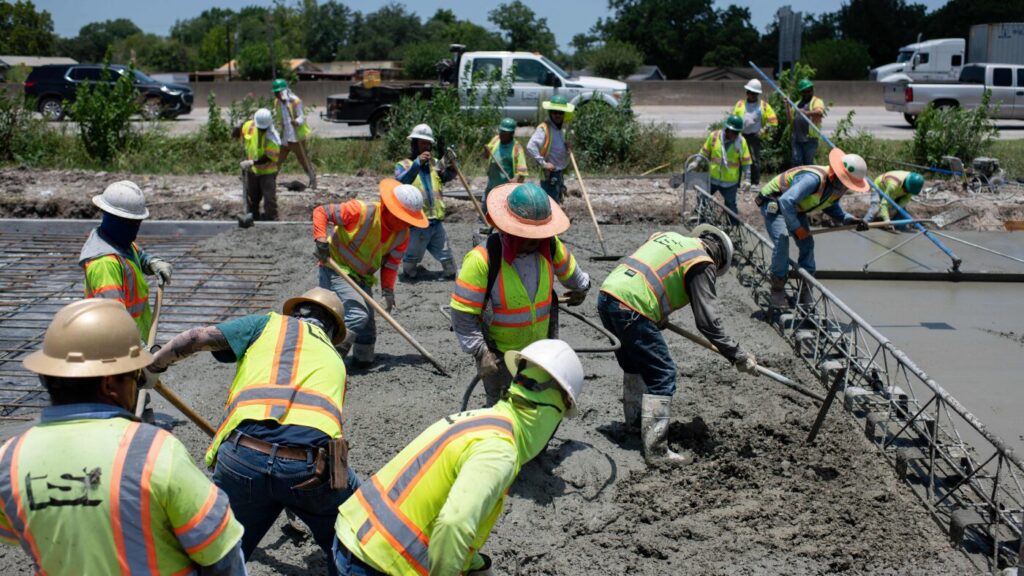
Civil engineering experts suggest that concrete, while durable, is prone to such failures. To mitigate this, adding steel rebar or expansion joints can help accommodate expansion. However, these measures can affect the ride quality due to the rhythmic noise they produce.
Asphalt behaves differently under heat. Amit Bhasin from the University of Texas at Austin notes that asphalt tends to form ruts in slow-moving traffic areas as it behaves like a liquid under intense heat. Marohn adds that asphalt is easier to repair but less durable than concrete, which can fail dramatically when it does.
Adapting to a Changing Climate
With climate change leading to more frequent and intense heat waves, there is a pressing need to rethink road construction strategies. While concrete roads are initially costlier, they last longer and require less maintenance. In contrast, asphalt roads need frequent repairs.
For future-proofing infrastructure, Bhasin suggests considering more durable asphalt blends or adjusting steel reinforcement levels in concrete. However, this requires accurate climate predictions to inform engineering decisions. Engineers can design for extreme events, but it comes with increased costs. More durable asphalt solutions can be explored here.
Arizona State University’s Mikhail Chester highlights that infrastructure needs to evolve to withstand future temperature extremes. “In many ways, we’ve designed our infrastructures over decades, if not centuries, for temperatures that have been relatively milder,” Chester told NPR’s All Things Considered. With rising temperatures, existing designs are being tested beyond their limits, necessitating innovation and knowledge sharing.
Original Story at www.npr.org