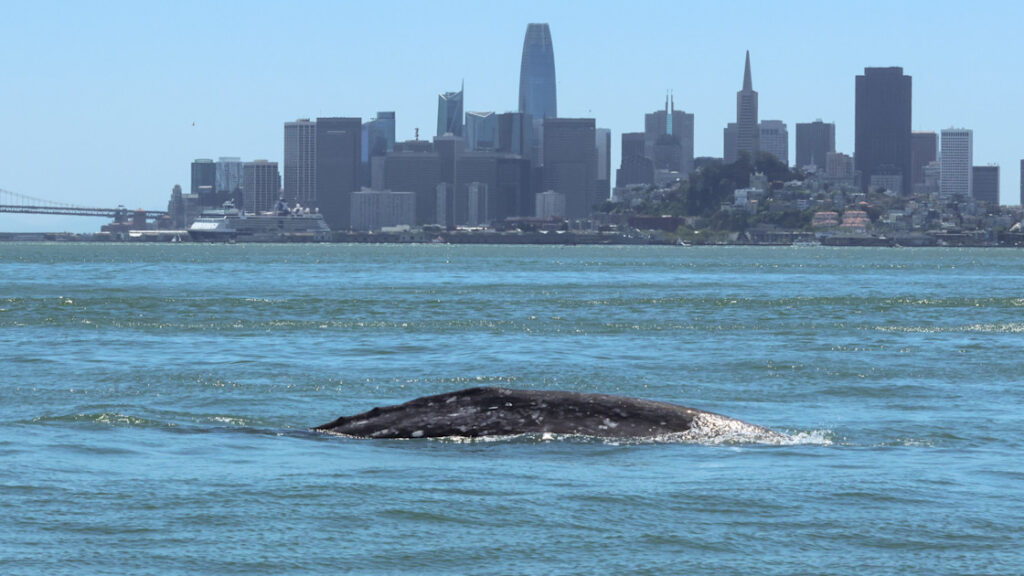
Gray whales are facing increased challenges in their migration routes due to the climate crisis, leading them to forage in San Francisco Bay, a hazardous area for marine life. The Marine Mammal Center and California Academy of Sciences have observed that many of these whales do not survive the journey, with a substantial number falling victim to ship strikes or starvation.
Traditionally, gray whales migrate between the nutrient-rich Arctic and the warm lagoons of Baja Mexico. However, the changing climate has disrupted their food sources, pushing them to search for sustenance in the busy waters of San Francisco Bay. Researchers have noted a high mortality rate among these whales, with nearly 20% dying due to the dangers present in the Bay.
Josephine Slaathaug from Sonoma State University, lead author of a study published in Frontiers in Marine Science, explains, “Gray whales have a low profile to the water when they surface, and this makes them difficult to see in conditions like fog which are common to San Francisco Bay.” This, coupled with the Bay’s heavy maritime traffic, creates a perilous environment for the whales.
Uncharted Waters
Gray whales typically do not feed during their long migrations, relying instead on the prey found in the Arctic. Yet, environmental changes have reduced these resources, making the whales more vulnerable. Their population has plummeted by over 50% since 2016, and sightings of calves are increasingly rare, according to the National Oceanic and Atmospheric Administration.
Since 2018, gray whales have been observed in San Francisco Bay, a location traditionally absent from their migratory path. Scientists have cataloged 114 individual whales in the Bay from 2018 to 2025, but only a small fraction return. This suggests the Bay may serve as a last resort for starving whales, forcing them to forage in unfamiliar areas.
Identification efforts involved opportunistic surveys, citizen science photography, and systematic surveys, although some whales may have been misidentified due to rapid skin decay. Only four of the cataloged whales were seen in multiple years, highlighting the need for more research to understand their behavior and survival rates.
Read and download original article
A Deadly Mix
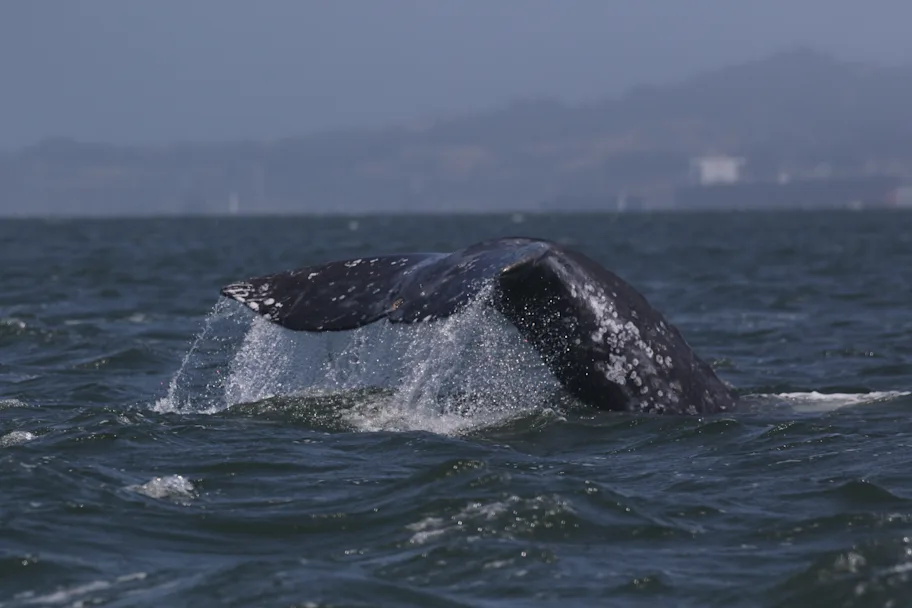
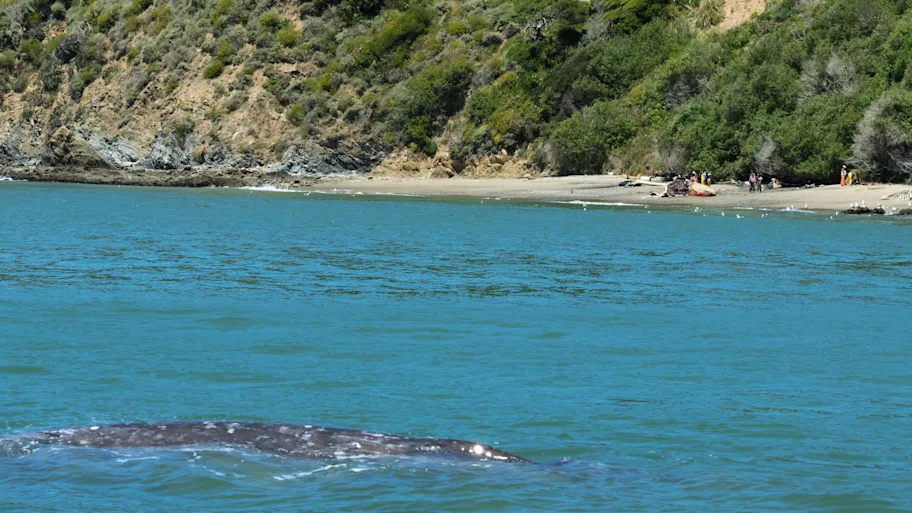
The fate of many gray whales venturing into San Francisco Bay is grim. From 2018 to 2025, 70 whales were discovered dead in the vicinity. Of these, 30 succumbed to vessel strikes, while others died from malnutrition. Scientists identified 21 deceased whales from their catalog of 45 potentially recognizable individuals.
Bekah Lane from the Center for Coastal Studies, a co-author of the study, stated, “At least 18% of the individuals identified in San Francisco Bay later died in the area.” She noted that over 40% of these deaths were due to vessel collisions.
Efforts to safeguard these whales are critical, especially given that in 2025 alone, 36 whales were recorded entering the Bay. Enhanced surveying and necropsy efforts could clarify whether starvation and ship strikes are interconnected, as starving whales may struggle to evade vessels.
Lane emphasized, “In San Francisco Bay, the biggest threat to these whales is vessel traffic.” She advocates for monitoring whale distribution and behavior to mitigate risks, suggesting that route adjustments and speed limitations could significantly reduce collision-related fatalities.
Slaathaug added, “This study is our best analysis of the data we collected, but it’s important to consider that we do not have the full picture of each whale’s movements on a daily timescale.” The findings contribute to understanding the broader challenges faced by gray whales amid climate change.
REPUBLISHING GUIDELINES: Open access and sharing research is part of Frontiers’ mission. Unless otherwise noted, you can republish articles posted in the Frontiers news site — as long as you include a link back to the original research. Selling the articles is not allowed.
Original Story at www.frontiersin.org