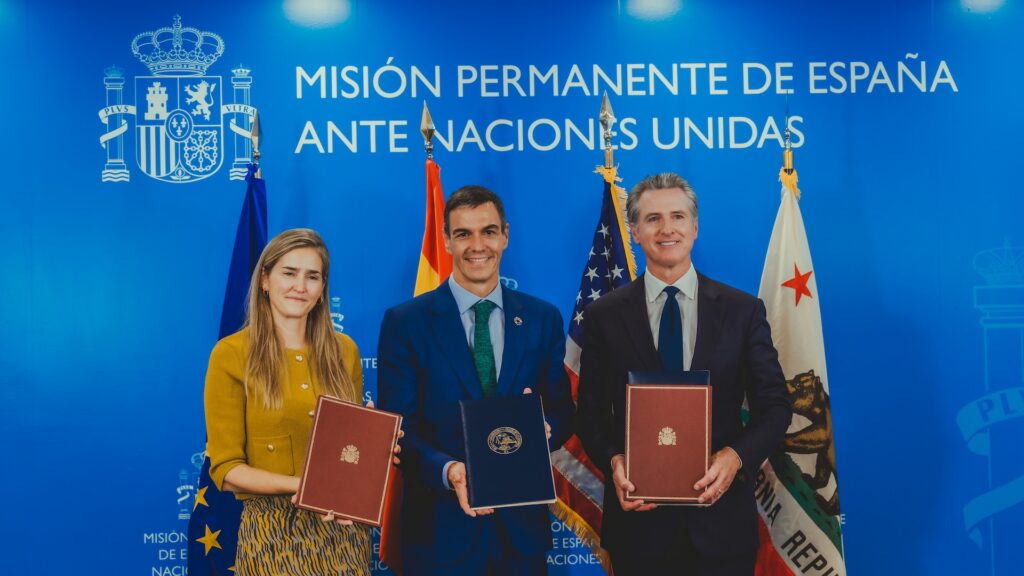
California’s Commitment to Sustainable Development
California continues to set a national example through its sustainable development initiatives and international climate partnerships. Governor Gavin Newsom and First Partner Jennifer Siebel Newsom recently underscored these efforts at the Alice Waters Institute’s event celebrating the Farm-to-School movement. This initiative connects students with healthy, locally-sourced meals while also supporting local agriculture and the regional economy.
Currently, nearly 3 million students benefit from California’s robust Farm to School programs. The program, a collaborative effort with the state legislature, received permanent funding through legislation signed by Governor Newsom. This ensures that schools continue to serve meals made with locally-grown ingredients.
Beyond providing nutritious meals, the Farm to School investments generate significant economic benefits. For every dollar invested, an estimated $2.01 is generated in economic activity, bolstering local food systems and supporting California farmers and producers.
California’s Role at Climate Week NYC
At Climate Week NYC, Governor Newsom showcased California’s achievements in reducing pollution while boosting economic growth. The event brought together global leaders from various sectors to discuss practical climate solutions.
Governor Newsom’s participation aimed to strengthen international collaborations and advance clean energy, zero-emission transportation, and climate resilience strategies. California’s leadership in these areas underscores its commitment to sustainable development and economic opportunity.
Forging Global Climate Partnerships
Under the Newsom administration, California has established over 70 international partnerships, focusing on climate action and economic growth. These collaborations prioritize sustainable development for workers and businesses.
-
United Kingdom (2026): In a joint effort to combat climate change, California and the United Kingdom signed a memorandum of understanding focusing on clean energy, climate resilience, and sustainable transportation.
-
Chile (2025): California’s collaboration with Chile aims to reduce methane emissions, a potent greenhouse gas, across waste, agriculture, and energy sectors. This partnership signed a memorandum of understanding to share best practices and information.
-
Colombia (2025): A partnership with Colombia emphasizes forest conservation, climate resilience, and clean energy development. The memorandum of understanding focuses on protecting the Amazon and enhancing biodiversity.
-
Nigeria (2025): Cooperation with Nigeria targets sustainable urban transportation and low-carbon fuels. The memorandum of understanding aims to accelerate the transition to zero-emission transportation.
-
Brazil (2025): California’s partnership with Brazil focuses on expanding clean transportation and air quality management, while also conserving lands and coastal waters by 2030.
-
Kenya (2025): The partnership with Kenya advances low-carbon development and trade, fostering sustainable land use policies. This historic partnership aims to reduce emissions and urban sprawl.
California’s Clean Energy Milestones
Since 2019, California has added over 37,000 megawatts of clean energy to its grid, with battery storage surging from under 700 MW to more than 21,000 MW. This progress supports the state’s goal of 100% clean electricity by 2045.
As of the end of 2024, 67% of California’s retail electricity sales were sourced from clean energy, with clean energy meeting the state’s needs for part of the day on 279 occasions. The trend continues in 2026, occurring on more than 90% of days in the first half of the year.
California leads the nation in clean energy employment, with 552,300 workers. The sector grew by 7,300 workers in 2024, outpacing overall state job growth by a factor of three, as reported by E2 in 2025.
Original Story at www.gov.ca.gov