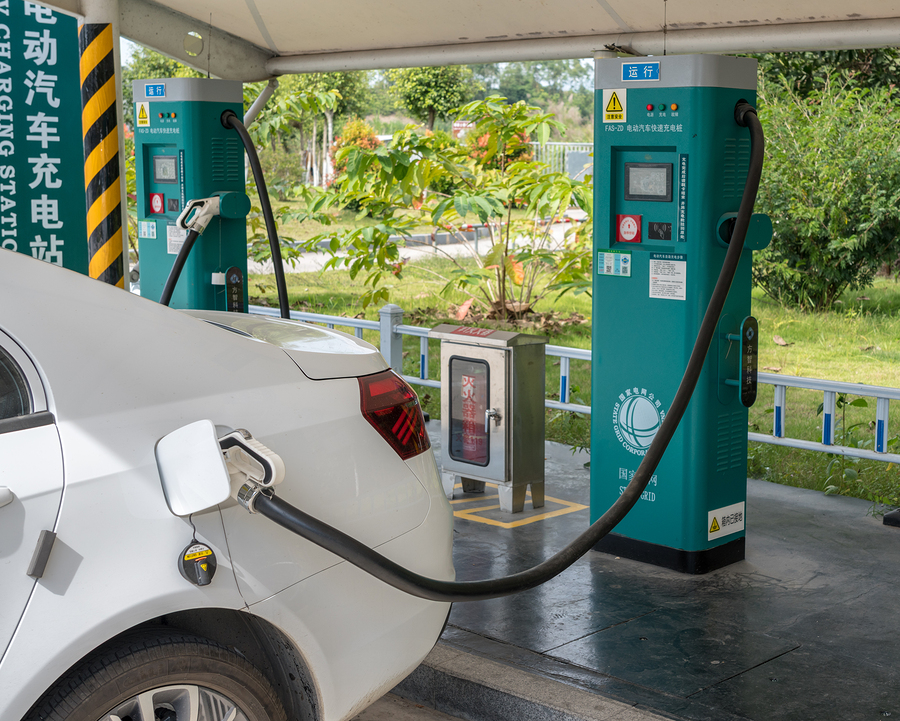
Worldwide Electric Vehicle Sales Surge in 2025 with Mixed Regional Outcomes
The global electric vehicle (EV) market experienced a substantial increase in 2025, with sales reaching 20.7 million units, marking a 20% growth from the previous year. This growth, however, showed significant regional variation, highlighting both thriving and struggling markets across the globe.
Europe’s Strong Performance
Europe emerged as the leader in EV sales growth, with a robust 33% increase in 2025. Germany and the UK were at the forefront of this expansion, with sales rising by 48% and 27%, respectively. This success in Europe was partly driven by the introduction of new consumer incentives and a shift in emissions compliance averaging over 2025-27. Despite this, France showed only a modest 2% growth, influenced by a delayed impact of subsidies later in the year. EV sales are anticipated to rise by 14% in 2026 as nations like France, Germany, and Sweden continue to offer targeted support to lower-income households.
China’s Leading Sales Volume
In terms of sheer volume, China remained the dominant player, with a 17% increase in EV sales. The Chinese government’s strong incentives and policies, such as purchase tax exemptions and production mandates, have significantly bolstered the market. Despite a domestic price war among manufacturers, China’s EV exports surged, with companies like BYD more than doubling their overseas sales. This expansion reflects China’s strategic push to capture international markets, with Chinese-produced EVs making up 19% of sales in Europe. In 2026, China’s EVs will face a 50% purchase tax, a change from the previous full exemption.
North America’s Mixed Results
In North America, the EV market experienced mixed outcomes. The United States saw a meager 1% growth in EV sales, largely due to the expiration of federal tax credits and policy shifts under President Trump. The removal of subsidies in Canada led to a dramatic 41% decrease in sales. Conversely, Mexico saw a 29% increase, attributed to low-cost imports from China. However, the imposition of a 50% tariff on Chinese EV imports in 2026 aims to protect the domestic market from influxes of foreign vehicles.
Expanding Markets in Southeast Asia and Beyond
Elsewhere, the EV market surged by 48% in 2025, with Southeast Asia nearly doubling its sales. This region averaged over 55,000 EVs sold monthly in the last quarter of 2025, compared to 32,000 in the previous year. South and Central America also witnessed a 49% rise in EV sales, with Chinese models dominating the market at a fraction of the cost of competitors like Tesla. This growth is supported by strategic partnerships between Chinese automakers and local importers.
Insights and Future Projections
The 2025 data underscores the pivotal role of subsidies in driving EV adoption globally. The removal of such incentives in certain regions has visibly impacted consumer behavior, highlighting the delicate balance between market forces and governmental intervention. As explained by Benchmark, “Consumer choices serve as signals to producers about what to supply. High demand for a product indicates its desirability, prompting businesses to produce more, while low demand can lead to reduced production and further innovation.” This dynamic will continue to shape the EV landscape in the coming years.
For inquiries, please contact [email protected].
Original Story at www.instituteforenergyresearch.org