Ford Steers Toward Affordable EVs With New Platform Despite Strategic Delays
In a significant shift within the automotive industry, Ford Motor Company is recalibrating its electric vehicle (EV) strategy by delaying several projects but maintaining a crucial initiative focused on affordability. This move comes as the company navigates the complex landscape of EV production and market demands.
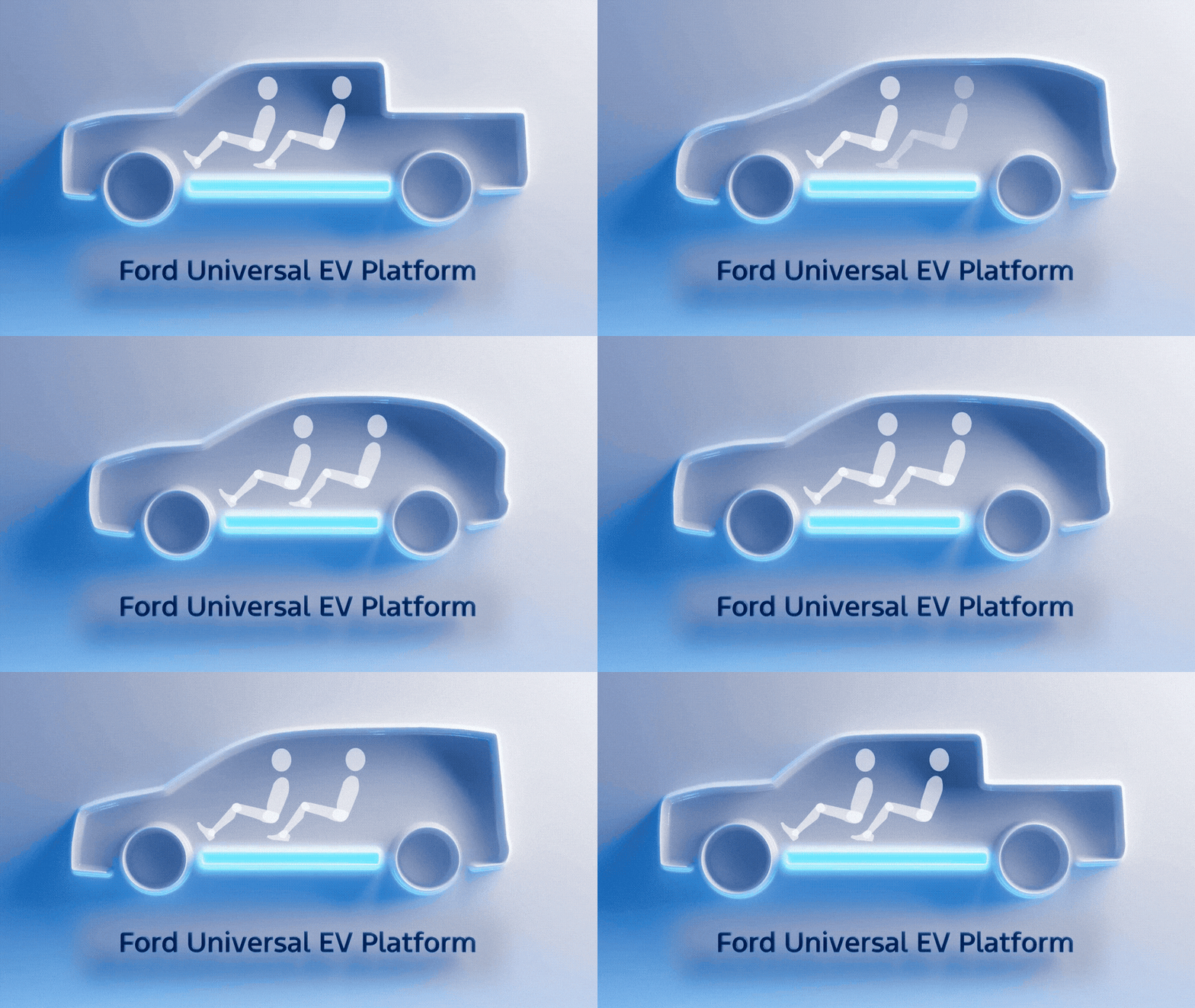
While Ford has shelved its plans for new battery manufacturing facilities and postponed or canceled various EV models, it continues to forge ahead with the development of a low-cost electric vehicle platform. This platform, termed the “Universal EV Platform,” is pivotal to Ford’s vision of producing a series of economically accessible electric models, starting with an innovative pickup truck slated for release next year.
The Universal EV Platform is engineered to support a wide range of future Ford electric vehicles, with a target price starting around $30,000. Designed for cost-effective production, this platform is intended to integrate with multiple vehicle types, enhancing Ford’s economies of scale.
The first vehicle from this platform will be a midsize electric pickup truck expected to launch in 2027. This truck is designed for aerodynamic efficiency, allowing for an extended range even with a smaller, more cost-effective battery. Ford has confirmed that this vehicle will feature two rows of seating and offer over 300 miles of range, priced at approximately $30,000.
This pickup will utilize lithium-iron phosphate (LFP) battery cells, which are known for their durability and lower initial costs compared to traditional lithium-ion batteries. Production of these LFP batteries is set to occur in Michigan.
Ford’s investment in launching the Universal EV Platform is substantial, with an estimated $5 billion allocated. This includes approximately $3 billion for a new battery plant in Michigan and $2 billion to renovate a Kentucky factory to produce the new EVs.
Although details are sparse regarding subsequent models, Ford intends to expand its lineup based on this platform, contingent on market developments. It is clear, however, that the forthcoming pickup is distinct from the next generation of the F-150 Lightning, which will be a more upscale option featuring an onboard generator.
The new pickup will not be a replacement for the Ranger or Maverick models but will represent a new addition to Ford’s EV lineup. As Ford continues to innovate within the EV sector, this strategic pivot aims to make electric vehicles more accessible to a broader audience, setting the stage for future developments in Ford’s electric portfolio.
Original Story at finance.yahoo.com