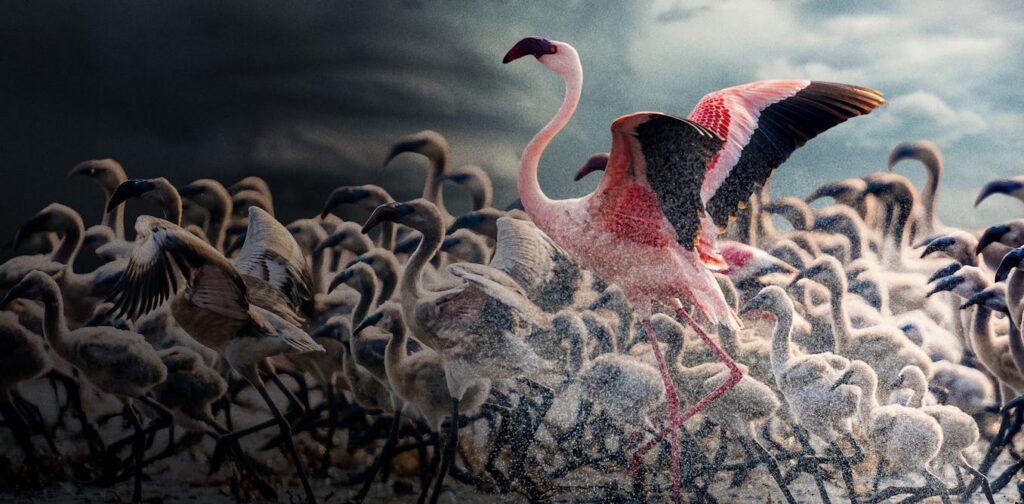
Imagine a world where wildlife grapples daily with the harsh realities of climate change. This is not a distant future but a present-day scenario highlighted in a captivating new documentary series. “Force of Nature,” airing on ITV, promises to bring audiences face-to-face with the ecological impact of extreme weather.
Extreme Weather: An Ecological Perspective
The series, narrated by actor Andrew Lincoln, shifts the narrative from human-centric stories of climate change to a broader ecological context. Produced by Plimsoll Productions, the creators of renowned wildlife documentaries, “Force of Nature” took three years to complete and is anticipated to be a pivotal series for climate awareness.
Mark Brownlow, executive producer and former producer of “Blue Planet II,” describes it as “the most important story of our time.” The series explores how animals worldwide confront hurricanes, floods, droughts, and wildfires, bringing the realities of climate change into vivid focus.
Science and Storytelling
Scientists have long studied weather extremes, but translating complex data into actionable understanding for the public has been challenging. The UK recorded temperatures exceeding 40°C for the first time in July 2022, illustrating the changing climate’s intensity. If the famous summer of 1976 were to occur today, temperatures would soar to 38 or 39°C, showcasing the warming trend.
Flash flooding, as evidenced by the deadly 2024 Valencia floods, is becoming more severe. Such events, including Valencia-style flooding, highlight the increasing frequency of extreme weather, now a genuine threat to places like Britain.
Vicente Sargues/Shutterstock
Visualizing the Invisible
Wildfire smoke, capable of traveling thousands of miles, turned UK skies vivid hues in 2023 due to Canadian wildfires. Such phenomena illustrate the global nature of environmental challenges, with smoke even affecting events like the World Cup final in New York.
While scientific data is crucial, compelling storytelling like that in “Force of Nature” helps make risks imaginable and relatable. As Dan and Chip Heath noted in their book Made to Stick, “people may need statistics, but they believe stories.”
Resilience and Hope
The series also emphasizes the resilience of wildlife. Animals adapt and improvise to survive, offering a powerful narrative against climate fatalism, which can be as detrimental as climate denial. By showcasing these stories, the series encourages hope and action over despair.
The UK’s infrastructure, designed for a bygone climate, needs urgent adaptation. Strengthening flood defenses, improving early warning systems, and reducing fossil fuel emissions are critical steps forward.

© ITV
The Power of Television
Television has previously shifted public discourse, much like the BBC’s “Blue Planet II” did for plastic pollution. ITV’s “Force of Nature,” supported by its climate content pledge, aims to do the same for the issue of extreme weather.
While a documentary cannot halt the progression of climate change, it can inspire the necessary actions to mitigate its effects. By making climate impacts tangible, “Force of Nature” urges viewers to recognize the immediate need to adapt and act.
Original Story at theconversation.com