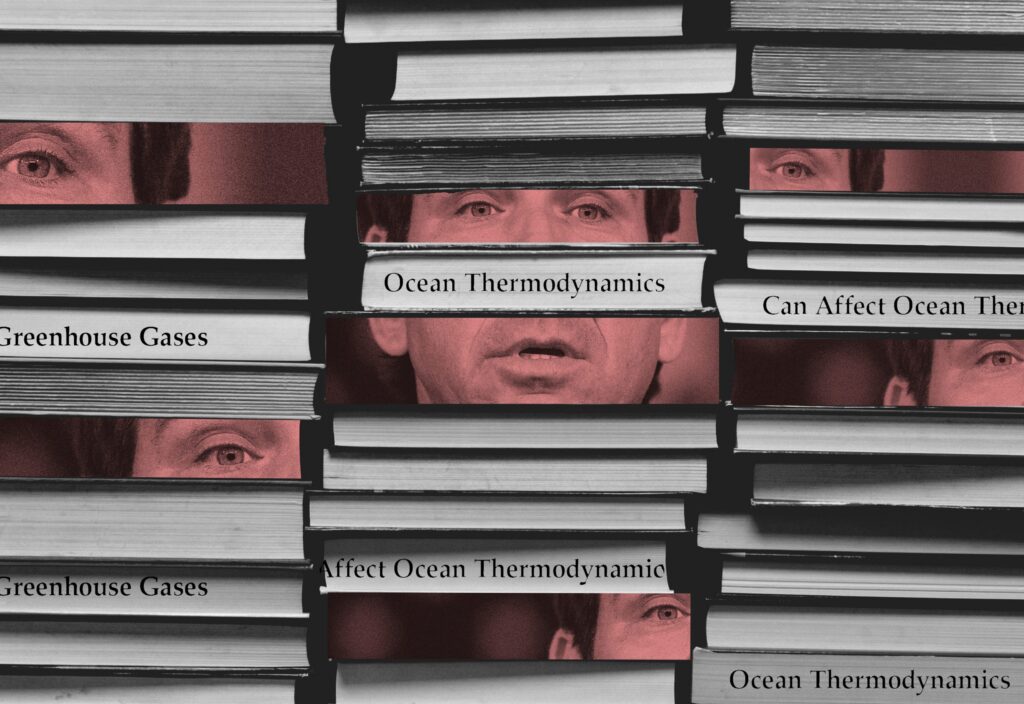
Florida’s Textbook Changes Spark Debate Over Climate Education
As Florida updates its educational materials, significant alterations in science textbooks have sparked a debate about the representation of climate change. These changes, requested by state education officials, have led to the removal or alteration of climate-related content, raising concerns among educators and scientists.
Instead of learning about the potential deaths linked to climate change, with estimates suggesting at least 150,000 casualties annually, Florida high school students are now taught that “human health will also be affected by the increase in CO2 and another 1 degree Celsius will further increase the impact.” This shift in narrative marks a departure from previous educational content.
In McGraw Hill’s Marine Science textbook, the term “climate change” was replaced with “changes in the environment,” while Cengage’s environmental science book omitted the term “polluting” from “coal burning power plants.” Additionally, the removal of references to University of Washington students supporting renewable energy fees highlights the extent of content modifications.
An investigation by WUSF and The Hechinger Report revealed that these changes were not required to align textbooks with state science standards. Glenn Branch, deputy director of the National Center for Science Education, commented, “Demanding that the treatment of climate change be weakened in these textbooks is very unusual.”
This development coincides with Florida’s first update of its science standards since 2008. The current standards mandate education on human-caused climate change in various high school electives. However, it remains uncertain whether the revised standards will continue to include climate education.
Governor Ron DeSantis has been vocal about removing climate change references from state statutes. This aligns with broader political trends in Florida, where recent legislation has impacted education policies, including diversity, equity, and inclusion initiatives, as well as discussions around systemic racism.
Amidst these political dynamics, science educators express concern about the implications for teaching climate change. Florida’s geographic vulnerability to climate change underscores the importance of informed education, yet teachers face a “culture of caution” when addressing controversial topics in classrooms.
Publishers such as Cengage and McGraw Hill have responded to the state’s requests by aligning content with local requirements while maintaining content integrity. However, some authors, like Michael Huber of McGraw Hill’s Marine Science, find the changes unsettling and believe they degrade the educational quality.
As the state moves forward with its textbook approval process, publishers have been given opportunities to revise and resubmit materials. Data analysis indicates that textbooks covering environmental science, earth science, and marine science were initially adopted at lower rates due to their climate content.
In Texas, similar debates have emerged, where the oil and gas industry influenced the removal of climate content from educational standards. Conversely, states like California and New Jersey are incorporating more climate education into their curricula.
The ongoing changes in Florida’s educational landscape reflect a broader national conversation about how climate change is taught in schools. Educators remain committed to teaching climate science, despite the challenges posed by evolving policies and public discourse.
Original Story at hechingerreport.org