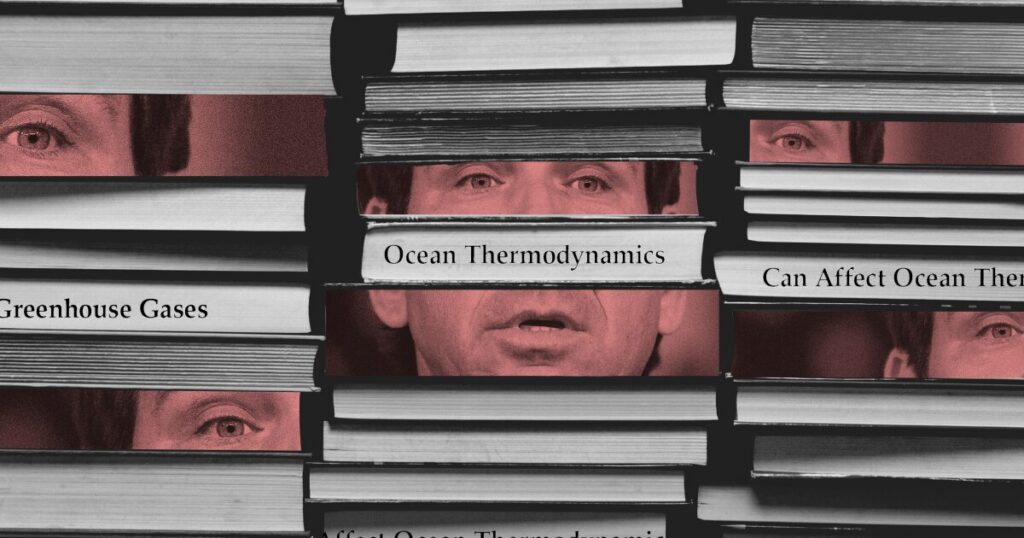
Florida’s Textbook Edits: Climate Change Narratives Altered
Recent changes to science textbooks in Florida have sparked debate over the portrayal of climate change in education. Had students accessed the original draft, they might have learned about significant research highlighting the deadly impact of climate change, which is estimated to claim 150,000 lives annually. Instead, the revised text mentions only that human health will be affected by increased CO2 levels.
In McGraw Hill’s Marine Science book, the term “climate change” was replaced with “changes in the environment.” Meanwhile, Cengage’s environmental science textbook removed “polluting” from descriptions of coal-burning power plants and cut references to renewable energy initiatives by University of Washington students.
Florida Department of Education
/
Courtesy
These modifications were requested by Florida education officials during the summer of 2024. Glenn Branch, Deputy Director of the National Center for Science Education, commented, “These are not changes that were required to bring the textbooks in line with the state science standards.”
RELATED: Climate change-fueled storms are affecting children’s learning
Florida’s science standards, last updated in 2008, require teaching human-caused climate change in certain high school electives. However, it is uncertain if the new standards will continue to include this topic. Education officials have not addressed inquiries regarding this issue.

Florida Department of Education
/
Courtesy
Amidst textbook revisions, Florida’s political climate also reflects a cautious approach to climate education. Governor Ron DeSantis officially removed climate change references from state statutes in May 2024. This follows a series of political moves affecting education, including bans on diversity, equity, and inclusion initiatives.
Florida’s geography makes it highly susceptible to climate impacts, with stronger storms and increased flooding events. A Central Florida middle school teacher expressed frustration, stating, “We’re in a state that is arguably the most affected by climate change, and will continue to be. And DeSantis is just pretending like it doesn’t exist.”

The changes in textbooks reflect a broader trend of political intervention in educational content, as seen in states like Texas and California. The adjustments in Florida’s textbooks might impact the nationwide portrayal of climate change, given publishers often tailor content for large states and distribute those editions widely.
Ken Miller, a professor emeritus of biology at Brown University, revealed that Florida education officials pressured publishers to modify climate change content. As reported by the Orlando Sentinel, Miller and his co-author were asked to remove “caused by human activity” from their textbook.
Michael Huber, an author of McGraw Hill’s Marine Science textbook, was unaware of the edits made to Florida’s edition. “It just degrades the book,” Huber said, expressing concern about the changes’ distortion of scientific messages.
As Florida undergoes a review of its science standards, educators and experts remain uncertain about the future inclusion of climate change education. The state’s updating process, which began in late 2024, is still ongoing, with stakeholders awaiting the final standards.
RELATED: The Escambia school board deposed students. Now it says its own members shouldn’t be deposed
Across the nation, the approach to climate education varies, with some states enhancing climate content while others face political challenges. The issue has parallels with the historical treatment of evolution in science education, marking climate change as another contentious topic in schools.
Original Story at www.wusf.org