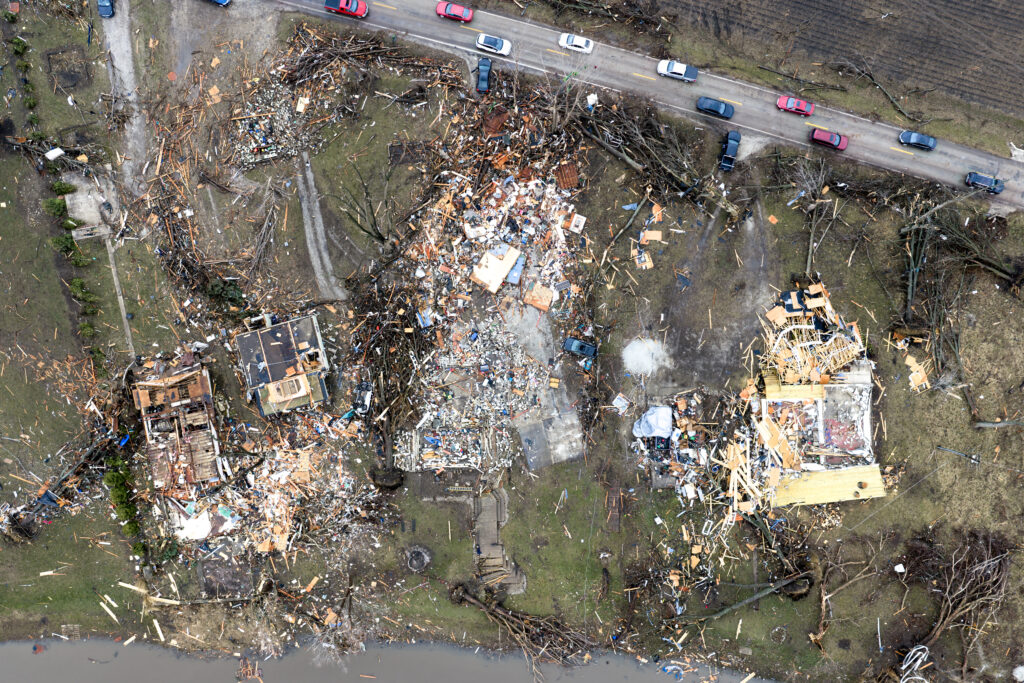
Across the United States, weather patterns have taken a dramatic turn, leaving residents grappling with a mix of heat waves, snowstorms, and severe thunderstorms. As the West endures the zenith of a historic heat wave, the Midwest is battered by hail and snowstorms, while the Southeast and East Coast brace for storms that threaten floods and wind damage.
The threat of tornadoes looms in several regions, particularly in the Midwest, Southeast, and along the East Coast. Recent tornadoes have caused multiple fatalities, with warnings stretching as far north as New Jersey. This shift in tornado activity, observed by scientists, indicates a rising frequency in the Northeast, Southeast, and Midwest, while traditional tornado-prone areas like Texas, Oklahoma, and Colorado are witnessing a decrease in conducive atmospheric conditions. Climate change is suspected to influence this trend, although the connection remains complex, as noted in previous reports.
Unpredictable Tornado Patterns
March heralds the onset of the severe weather season in the U.S., a time when atmospheric conditions align to create storms. Moisture, instability, lift, and wind shear combine to foster tornado-producing thunderstorms. Despite their rarity, the U.S. experiences about 1,000 tornadoes annually, with some proving extremely destructive. This year alone, over 75 tornadoes have been recorded, including deadly ones in Southwest Michigan.
The climate change-tornado link remains elusive. Meteorologist Bob Henson noted in his 2021 article that each tornado’s localized nature complicates direct ties to global climate trends. Yet, more data from storm chasers and social media suggest that tornado occurrences are becoming more concentrated, shifting from spring and summer to fall and winter. A groundbreaking 2018 study pointed to an eastward movement, indicating a modest yet significant increase in tornado conditions.
Stephen Strader, an atmospheric scientist at Villanova University, emphasizes that even a small increase in tornado activity in densely populated areas like the Southeast could have dire effects. Many homes in this region are manufactured and particularly susceptible to tornado damage, increasing the risk of fatalities compared to sturdier site-built houses.
Hail: A Costly Consequence
Severe convective storms also bring hail, known for its substantial financial impact. In 2023, U.S. hailstorms incurred $46 billion in damages, surpassing tornado-related costs. Research indicates that global warming may be increasing the likelihood of large, destructive hail. Notably, recent supercell storms in Indiana and Illinois produced a record-setting hailstone in Illinois, measuring 7.125 inches across.
While the science of climate attribution progresses slowly, Strader advises patience, acknowledging the complexities involved. “We know there’s going to be more storms and more severe weather,” he said. “The question is, is it going to be more hail? Wind? Tornadoes? Where? When?” The answers remain uncertain, with significant error margins that pose communication challenges.
More Top Climate News
With global temperatures on the rise, a new study suggests a decline in outdoor physical activity, potentially increasing health risks such as heart disease and cancer. This research, reported by The Guardian, predicts a 1.5 percentage point increase in physical inactivity worldwide for each additional month with average temperatures above 82°F by 2050.
Meanwhile, Scientific American reports on the rise of algal blooms in mountain lakes, driven by climate change and pollution. These blooms threaten alpine ecosystems and water supplies globally.
Finally, Grist highlights a nearly 40% decline in climate change news coverage since 2021, attributing it to competing news stories. This drop could hinder climate awareness and policy efforts, according to experts.
Postcard From … New Hampshire
Reflecting on a summer hike in New Hampshire, the author recalls spotting bobcat kittens during a trek, marking a memorable nature encounter. As warmer weather approaches, readers are invited to share their own nature photos from any setting, contributing to a collective appreciation of changing seasons.
Original Story at insideclimatenews.org