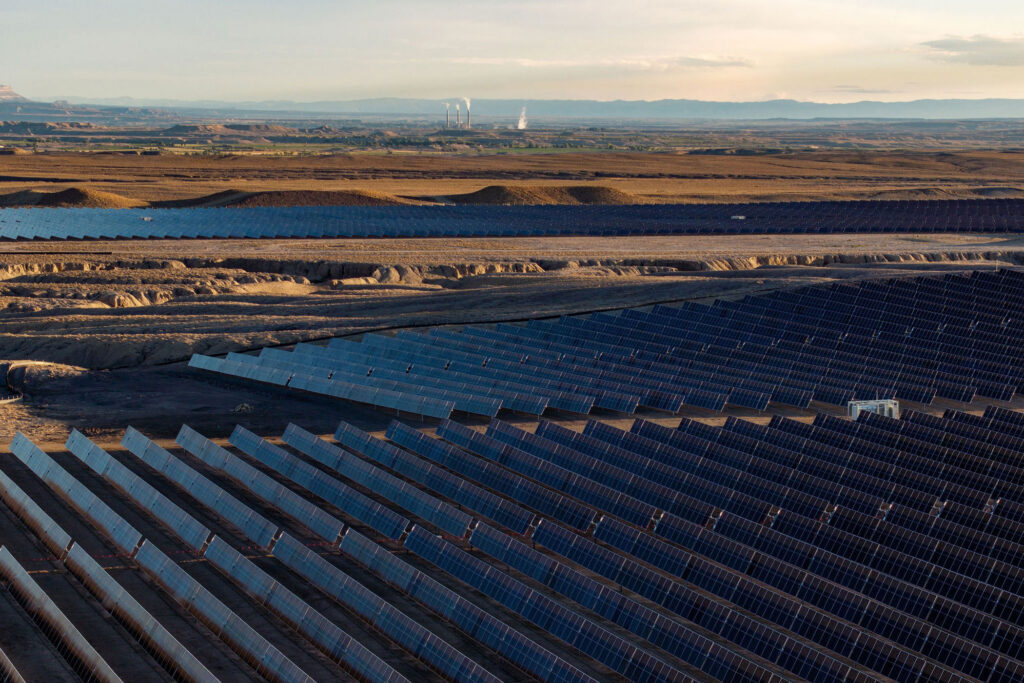
The first half of 2026 has seen significant developments in the U.S. power sector, with the launch of major natural gas plants and much-anticipated renewable energy projects. According to U.S. Energy Information Administration data, 368 utility-scale plants began operation from January to June, predominantly utility-scale solar.
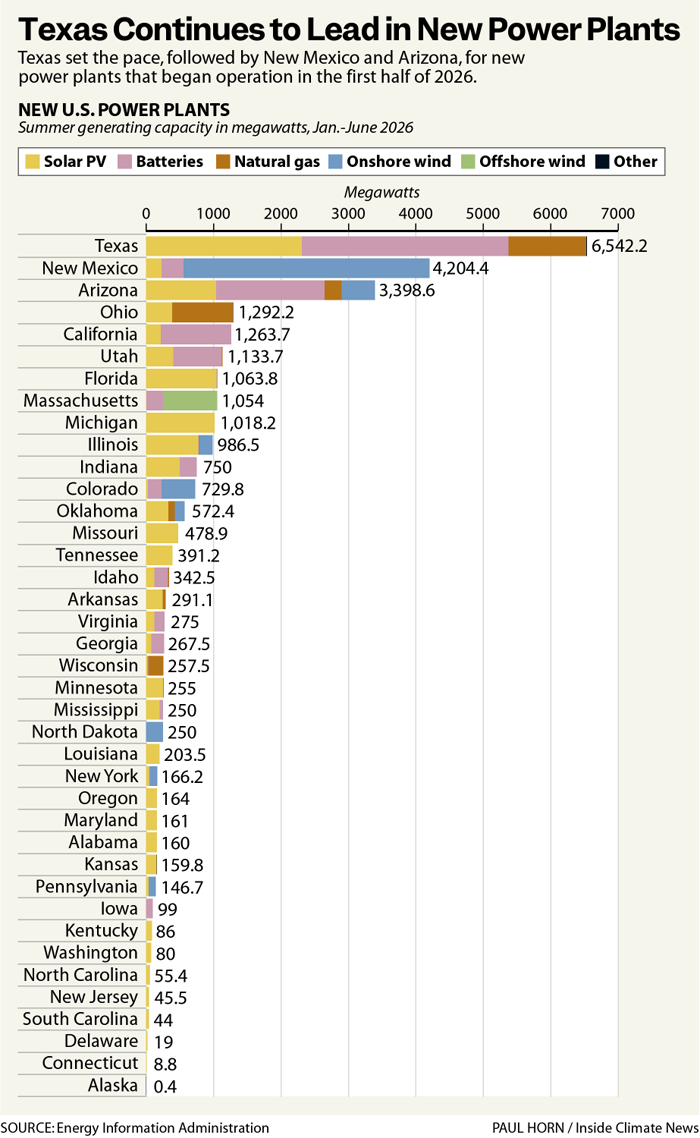
The list is led by SunZia Wind South and SunZia Wind North in New Mexico, the largest wind farms in the U.S. with a combined capacity of 3,650 megawatts. This project has been in development for nearly a decade and comes at a time when onshore wind power growth has slowed due to regulatory and public perception challenges.
Following SunZia, the Trumbull Energy Center in Ohio is a 900-megawatt natural gas plant in the PJM Interconnection grid region.
The offshore wind project near Massachusetts, Vineyard Wind, is another major development, although its completion does not significantly indicate future trends.
In line with broader trends is the Green River Energy Center in Utah, featuring 800 megawatts split evenly between solar and batteries. This highlights the continued focus on utility-scale solar and battery projects, which saw 207 and 95 projects, respectively, come online in the same period.
Natural gas plants, including combustion turbines and internal combustion engines, also saw 43 new projects. Onshore wind added nine, while combined-cycle natural gas had three, with more developments expected in the coming years.
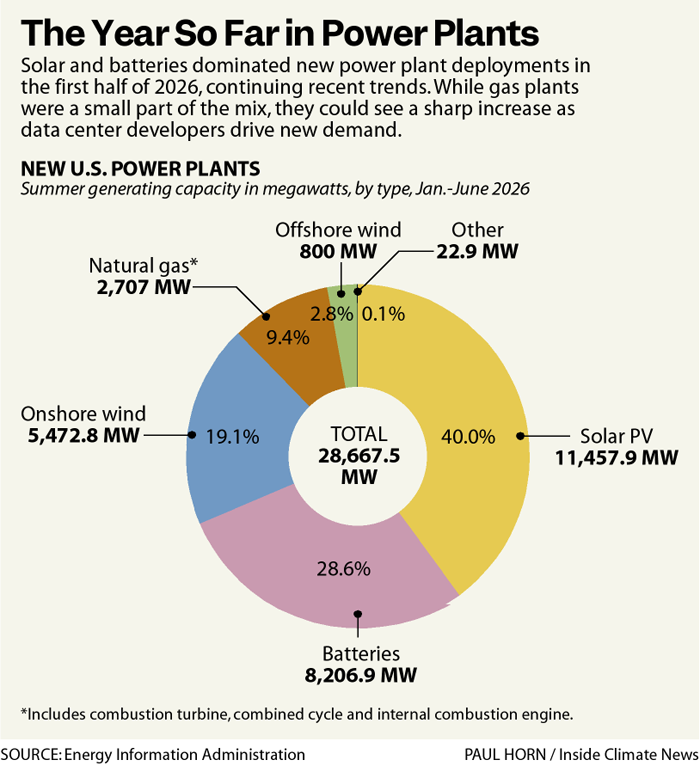
In terms of generating capacity, utility-scale solar led with 11,458 megawatts, followed by batteries at 8,207 megawatts, and onshore wind, largely due to SunZia, at 5,473 megawatts. New natural gas plants contributed 2,707 megawatts in total.
Eric Gimon of Energy Innovation notes that most new projects are small to mid-sized utility-scale solar, often paired with batteries. “These smaller projects are easier to build, with more diverse site possibilities,” he said.
Geographically, Texas, New Mexico, and Arizona accounted for nearly half of the new generating capacity. Texas led with a mix focusing on batteries and gas, driven by state policies to support grid reliability.
Illinois led in the number of new utility-scale solar projects, driven by state laws promoting small and medium-sized solar.
- A new 4-megawatt hydropower project in Minnesota and a 2.8-megawatt biomass plant in Ohio illustrate diverse developments.
Looking forward, the Energy Information Administration expects the solar expansion to persist, with a surge in natural gas plants anticipated later this decade.
For more energy transition stories, see: New Solar Tariffs Explained, Sunrun’s Market Challenges, and Amazon’s Texas Gas Plant Plans.
Original Story at insideclimatenews.org