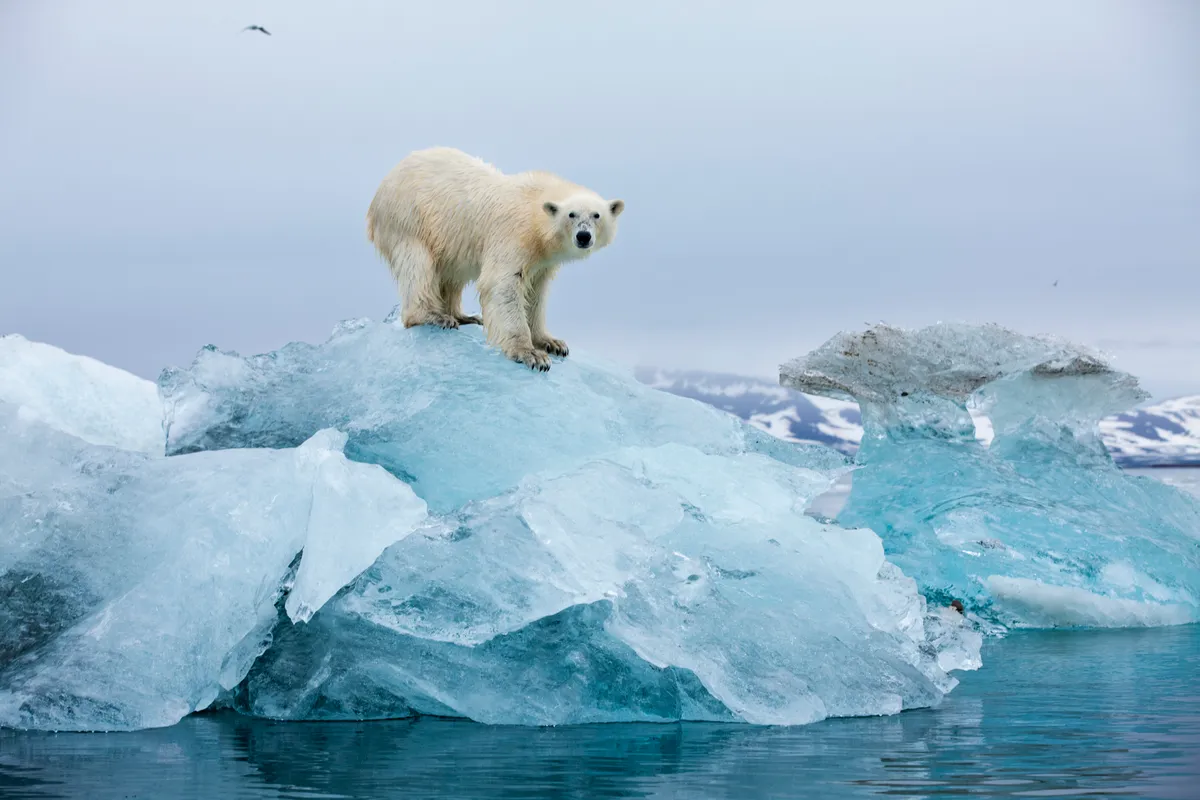
Known for their majestic presence and striking appearance, polar bears have become symbols of the Arctic. These creatures are frequently depicted in wildlife documentaries and children’s literature. They also feature prominently in discussions about the impact of climate change on vulnerable species, relying heavily on the rapidly diminishing sea ice.
As the world’s largest bear species and land carnivores, polar bears primarily hunt seals, such as the bearded and ringed varieties. Occasionally, they may attempt to catch walruses and are known to scavenge on whale carcasses or rummage through human settlements’ garbage.
Alternative Names for Polar Bears
In various cultures, polar bears are given unique names reflecting their stature and environment. The Inuit of the Canadian Arctic refer to them as nanuq, meaning a creature of great respect. The Russian term is beliy medved, translating to white bear, while in Norway and Denmark, they are known as isbjorn, or ice bear.
Hybridization with Brown Bears
Polar bears can interbreed with grizzly bears, a subspecies of brown bears. These hybrids are commonly known as ‘pizzly bears’.
Polar Bear Coloration
While polar bears appear white, their skin is actually black. The bear’s fur is translucent and hollow, which reflects visible light, providing effective camouflage in their snowy and icy habitat.
Habitat and Distribution
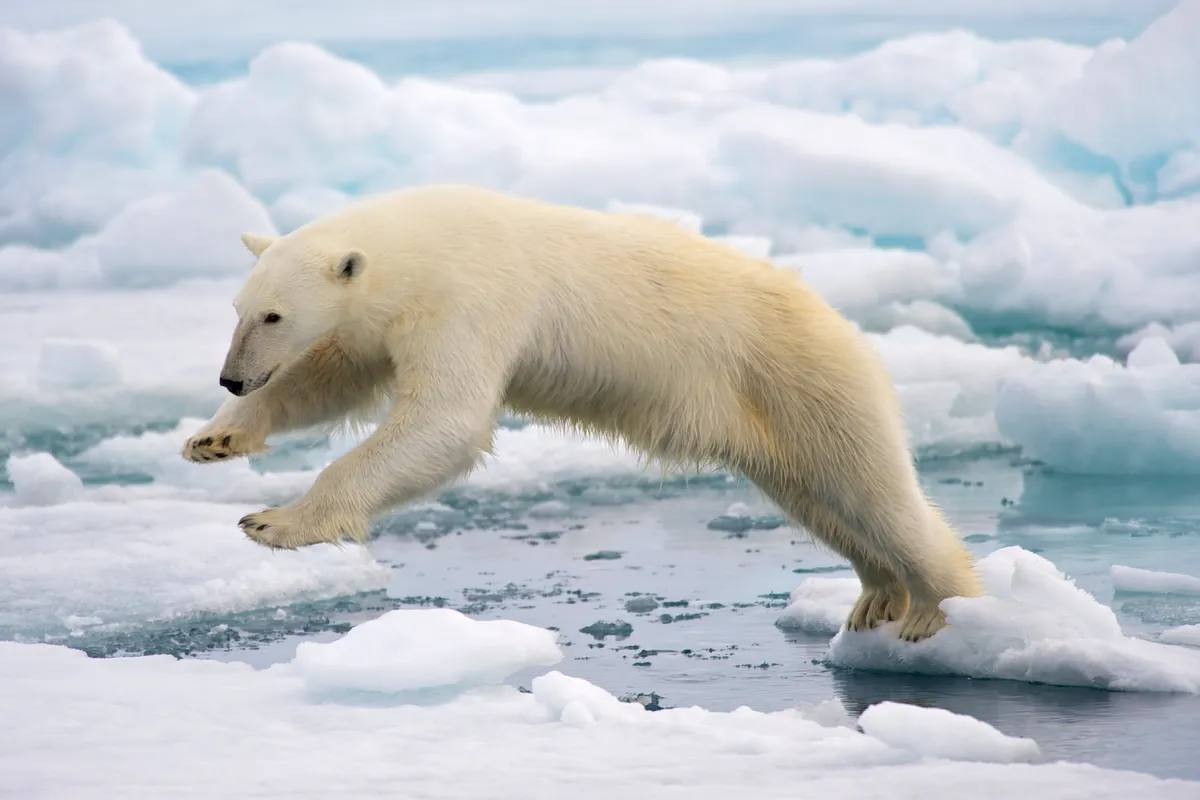
Polar bears predominantly inhabit circumpolar regions, specifically in Canada, Norway, Greenland, and Russia. Occasionally, they are spotted further south in James Bay, Canada. There are 19 recognized polar bear subpopulations distributed across the Arctic.
Polar Bears in Antarctica?
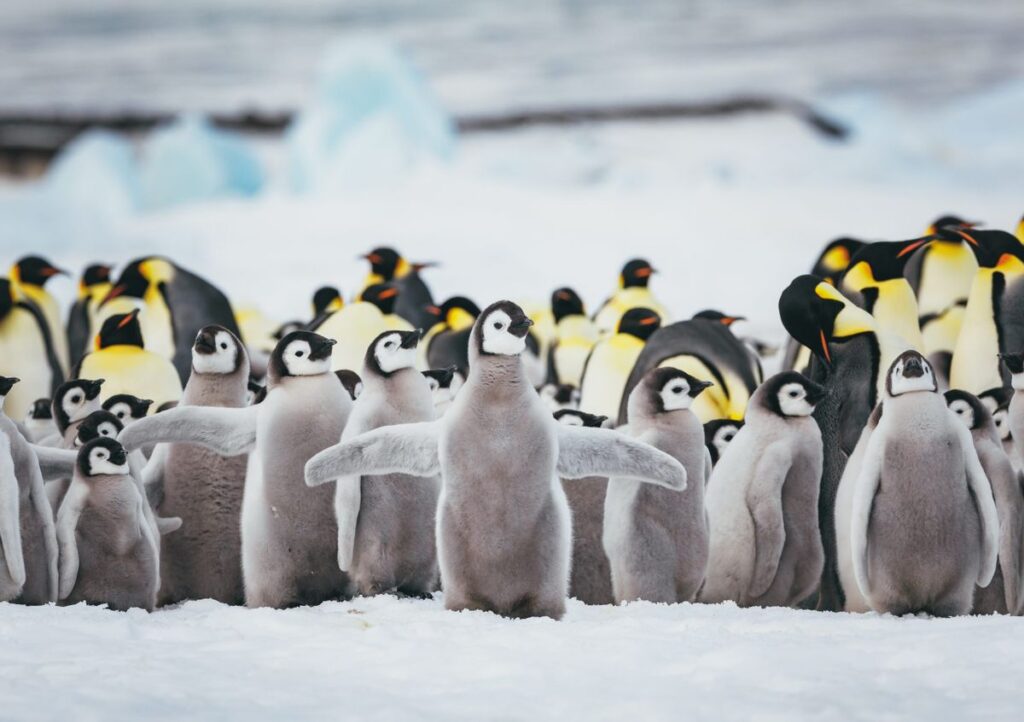
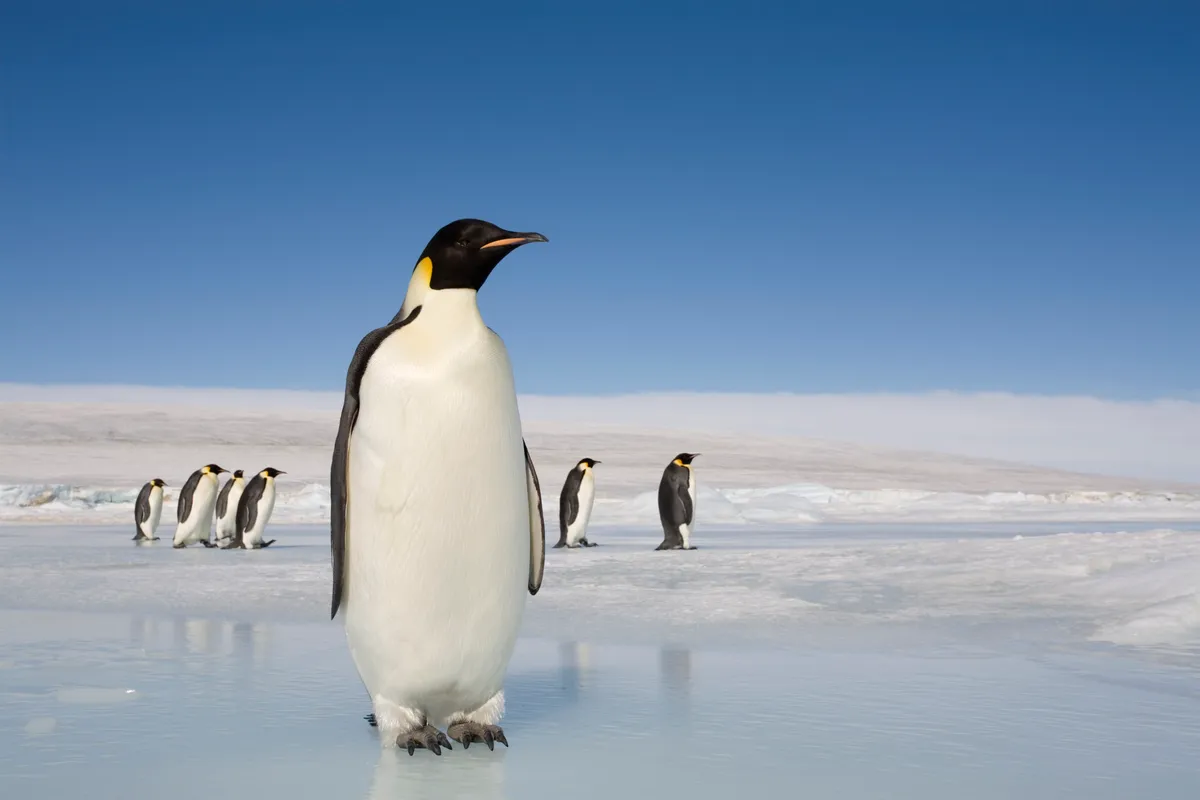
There’s a common misconception of polar bears coexisting with penguins, which is geographically inaccurate. Despite the idea of relocating polar bears to Antarctica due to shrinking Arctic sea ice, the implications for local wildlife would be catastrophic. The Antarctic ecosystem, with its array of seals and flightless penguins, evolved without terrestrial predators like polar bears.
Size and Physical Attributes
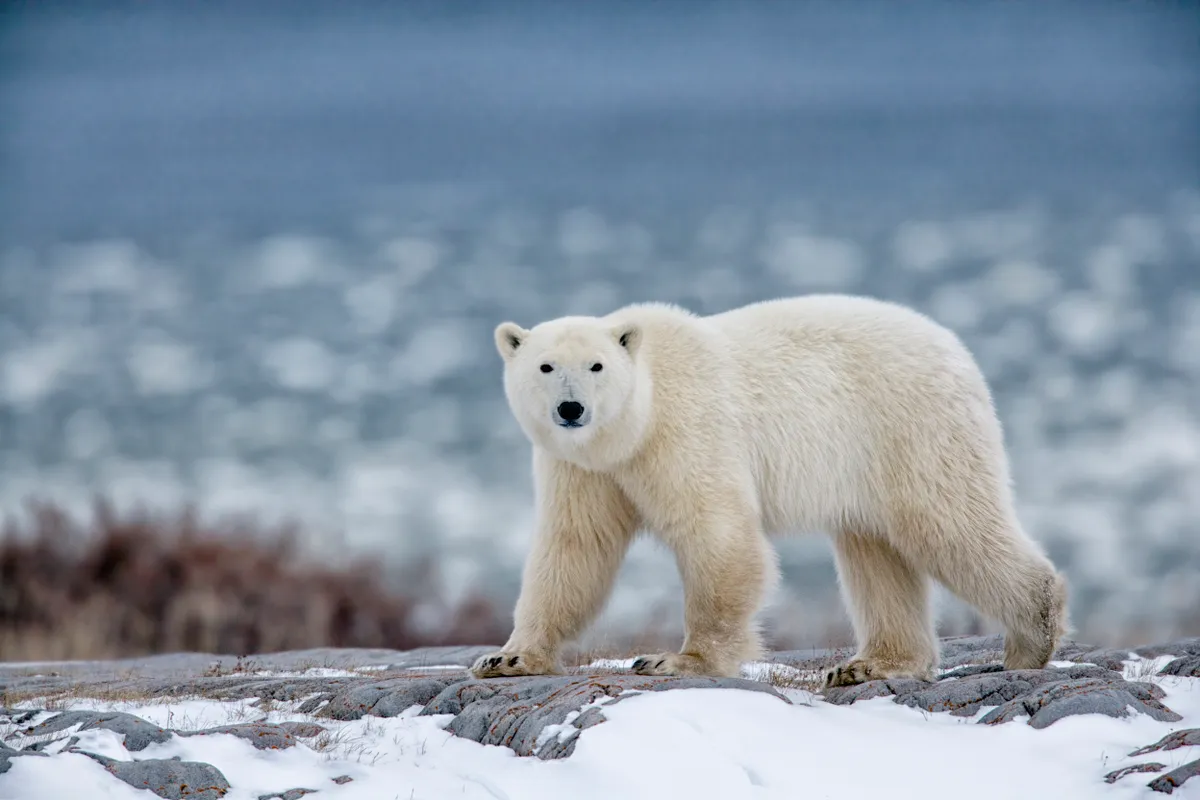
The polar bear is the largest land carnivore, with males weighing between 390kg to over 590kg and females between 152kg to 295kg. These bears can measure up to 3 meters in length.
Swimming Capabilities
Polar bears are adept swimmers, covering long distances between sea ice. They can swim at speeds up to 6 mph, using their front paws as paddles and their hind legs as rudders.
Dietary Preferences
Ringed and bearded seals form the bulk of the polar bear diet. They also scavenge on whale carcasses and, near human settlements, on garbage. A polar bear can consume 45kg of blubber in one sitting but can lower its metabolism when food is scarce.
Hunting Techniques
Polar bears have an extraordinary sense of smell, detecting prey nearly a kilometer away and under compacted snow. They often wait by seal breathing holes to ambush seals when they surface. However, only 2% of their hunts are successful.
Human Interactions
Unlike other bears, polar bears see humans as prey, not threats. With a powerful bite force and sharp teeth, they are formidable predators. Attacks are rare due to their remote habitat, but as climate change drives them closer to human areas, incidents may increase.
Polar Bear Territories
Instead of territories, polar bears have overlapping home ranges on the ever-changing Arctic sea ice.
Adaptations for Ice
Polar bears have non-retractable claws and paw pads with papillae, providing traction on ice. Their large paws, up to 30cm across, help distribute weight on thin ice.
Lifespan and Reproduction
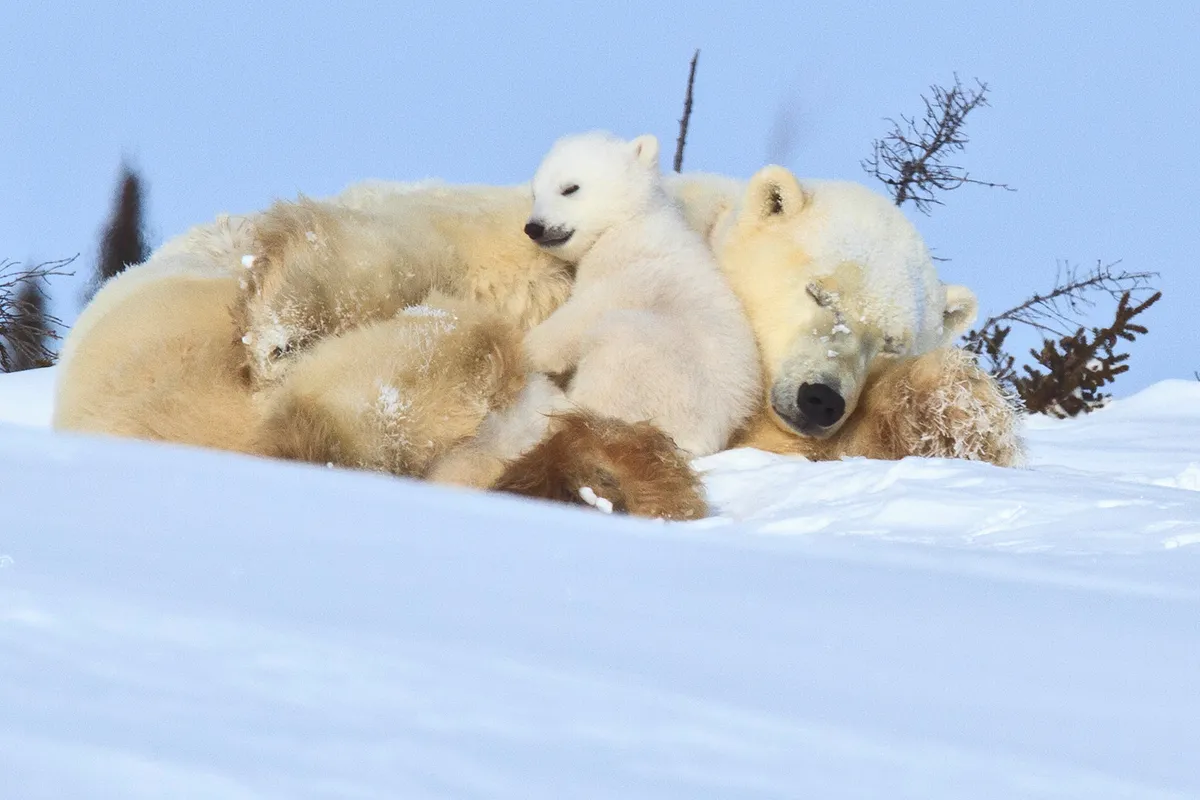
In the wild, polar bears can live 25 to 30 years. Females typically give birth to twins, which weigh about half a kilogram each. The cubs stay with their mother for two years.
Conservation Status
Polar bears are classified as Vulnerable due to climate change-induced sea ice loss. They also face risks from habitat destruction and pollution.
Evolutionary Background
Polar bears likely evolved from brown bears around 600,000 years ago, adapting to the Arctic environment. Genetic evidence shows a close relation between polar and some brown bear populations.
International Polar Bear Day
Celebrated annually on February 27, International Polar Bear Day raises awareness about the conservation challenges facing these magnificent creatures.
Scientific Classification
The polar bear, or Ursus maritimus, is the only marine mammal among the bear family, which includes eight species.
- Polar bear (Ursus maritimus)
- American black bear (U. americanus)
- Asian black bear (U. thibetanus)
- Brown bear (U. arctos)
- Giant panda (Ailuropoda melanoleuca)
- Spectacled bear (Tremarctos ornatus)
- Sun bear (Helarctos malayanus)
- Sloth bear (Melursus ursinus)
Main image: Polar bear with twin cubs, in Hudson Bay, Manitoba, Canada. © Johnny Johnson/Getty
Original Story at www.discoverwildlife.com