Exploring New Avenues for Highway Funding as Gas Tax Revenues Decline
As the shift toward fuel-efficient and electric vehicles accelerates, traditional gas tax revenues that have long funded road infrastructure are dwindling. This financial squeeze has prompted states and the federal government to seek alternative funding strategies. Among these strategies, leveraging the value of land near highways is emerging as a viable solution.
Historically, the federal government has financed road construction and maintenance primarily through gasoline taxes, contributing approximately 70 percent of the Highway Trust Fund. However, with the increasing popularity of electric vehicles and more fuel-efficient cars, gasoline consumption has decreased, leading to significant funding shortfalls.
According to the Pew Research Center, the backlog for road maintenance across 24 states has soared to over $86 billion since 2015. Furthermore, the Tax Foundation noted that from 1977 to 2022, the real highway revenue per vehicle mile driven plummeted by 52.7 percent.
As gas tax revenues prove inadequate, the concept of selling or leasing state and federal lands near highways offers a potential remedy. This approach is inspired by the successful “rail-plus-property” model in Hong Kong, where real estate profits are used to subsidize transit operations.
The appeal of land near highways is particularly high for e-commerce distribution hubs and data centers. As online retail sales increase, so does the need for distribution warehouse space, with each $1 billion in sales requiring 1.25 million square feet of warehouse space, according to Global Capital Funding. Similarly, the demand for data centers has risen with advancements in AI-driven computing, as explored by the Department of Energy on federal land parcels.
Although concerns around noise, traffic, and environmental impacts exist, strategic planning could mitigate these issues by directing developments to less populated suburban or rural highway corridors. Texas’s implementation of “transportation reinvestment zones” offers a precedent, using incremental tax revenues from highway-adjacent developments to fund transportation projects.
On the federal level, the opportunity is even broader, with the government owning over 615 million acres of land. Potential sites for development include underutilized federal transportation rights-of-way and excess military buffer lands, barring any conservation lands or ecologically sensitive areas.
In conclusion, the decline in gas tax revenues necessitates innovative approaches to highway funding. By capitalizing on the value of land near highways, governments can bridge the financial gaps and align road investment more closely with actual demand, ensuring sustainable infrastructure development for the future.
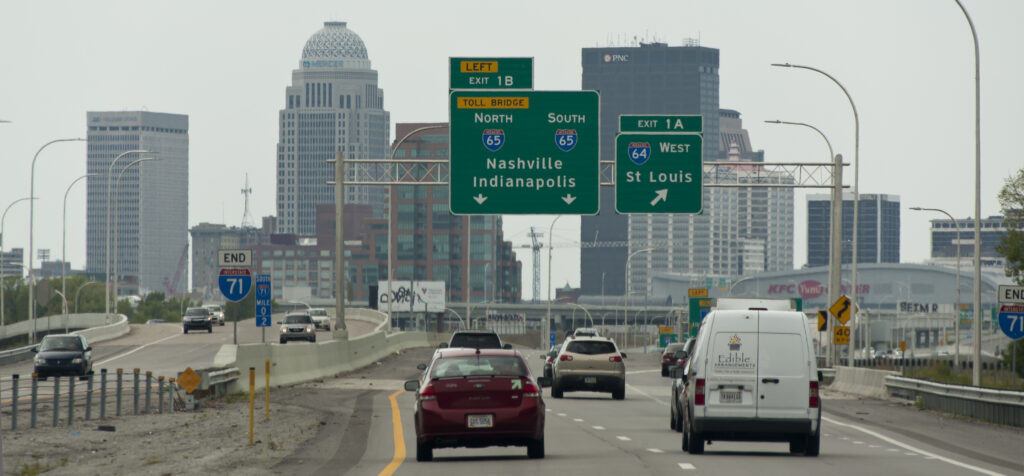
Cover image use authorized under the Creative Commons Attribution-ShareAlike 4.0 license.
Original Story at www.independent.org