As the automotive industry shifts gears toward a more sustainable future, electric vehicles (EVs) are gaining traction, gradually replacing their gas-guzzling predecessors. While these vehicles are not without their challenges, such as limited range and hefty batteries, they offer numerous advantages, including improved fuel efficiency, quieter operation, and potential cost savings over time.
The journey toward widespread EV adoption has been long, and many models have come and gone, leaving an indelible mark on the industry’s evolution. Here, we revisit some of the electric vehicles that once roamed the U.S. roads but are no longer in production.
Tesla Roadster
In 2008, Tesla’s Roadster emerged as a trailblazer in the electric car arena, showcasing the potential of all-electric vehicles with its sleek design and impressive performance. Despite its groundbreaking status, the Roadster was discontinued in 2012 due to regulatory challenges related to airbags. Tesla, however, left a legacy by sharing some of the Roadster’s design elements with other EV manufacturers. Although a second-generation Roadster was announced in 2017, its release remains uncertain.
Volkswagen E-Golf
Volkswagen’s E-Golf, the electric variant of the iconic Golf, was introduced in 2014 and discontinued in 2020, making way for the automaker’s new ID series. This transition reflects a broader trend toward developing EVs with distinct designs rather than adapting existing models. The E-Golf’s departure from production may not be permanent, as the future could see its return.
Smart Fortwo ED
The Smart Fortwo ED, a compact and fuel-efficient microcar, was discontinued in the U.S. in 2019, following the end of its gas-powered sibling’s production in 2017. Despite its appeal for maneuverability and urban driving, the Fortwo struggled to capture the American market’s attention, where larger vehicles often prevail. Mercedes-Benz continues to offer other electric options, like the EQB, catering to different consumer needs.
BMW i3
Introduced in 2013, the BMW i3 was the company’s first “zero emissions” vehicle, playing a crucial role in promoting electric cars. Despite its limited range and unconventional design, the i3 sold approximately 50,000 units in the U.S. over a decade. BMW now focuses on integrating electric technology into existing models to foster brand loyalty among its customers.
Chevrolet S-10 EV
Chevrolet’s venture into electric pickups began with the S-10 EV in 1996, a prototype with a limited range of under 50 miles. Though few units were produced, the S-10 paved the way for future electric trucks, such as the Chevrolet Silverado EV, which boasts a range of over 400 miles, reaffirming the potential of electric power in larger vehicles.
Fiat 500e
Drawing parallels with the Smart Fortwo, the Fiat 500e struggled to gain traction among American consumers. Launched in 2013, the 500e was sold at a loss to comply with state regulations. Although it was discontinued in 2019, a reimagined version hit the European market and returned to the U.S. in limited numbers in 2024.
Ford Focus Electric
The Ford Focus Electric, introduced in 2011, mirrored its gas-powered counterpart in appearance but featured a battery-powered engine. Despite its discontinuation in 2018, the model received accolades for its fuel efficiency. With Ford’s strategic pivot toward electric vehicles, the legacy of the Focus Electric may inform future developments in the EV sector.
Honda Fit EV
The Honda Fit EV, a lease-only subcompact with a modest range, was produced between 2012 and 2014. Its limited availability and range hindered its success. As EV technology advances, the industry faces the challenge of training mechanics to handle battery repairs, a crucial step in supporting the widespread adoption of electric cars.
Coda EV
The Coda EV, developed by a now-defunct startup, aimed to make a splash in the electric car market but faltered due to its lackluster design and high price point. Despite selling only 117 units before filing for bankruptcy, the Coda serves as a reminder of the challenges faced by early EV pioneers.
Ford Ranger EV
Following the Chevrolet S-10 EV, the Ford Ranger EV debuted in 1998 as an experimental electric pickup truck. Mostly leased rather than sold, the Ranger EV was discontinued in 2002. Its legacy lies in demonstrating the viability of electric trucks, paving the way for future innovations in the segment.
Honda Clarity Electric
The Honda Clarity series experimented with various alternative fuel sources, including the Clarity Electric, which was discontinued in 2020. Consumers have shown a preference for hybrids, which offer greater versatility than fully electric vehicles, highlighting the ongoing evolution of consumer preferences in the EV market.
Toyota RAV4 EV
The Toyota RAV4 EV saw two iterations, first in 1997 and again in 2012, the latter developed with Tesla’s collaboration. Despite technological advancements, the model was discontinued in 2014. Toyota has since shifted focus to hybrid models, balancing electric and gasoline power for enhanced versatility.
GM EV-1
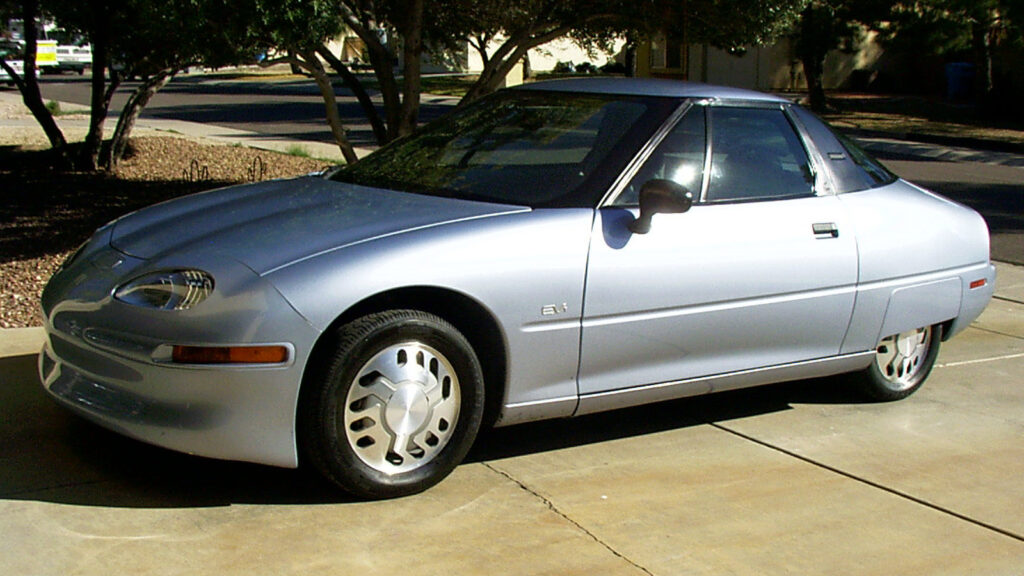
The GM EV-1 is often hailed as a pioneering electric vehicle, despite its limited market impact due to infrastructure challenges at the time. The vehicle faced opposition from interests opposing alternative fuels, but its legacy endures as an early influence on the growing acceptance of electric cars.
Original Story at www.slashgear.com