
Last March, Venezuela’s main opposition leaders sent a video message to Houston, targeting one of the largest annual global energy meetings.
“Venezuela represents the greatest untapped opportunity in the world,” stated Edmundo González Urrutia, regarded by many as the legitimate winner of the disputed 2024 presidential election. His running mate, María Corina Machado, assured attendees of S&P Global’s CERAWeek of a forthcoming “successful, secure and open society” in the nation with the largest petroleum reserves.
It’s uncertain if the video increased investment interest in Venezuela, given the billions still owed to energy companies disrupted by the country’s political upheaval. González was in Spain, and Machado, who later won the Nobel Peace Prize, was secluded in Venezuela, both facing arrest threats from President Nicolás Maduro’s government.
However, the oil industry soon heard the same message from a different source. As reported by POLITICO, the Trump administration invited ExxonMobil and ConocoPhillips executives to Washington in November to discuss returning to Venezuela post-Maduro. Sources indicated the companies were unenthusiastic due to Venezuela’s unstable history and more secure market opportunities elsewhere.
This backdrop provides context for Trump’s assurances post-Maduro’s capture on Jan. 3, promising an oil-driven economic revival. Critics view this as a boon to the industry supporting Trump’s presidency, though experts argue the perception of Venezuela as a lucrative opportunity is overstated.
Trump “seems to think he can just open the country and companies will rush back,” said Samantha Gross of the Brookings Institution’s Energy Security and Climate Initiative. “There’s no resource risk, but political and financial risks are significant.”
On Wednesday, reports surfaced that Trump will meet major oil executives at the White House to discuss Venezuela.
Billions Needed Over Many Years
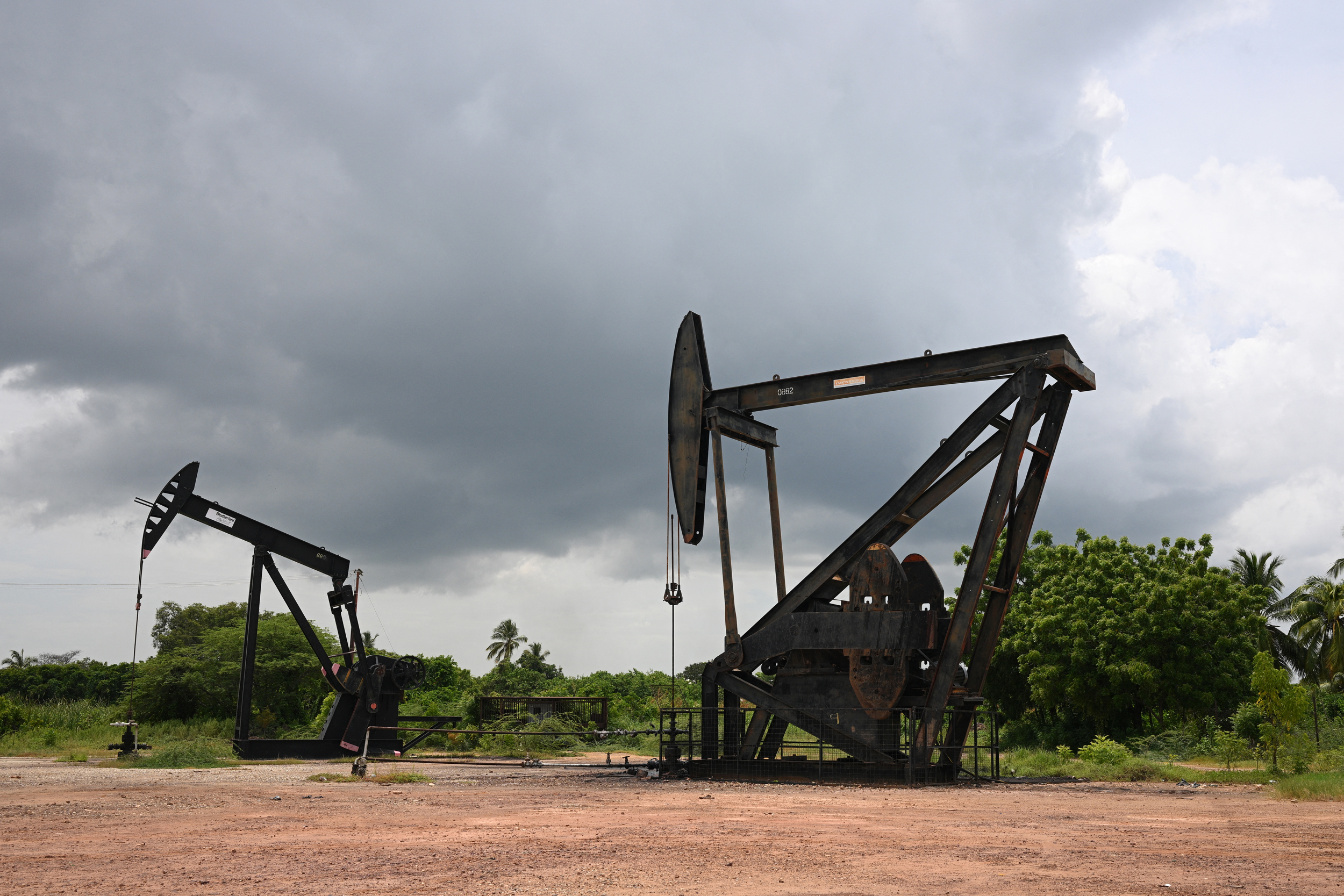
Venezuela’s oil infrastructure suffers from years of authoritarian rule. Under Hugo Chávez and Maduro, foreign oil assets were expropriated, and domestic experts expelled, causing oil production to plummet over 70% from its 1997 peak. The UN estimates 80% of Venezuelans live in poverty, and millions have fled the country. Despite holding 303 billion barrels of oil, restoring production requires billions and years.
“It’s more than just knowing where the oil is,” Gross noted. “That’s the easy part.”
Rystad Energy estimated $30-$35 billion is needed in the next two to three years to raise production to 3 million barrels per day by 2040. Total oil and gas capital expenditure over the next 14 years would be $183 billion. Extraction is challenging, expensive, and carbon-intensive.
Global oil production currently exceeds demand, driven by a slow economy, U.S. fracking, and electric vehicle adoption. Oil prices are at their lowest since early 2021. Experts suggest companies will pursue low-cost, low-risk investments.
Despite this, Trump expressed optimism at a press conference about U.S. companies rebuilding Venezuela’s oil industry, planning to spend billions to fix infrastructure and generate revenue. He admitted the investment size but anticipated a rebuild within 18 months.
The economics are tricky, with immediate investment needs and delayed returns. Wood Mackenzie warned that lifting sanctions could oversupply the market, reducing prices further.
“Venezuela holds the scale producers need, but fundamentals hinder rapid deployment,” said Alan Gelder from Wood Mackenzie. “Heavy crude economics, unresolved claims, and political uncertainty create an extended risk profile. Companies will observe, but commitments require more than sanctions relief.”
Dennis Nuss, ConocoPhillips spokesperson, stated the company is assessing developments in Venezuela for global energy implications. ExxonMobil did not respond to inquiries.
Philippe Benoit from Columbia University’s Center on Global Energy Policy suggested U.S. oil companies want stability before returning to Venezuela. Despite excess oil and low prices, incentives to invest billions aren’t as compelling as decades ago.
ExxonMobil has committed $60 billion in Guyana since 2019, showcasing their cautious approach.
Guyana’s President Irfaan Ali’s presence at CERAWeek highlighted his country’s stability and economic success, contrasting Venezuela’s fugitive leaders. Ali emphasized diplomacy and confidence in resolving territorial disputes.
David Goldwyn, former State Department energy envoy, said companies need commitment to rule of law before returning. “Few U.S. companies are likely to return until there’s a reliable legal and fiscal regime,” Goldwyn said in a report from the Atlantic Council.
Venezuela’s political ambiguity continues with Delcy Rodríguez as vice president, despite opposition leaders deeming her “not trustworthy.”
International observers noted overwhelming support for Machado and González in the 2024 election, but Maduro rejected the results, forcing opponents underground.
Trump has withheld support for Maduro’s opponents, despite Machado’s efforts. She praised Trump’s policies in her CERAWeek speech but didn’t sway him. Trump remarked, “She’s a very nice woman, but lacks respect in the country.”
U.S. Energy Secretary Chris Wright stated the U.S. would oversee Venezuela’s oil industry “indefinitely.”
A Clash With Energy Dominance and Climate
Benoit noted Trump’s push for American “energy dominance” might backfire with Venezuela, potentially undermining U.S. dominance. Increased Venezuelan oil could harm mid-size U.S. oil companies and alter the market balance.
Despite global efforts to reduce fossil fuel reliance, Gross stated that weak oil demand makes new investments in Venezuela unlikely. “If the market doesn’t want it, it doesn’t happen,” she noted.
Trump’s ability to boost Venezuela’s oil production and its climate impact depends on global shifts towards less oil dependency.
“It’s not a climate bomb if nobody demands it,” Gross concluded.
Arcelia Martin contributed to this report.
Original Story at insideclimatenews.org