By Tianyi Sun, Senior Climate Scientist & Stephane Sartzetakis, Senior Research Analyst, Environmental Defense Fund
The potential of hydrogen as a tool for reducing emissions in challenging sectors is noteworthy, yet its production alone doesn’t guarantee a global climate advantage. Furthermore, deploying hydrogen in areas where electrification is feasible might diminish its potential benefits. These insights are part of a recent climate impact assessment by the Environmental Defense Fund, which was published in Frontiers in July.
The study titled Hydrogen in context: comparative climate impact assessment across multiple decarbonization pathways evaluated hydrogen’s climate impact across 57 decarbonization pathways and 11 applications. It considered renewable hydrogen, fossil-fuel-based hydrogen with carbon capture, hydrogen-based fuels, direct electrification, and other alternatives.
The findings suggest a pragmatic approach: prioritize electrification with clean energy when possible, utilize hydrogen where its unique properties are necessary, and ensure hydrogen projects demonstrate their climate performance from production through to usage.
Ultimately, hydrogen, like other energy options, is neither a guaranteed solution nor a liability for climate change. Its benefits are contingent upon its production methods, applications, and the management of its lifecycle emissions.
Optimal Utilization of Hydrogen
Renewable hydrogen presents significant advantages as an industrial feedstock, notably in steel and fertilizer production. The study found that renewable hydrogen used for steel production offers the greatest climate benefit per unit of renewable electricity among studied applications.
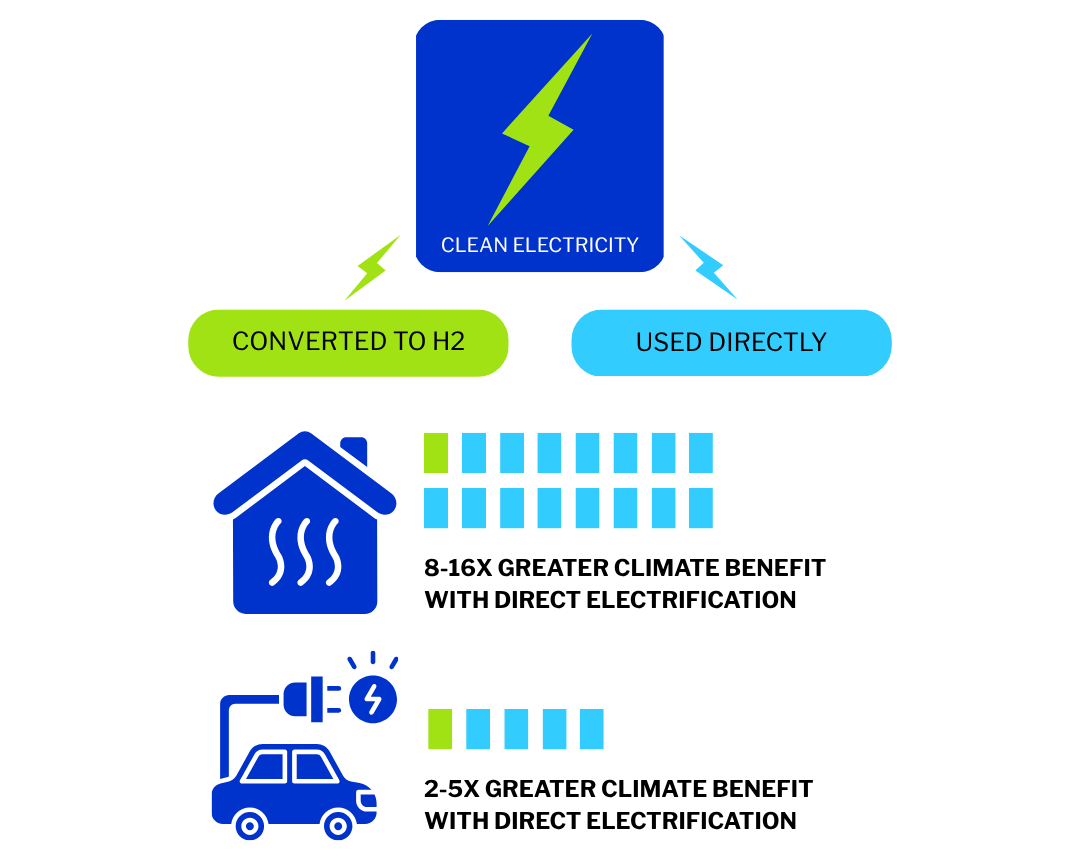
Hydrogen-based fuels also prove beneficial in sectors where direct electrification is challenging, such as certain shipping and aviation components. However, when direct electrification is viable, it significantly outperforms hydrogen in climate benefits. For instance, in home heating, direct electrification offers 8 to 16 times more near-term climate benefit per unit of renewable electricity compared to using hydrogen for heat. In road transport, the advantage ranges from 2 to 5 times. The energy consumed in converting electricity to hydrogen, transporting it, and using it as fuel could be better applied directly.
Each kilowatt-hour of clean electricity carries an opportunity cost, prompting policymakers and companies to evaluate where it can most effectively reduce pollution.
Comprehensive Assessment of Hydrogen’s Climate Impact
Hydrogen’s climate impact extends beyond its production. Escaped hydrogen during production, storage, transport, or use contributes to warming. Across the pathways evaluated, a 1% increase in hydrogen loss reduces near-term climate benefits by about 3% on average (1.5% in the long term), emphasizing the importance of preventing losses.
Fossil-fuel-based hydrogen with carbon capture can offer significant benefits under the right conditions, but upstream methane emissions and carbon capture efficacy are critical. For every 1% reduction in methane emissions, there’s a 15% improvement in near-term benefits (9% in the long term), while each 1% increase in carbon capture rate results in a 1% benefit improvement.
Nevertheless, even optimal carbon capture cannot offset significant methane and hydrogen emissions, potentially resulting in net near-term warming for fossil-based hydrogen in eight of the 11 uses analyzed.
The study highlights the need for precise, transparent, and reliable measurement and management of methane, carbon, and hydrogen emissions across the entire supply chain.
Renewable hydrogen faces its own challenges, particularly regarding its electricity source. If clean power used by electrolyzers would have otherwise powered the grid, it may lead to increased fossil fuel generation. To prevent this, new clean electricity, aligned with hydrogen production in time and location, is essential.
Market Development Driven by Results
The study modeled potential pathways without assessing the performance of existing hydrogen projects. Its results underscore the necessity for better measurement and transparent lifecycle accounting as hydrogen projects expand. Policies should incentivize verified emissions reductions, industry should prioritize managing hydrogen and methane losses, and investors should evaluate electricity supply and use alongside production capacity.
Hydrogen has a pivotal role in advancing a cleaner economy. The most effective projects will be those that demonstrate genuine climate value and can substantiate their claims.
Original Story at blogs.edf.org