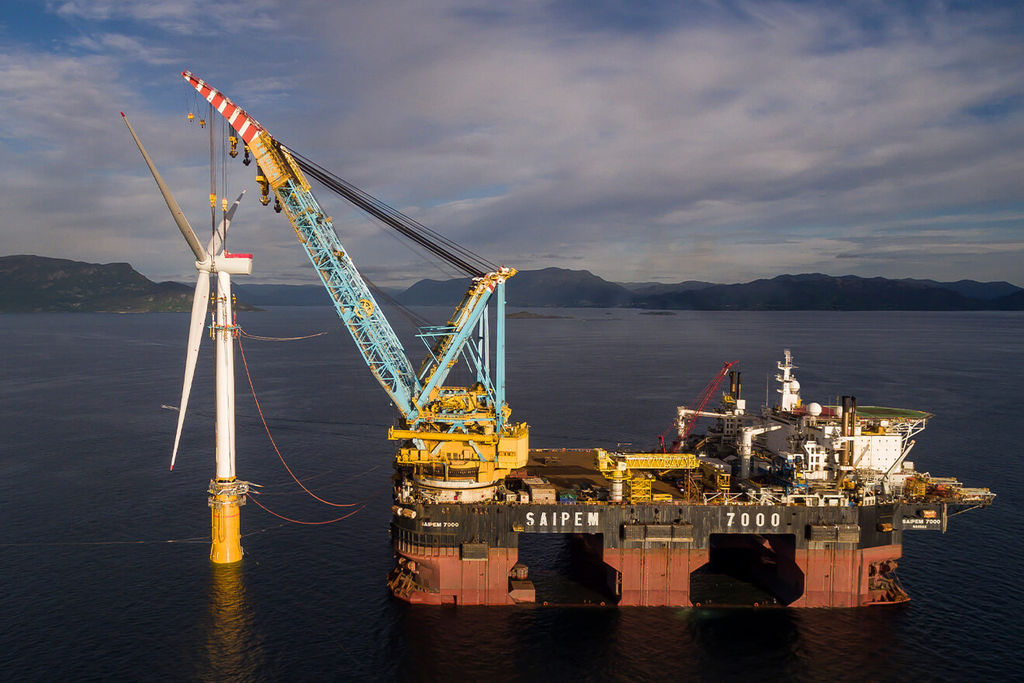
The merger proposal between Saipem and Subsea7 is under increased scrutiny by the European Union (EU) due to concerns over market concentration in subsea umbilicals, risers, and flowlines (SURF) and carbon capture and storage (CCS). This could affect competition, increase costs, and stifle innovation.
The European Commission has launched an in-depth investigation under the EU Merger Regulation to examine the merger between Saipem and Subsea7, intended to establish Saipem7 as a unified entity, amid fears that it could substantially diminish competition in offshore engineering and construction service markets.
The investigation follows preliminary findings from the European Commission, indicating the merger might bolster business in offshore wind projects and conventional offshore projects. However, it could also consolidate the SURF services market, a concern for the Commission.
SURF, comprising pipes and cables laid on or near the seabed, connects offshore wells to production facilities. These services are also crucial in CCS projects, which capture CO2 emissions, transport them via pipelines, and store them in geological formations under the seabed to prevent atmospheric release.
“The global SURF services market is already highly concentrated, with Saipem and Subsea7 as two of the three leading providers, offering few credible alternatives,” stated the Commission in a release on July 22.
EU Highlights Potential Risks for Competition, Prices, and Innovation
The European Commission’s preliminary findings suggest the merger could significantly reduce competition in the concentrated SURF services market for oil and gas and CCS projects. With Saipem and Subsea7 being top global suppliers, their merger would control substantial market and capacity shares.
Saipem and Subsea7 closely compete, especially on complex projects, leaving few competitors of comparable scale. The capital-intensive nature of this industry, requiring significant investments in sophisticated vessels, creates high entry barriers, limiting competition.
The Commission notes that while customers, often large players in the oil and gas sector, are sophisticated, they may struggle to resist price hikes without sufficient alternative suppliers. “The transaction may lead to a loss of competition in the SURF services market, potentially resulting in higher prices and reduced innovation,” the Commission stated, adding it will explore if the merger could cause coordinated market effects during its investigation.
Further, the assessment will cover potential impacts on related markets, such as trunkline services and decommissioning of subsea infrastructure, which require similar capabilities. The Commission will also evaluate whether the merger poses anticompetitive vertical or conglomerate effects.
Following the transaction notice on June 16, 2026, the Commission has 90 working days, until November 26, 2026, to reach a decision. The initiation of an in-depth investigation does not predetermine its outcome.
Reach the offshore wind industry in one go!
offshoreWIND.biz is read by thousands of offshore wind professionals every day.
—
Increase your visibility with banners, tell your story with a branded article, and showcase your expertise with a full-page company profile in our offshore wind business directory.
Follow offshoreWIND.biz on:
Original Story at www.offshorewind.biz