Uncommon marine species are making appearances in Southern California’s coastal waters, drawing attention from both residents and scientists. In a historical first, a sea turtle recently nested near Seal Beach, an event attributed to the El Niño weather pattern.
This year’s El Niño is anticipated to be exceptionally strong, with forecasters indicating a 90% probability of significant impacts, including high surf and heavy rainfall, affecting the region’s weather and ecology.
Earlier this month, Southern Californians experienced a preview of El Niño’s potential impact when powerful surf from Hurricane Marie caused extensive damage along the coastline. However, El Niño’s influence extends beyond weather, as evidenced by the arrival of unusual marine life.
Unexpected Marine Arrivals
Following the warm currents associated with El Niño, species not typically found in the area are venturing into Southern California waters. Bill Ludt, an ichthyology curator at the Los Angeles County Museum of Natural History, explained, “Animals like a certain range of temperature, just like you’re setting the thermostat at home to a certain temperature that you like.”
Among the visitors is an endangered olive ridley sea turtle, which emerged near Seal Beach on September 16 to lay eggs, marking a first for California, according to the National Oceanic and Atmospheric Administration. Another nesting was observed at Huntington Beach Pier, with both sites now protected.
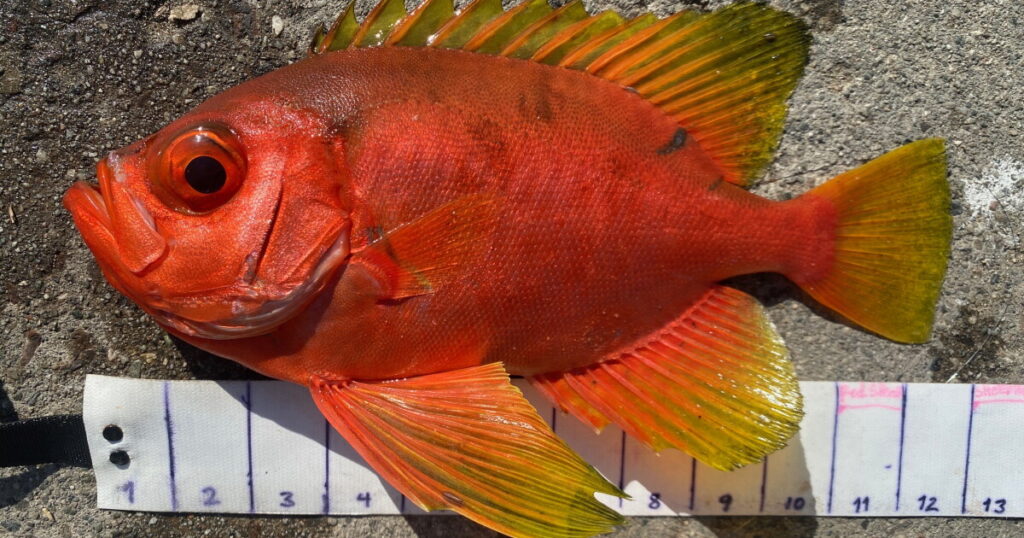
In addition to sea turtles, whale sharks, hammerhead sharks, mahi mahi, and bullet tuna have been reported in the region. Notably, a fisherman recently caught a longfinned bigeye, a species usually found off Mexico and Baja California, from the Venice fishing pier. Ludt stated, “It is a wide-ranging species, just not typically in California. So it will occur in Baja, as well as other parts of the world. But for California, this is a first.”
The Natural History Museum is cataloging these findings to document the changes in marine biodiversity. Ludt emphasized the importance of recording both rare and common occurrences to understand how life evolves on Earth.
While pelagic creatures like sea turtles and sharks are making their presence known, Ludt predicts more colorful reef fish, similar to those in Hawaii, might arrive as the season progresses.
Sea snakes, too, are expected to appear in local waters. A yellow-bellied sea snake was reportedly found at Crystal Cove, though confirmation is pending. These snakes, which appeared in previous El Niño events, are venomous but pose no threat unless provoked.
Impact on Native Marine Life
While non-native species might find the warmer waters favorable, California’s indigenous marine life could suffer. Elevated temperatures can compromise native species’ immune systems and metabolism, reducing food availability for predators like seals, sea lions, and dolphins.
Additionally, warmer waters can spur harmful algal blooms, which are particularly detrimental to marine mammals. Jorge Velez-Juarbe, a curator of marine mammals at the L.A. County Natural History Museum, warns of increased sickness and stranding among animals. “They’ll beach, and they’ll be acting up weirdly, sometimes maybe more aggressively than they normally would,” he noted.
Velez-Juarbe suggests that while El Niño’s effects are troubling, they might offer insights into the broader impacts of climate change on marine ecosystems. Fortunately, he predicts that native species will likely recover once ocean temperatures normalize.
For those who encounter sick or stranded animals, the recommendation is to maintain a safe distance and contact authorities. Reports can be made to NOAA’s stranded animal hotline at (866) 767-6114. Discoveries of unusual marine life can be shared with the Natural History Museum via email at nature@nhm.org.
Original Story at laist.com