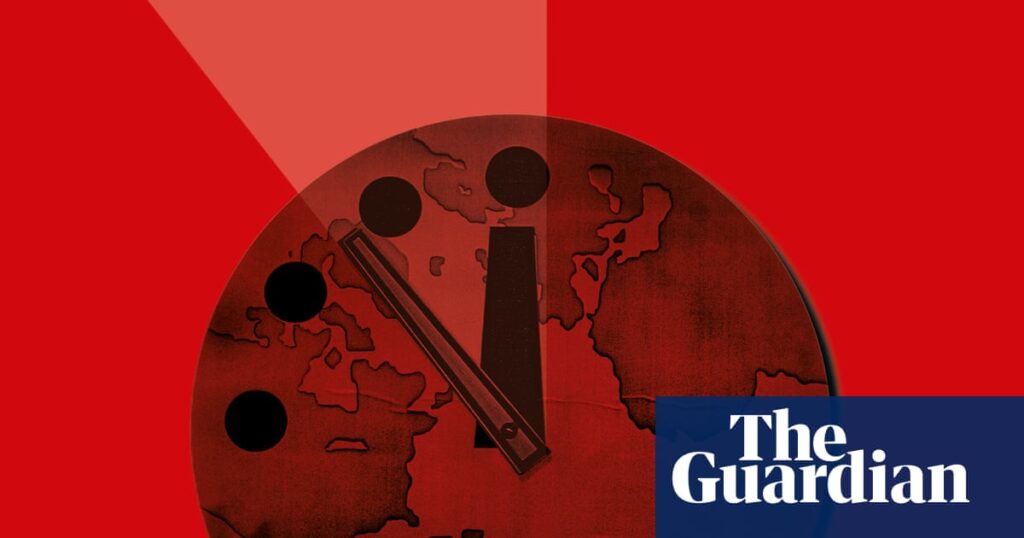
The Perils of Our Time: Humanity Inches Closer to Midnight
The specter of global catastrophe looms larger than ever, as humanity grapples with a confluence of existential threats. From escalating conflicts in the Middle East and Ukraine, to the unpredictable rise of artificial intelligence, society faces unprecedented challenges. Meanwhile, scientists warn of potential lab-created pathogens more lethal than Covid, and the world’s pandemic preparedness is reportedly weakening. Amidst these dangers, the Doomsday Clock, a symbolic gauge of how close humanity is to self-destruction, ticks ominously closer to midnight, now set at 85 seconds.
The Doomsday Clock: A Symbol of Urgency
Alexandra Bell, CEO of the Bulletin of the Atomic Scientists, which oversees the Doomsday Clock, notes a concerning trend: “What we have seen is a slow almost sleepwalk into increasing dangers over the last decade.” Her observation underscores a perceived “complete failure in leadership” across nations to adequately address these threats. Bell asserts that rising global conflicts, climate change, and the intertwining of AI in nuclear decisions amplify the risks.
Bell’s office in Washington DC, adorned with a world map and a unique “Barbenheimer” artwork, reflects her deep engagement with these issues. Despite public complacency due to the absence of nuclear attacks since 1945, Bell warns of the persistent danger, “We’ve been lucky, because the odds are not in our favor. The more weapons that exist, for longer, the more likely it is something will go wrong.”
The Origins and Evolution of the Doomsday Clock
Established in 1947 by Manhattan Project scientists, the Doomsday Clock initially responded to nuclear war threats. Its time is usually set annually by the Bulletin’s science and security board, a group of experts who assess global risks. The clock serves as a stark reminder and a call to action for leaders and citizens.
The clock’s history is marked by significant shifts, such as the move to 17 minutes to midnight after the Cold War. However, the modern era brings new challenges. In 2007, under Kennette Benedict’s leadership, the clock expanded its scope to include climate change and technological risks, a move criticized for “diluting” the original nuclear focus.
Current Threats and the Role of Public Action
Today, the clock stands at a perilous 85 seconds to midnight. Recent events, such as AI’s involvement in military strategies and escalating tensions with Iran, underscore the urgency. Bell, who succeeded Rachel Bronson as president, emphasizes the importance of public engagement, stating, “The history of nuclear arms control was shaped by public action.”
Despite the grim outlook, Bell remains hopeful that informed public pressure can drive leaders to address these existential threats. She stresses the need for awareness and action, echoing the Bulletin’s founding message: “The message we’re trying to get out is you’re going to have to care about these bigger issues, too.”
The Psychological Impact of the Doomsday Clock
Daniel Holz, chair of the Bulletin’s science and security board, highlights the psychological aspect of the clock’s symbolism. He notes the challenge of ensuring the clock’s time instills a sense of urgency without inducing paralysis. “If people feel powerless and so petrified that they can’t engage, then we’re making things worse,” he explains.
As society grapples with the potential for global catastrophe, the Doomsday Clock serves as a powerful reminder of the need for vigilance, informed action, and hope. As Holz reflects, “Earth is this tiny, irrelevant speck. If we blow ourselves up, the universe is not going to save us. Which means it’s up to us, right?”
Original Story at www.theguardian.com