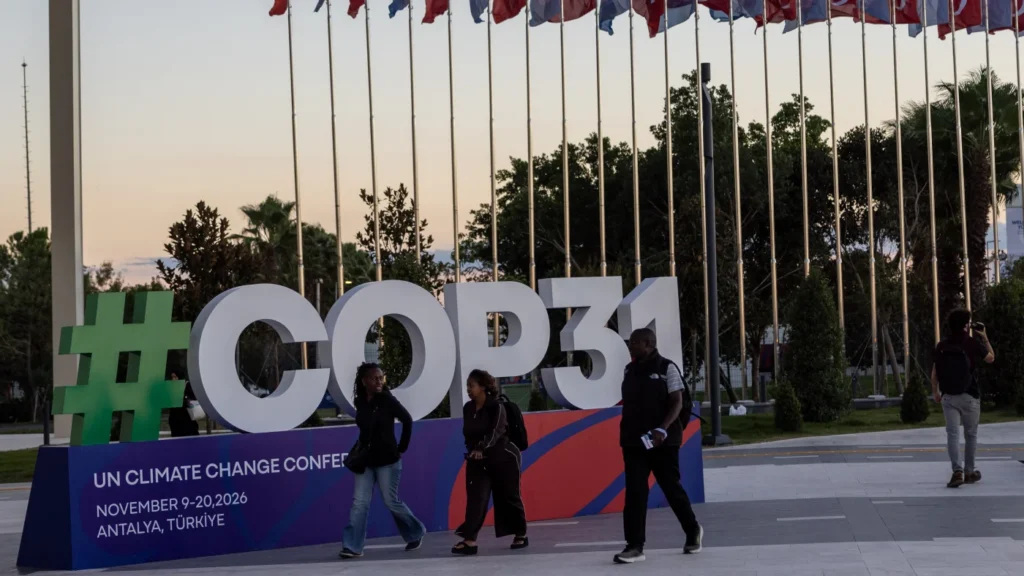
Global Energy Crisis Shapes COP31 Discussions in Turkey
As the United Nations climate conference, COP31, kicks off in Antalya, Turkey, from November 9-20, global leaders face a critical backdrop of an ongoing energy crisis. The conflict involving the U.S., Israel, and Iran, now in its ninth month, has highlighted vulnerabilities in global energy supply chains, primarily due to the closure of the Strait of Hormuz and surging fossil fuel prices.
According to Kingsmill Bond, an analyst at the energy think tank Ember, this energy crisis is distinct from past ones, like those in the 1970s and post-Russia’s Ukraine invasion in 2022. “This is the first time you’ve really had a global energy shock where you’ve got really cheap solutions to address it,” Bond notes.
Technological advancements in solar panels, batteries, and electric vehicles have provided viable alternatives to traditional energy sources. These technologies, predominantly manufactured in China, offer both economic stability and a reduction in emissions. Countries have increasingly shifted towards these solutions, a trend expected to influence discussions at COP31.
Electrification Takes Center Stage
This year’s conference is being dubbed “the electrification COP” as nations aim to increase the global electrification rate from approximately 23% to 35% by 2035, a goal encapsulated in the phrase “35 by ’35.” With renewable energy sources like solar and wind becoming more cost-effective than fossil fuels, experts believe these targets are achievable.
Li Shuo, director of the China Climate Hub at the Asia Society Policy Institute, emphasizes the importance of green energy: “More green energy will help you decarbonize better and faster.”
Fossil Fuels Under Scrutiny
The COP process, now in its 31st year, continues to grapple with addressing fossil fuel consumption, a leading cause of climate change. Despite resistance from major fossil fuel producers like Saudi Arabia and Russia, there is growing momentum to phase out oil, gas, and coal.
Earlier this year, more than 50 countries convened at the First International Conference to Transition Away from Fossil Fuels, aiming to complement the U.N. efforts. Over 25 countries are now working on a treaty to phase out fossil fuels, hoping to gain more support at COP31.
Absence of U.S. Delegation
The United States will not have a delegation at COP31, marking a continuation of its absence from last year’s conference in Brazil. The current administration has rolled back several climate initiatives, including subsidies for renewable energy and greenhouse gas regulations.
Nonetheless, some Democratic lawmakers, including Senator Sheldon Whitehouse from Rhode Island, will attend COP31. They aim to focus on fossil fuel accountability and explore carbon pricing mechanisms. Whitehouse asserts, “ It cannot remain free for the fossil fuel industry to pollute if we want to have any chance of a pathway to climate safety.”
Original Story at www.npr.org