Connecticut’s Electric Vehicle Sales Face Challenges Amid Policy Shifts
Following the removal of federal tax credits by the Trump administration last September, Connecticut has witnessed a significant drop in electric vehicle sales, as reported by the Department of Energy and Environmental Protection. This decline aligns with a broader national trend in EV sales.
Experts, however, remain hopeful that the escalating gasoline prices, influenced by the ongoing conflict in Iran, could shift consumer interest back towards electric and plug-in hybrid vehicles. Connecticut’s CHEAPR program still provides financial incentives for new EV purchases, and it saw peak demand in December 2024 with nearly 1,000 purchases utilizing state rebates.
Rebate distributions surged last summer, just before the federal tax credits expired on September 30, offering up to $7,500 for new EVs and $4,000 for used ones. Post-expiration, rebates plummeted by over 80% in October but have seen a modest recovery since, according to CHEAPR data.
The abrupt drop was partially due to consumers rushing to buy EVs before the tax credit deadline. The broader shift in federal policy has made EVs less affordable for many. “It’s not unexpected,” said Katie Dykes, Commissioner of the Department of Energy and Environmental Protection. “These are the consequences of the federal government walking back longstanding federal tax supports for clean vehicles.”
Despite the sales decline, the number of registered EVs in Connecticut rose by 20% last year, surpassing 73,156 vehicles in December. Barry Kresch, President of the Electric Vehicle Club of Connecticut, highlighted a national increase in used EV purchases, driven by a surplus of vehicles entering the market as leases expire.
Ann Munley, Director of Association Operations for the Connecticut Automotive Retailers Association, stated on Thursday that interest in EVs remains strong. “Connecticut’s franchised new car dealers are working closely with customers to highlight the latest advancements in range, performance, and affordability,” she said.
Connecticut’s EV registrations grew by 5,500 from July to December 2025, a decrease from 8,378 in the first half of 2024. Less than half of these new registrations utilized the state’s rebate program during this period.
Following last year’s surge in purchases, state officials temporarily reduced CHEAPR rebates to manage limited funds. In October, with the federal credits gone, rebates for fully electric vehicles increased to $1,000, while plug-in hybrids remained at $500. Additional incentives under the Rebate+ program are available for low and moderate-income buyers.
Kresch noted the state incentive is insufficient to replace the federal tax credits. “It’s good that it’s there, but it’s only $1,000,” he said. Lawmakers are considering two bills, Senate Bill 416 and House Bill 5153, to adjust CHEAPR eligibility for low-income buyers and used vehicles.
With federal incentives gone, rising gas prices—over $4 per gallon in Connecticut—may encourage a shift towards EVs. The average price of gasoline in Connecticut reached $4.02 on Thursday, marking a 38% increase from the previous month.
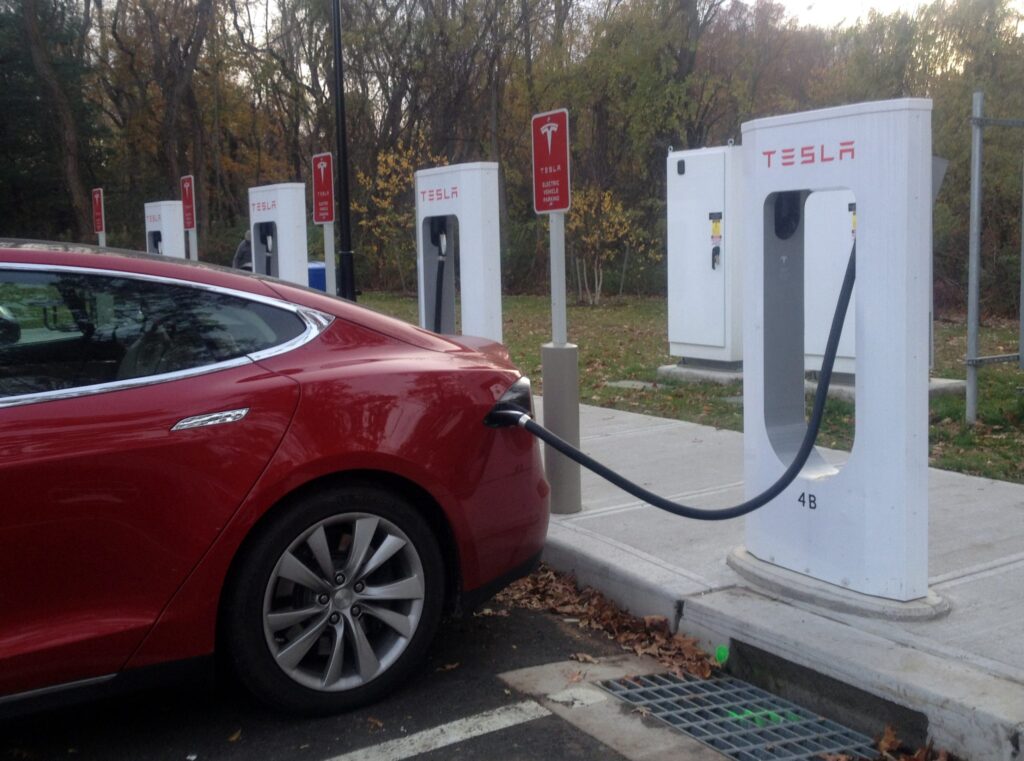
Tesla, Connecticut’s most popular EV brand, saw a slight global sales increase in early 2026, as reported by the New York Times. Other automakers have experienced similar trends. EVs made up about 6% of all new vehicles sold in Connecticut during the last quarter of 2025, down from over 10% the previous year but similar to 2022 levels.
Dykes remarked that despite the impact of federal policy changes, consumer interest in EVs persists. “The elimination of the federal tax credit has certainly had an impact on consumer adoption, but I think it’s ultimately just going to contribute to maybe a slower pace of adoption,” she said.
Original Story at ctmirror.org