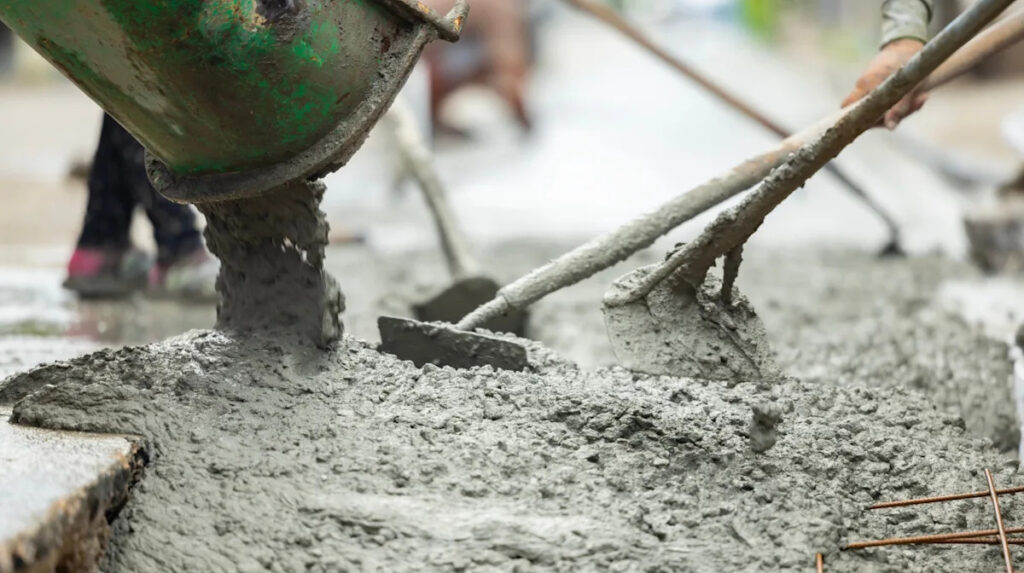
Concrete, a ubiquitous material second only to water in usage, is undergoing a revolutionary transformation. Researchers at Aarhus University in Denmark have introduced a novel concept of turning concrete into an energy storage device using microbes. This breakthrough, published in Cell Reports Physical Science, involves embedding Shewanella oneidensis bacteria into concrete to form a biohybrid material capable of storing electricity.
The process involves bacteria creating biofilms within the concrete, effectively converting each cement block into a supercapacitor. Unlike traditional batteries, this bacteria-infused concrete can regenerate its energy storage capacity. By providing nutrients, researchers observed a remarkable recovery of up to 80% of the storage abilities, countering the degradation seen in conventional batteries.
Qi Luo, a co-author of the study, shared in an Aarhus University press release, “We envision this technology being integrated into real buildings, in walls, foundations, or bridges, where it can support renewable energy sources like solar panels by providing local energy storage.” This innovation could reduce reliance on traditional home batteries for solar power storage, utilizing the concrete itself as a storage medium.
Could the walls of the future store energy?
This innovative concrete boasts significant energy storage potential. Luo noted that even at a modest energy density of 5 Wh/kg, a room built with this bacteria-infused cement could store approximately 10 kWh, enough to power a standard enterprise server for a day.
The material also demonstrated durability, retaining 85% of its capacity after 10,000 charging cycles, outperforming the average lithium-ion battery, which typically endures 300 to 2,400 cycles. The material maintained its energy storage capabilities across various temperatures, although performance decreased in freezing conditions. Microbes thrived best between 30 to 37 degrees Celsius (86 to 99 degrees Fahrenheit) and could withstand up to 80 degrees Celsius (176 degrees Fahrenheit) before losing capacity permanently. Remarkably, even after the microbes’ demise, the biofilms continued to store charge.
There are still limitations to the new material

Despite its promise, this cutting-edge concrete won’t be commercially available soon. The long-term behavior of the microbes remains unknown, and further research is needed to determine their survival with minimal maintenance. Scaling up bacteria production for industrial use poses another challenge.
Environmental factors, such as the alkalinity of the surroundings, impact the storage capabilities, and protection from heat would be necessary in hot climates. While this new concrete holds potential as a revolutionary battery technology, its commercial viability is still uncertain.
For more on tech developments, subscribe to our free newsletter or add us as a preferred search source on Google.
Read the original article on SlashGear.
Original Story at currently.att.yahoo.com