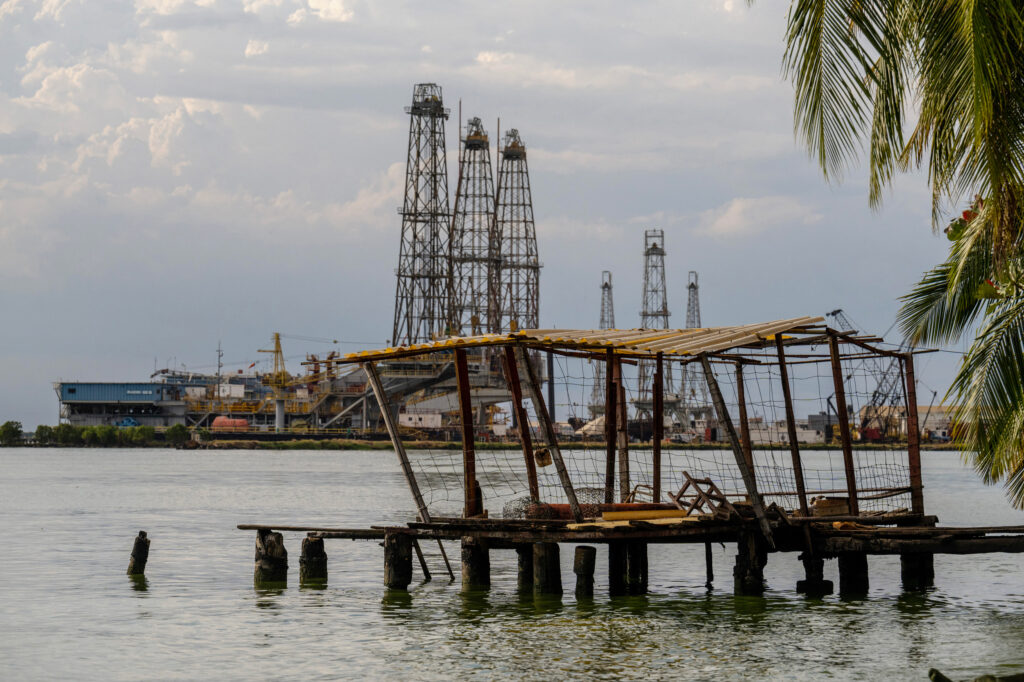
Mónica Godoy Molero jokes with her family that if you swim in Lake Maracaibo after an oil spill, you’ll grow a third eye. This dark humor resonates in Venezuela, a nation exploited by the oil industry for over a century, now at the heart of efforts to revamp its deteriorating oil infrastructure.
“All the beaches are heavily contaminated, crowded mainly by low-income residents,” Molero noted.
Gustavo Carrasquel Parra, an activist and ecotourism guide who lived near Lake Maracaibo for 27 years, shared similar concerns. “It’s not a matter of if, but when another oil spill will occur,” he stated, recalling a spill two years ago that harmed his business.
“My clients’ feet were covered in oil and tar,” Parra said, emphasizing the severe impact on local tourism and the environment.
The state of Zulia, surrounding Lake Maracaibo—a brackish tidal bay in northwestern Venezuela—is home to about 4 million people and central to the nation’s petroleum industry.
Oil spills are increasingly frequent as infrastructure degrades, according to Parra and reports from the Observatory of Political Ecology of Venezuela. From 2021 to 2022, spills rose from 77 to 84 incidents. The government hasn’t released spill data for four years, complicating assessments.
Amid global oil price fluctuations, the Trump Administration is advocating for rejuvenation of Venezuela’s oil industry. Activists and residents in Maracaibo hope new revenues might fund Lake Maracaibo’s cleanup. “The government hasn’t demonstrated a commitment to enforcing environmental laws,” said Antonio Machado Allison, a Venezuelan ecologist.
Residents continue using polluted waterways for daily needs, risking exposure to heavy metals and industrial chemicals. Gas flaring from wells with outdated technology further pollutes the air.
Breathing is hazardous due to flaring in refineries. Land subsidence from decades of drilling has compounded flooding risks. Contaminated floodwaters pose threats to towns around Lake Maracaibo.
Nicolás Maduro has been detained by U.S. forces, with Delcy Rodríguez serving as Interim President. The government seeks to reform oil policies, as stated by Petróleos de Venezuela, S.A. (PDVSA), opening the sector to more private investment.
Experts warn of potential environmental exploitation if reforms are mishandled. “The issue isn’t a lack of legislation, but enforcement,” Allison explained. Venezuela has environmental laws but fails in their implementation.
Article 12 of Venezuela’s constitution mandates environmental impact studies for oil projects. However, ambiguity over responsibility—government versus private companies—has led to ineffective enforcement, as evidenced by persistent spills and flaring.
Chevron, the only major U.S. oil company in Venezuela, declined to comment on its environmental policies. Venezuelan oil, a thick black substance, requires extensive cleanup efforts, complicating remediation.
Locals often approve drilling projects for economic benefit, although they can harm community economies, noted Jesus Aboud, a geophysicist formerly with PDVSA in Guira.
Aboud emphasized the need for transparency among PDVSA and foreign oil companies to protect the environment and local communities.
Despite differing views, Arminio, a former PDVSA geologist, believes environmental issues stem from poor policies and corruption, rather than the industry itself.
Lake Maracaibo has a history of subsidence due to oil extraction since 1914. Government-installed dikes help counteract effects, although they are aging and studies on regional subsidence remain outdated.
Parra, now in Choroní, campaigns for regulatory changes to allocate 5% of oil revenue to Lake Maracaibo’s environmental restoration. He remains committed to advocating for environmental awareness and action.
Molero, living in Maracaibo, hopes for improvement but remains skeptical given longstanding contamination and government transparency issues.
Original Story at insideclimatenews.org