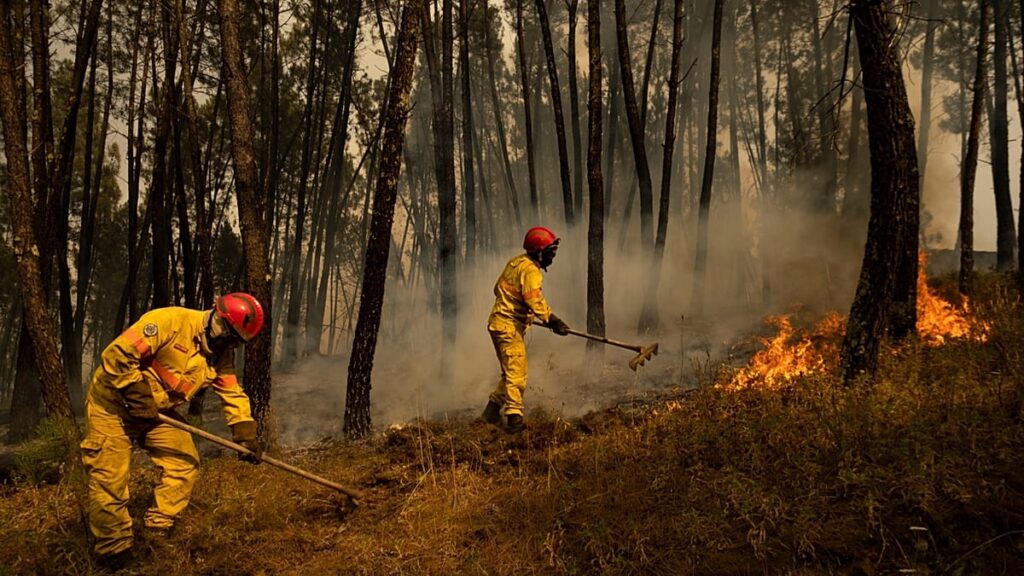
Forests across Europe face escalating threats, with projections indicating a 20% increase in forest damage by the year 2100, even under stringent climate policies. This alarming forecast emerges from a comprehensive international study that underscores the vulnerabilities of these crucial ecosystems.
Researchers, including experts from the Potsdam Institute for Climate Impact Research, have highlighted the grave risks posed by climate change-induced phenomena such as wildfires, storms, and bark beetle infestations. Their findings, published in Science, reveal that even with a global temperature rise constrained to approximately 2℃, the annual forest disturbance could leap from 180,000 to about 216,000 hectares by century’s end.
In a more severe scenario, where fossil fuel consumption persists, potentially leading to higher temperatures, disturbances could affect nearly 370,000 hectares annually by 2100.
Threats to Europe’s Forests Intensify
Particularly in Southern and Western Europe, forests are anticipated to undergo significant changes in terms of disturbance levels. While Northern Europe might experience less impact overall, it’s still expected to witness emerging hotspots of forest damage.
The previous year saw more than 1,800 forest fires across the EU, responsible for approximately 38 million tonnes of CO2 emissions. These incidents were largely fueled by climate conditions that were unusually warm and dry.
Summer 2025 was notably devastating for nations like Portugal and Spain, where wildfires broke records, accounting for a majority of the EU’s forest fire damage. According to World Weather Attribution (WWA), climate change made these fires about 40 times more likely.
The Vital Role of Forests in Climate Mitigation
Europe, with around 40% of its land area forested, relies heavily on these ecosystems as they serve as critical carbon sinks. These forests play a pivotal role in absorbing atmospheric CO2, thus mitigating the impacts of climate change.
In addition to harboring diverse species of flora and fauna, forests are essential for providing clean water, enhancing food security, and reducing flooding risks. Nonetheless, Christopher Reyer from PIK, a co-author of the study, warns that the carbon absorption capacity of Europe’s forests might decline in the future.
Reyer states, “If forests take up less carbon, or potentially even release more than they absorb, this increases pressure on other sectors such as transport and agriculture to reduce their emissions more rapidly.” He emphasizes the need for forest management to pivot towards resilience.
Assessing the EU’s Tree Planting Efforts
In 2010, the EU embarked on an ambitious tree-planting initiative aimed at planting three billion trees, promising to sequester an estimated 15 million tonnes of CO2 annually by 2050. However, progress has been slow, with less than 38 million trees planted to date, marking only 1.26% of the target.
According to an EU Commission representative, the initiative is a “voluntary commitment” intended to galvanize organizations and individuals in tree planting. While it is not mandatory, the Commission plans to introduce an award to stimulate innovative and impactful tree-planting activities, hoping to accelerate progress towards the goal.
Original Story at www.euronews.com