As Southern California braces itself for the seasonal Santa Ana winds, anticipated gusts of up to 60 mph threaten to heighten wildfire risks in the region. The onset of these powerful winds underscores the persistent danger they pose, even as new research suggests a potential decline in their frequency due to climate change.
According to a study led by UCLA scientists, human-induced climate change is already reducing the number of Santa Ana wind events, a trend expected to continue through the year 2100. These winds, which originate from the contrasting temperatures between the deserts of Utah and Nevada and California’s coastal regions, are seeing fewer weak and moderate occurrences. However, this is unlikely to lessen the severity of the most destructive wind-driven fires, as detailed in a recent publication in the American Geophysical Union journal Earth’s Future.
The Santa Ana winds are notorious in Southern California for transforming routine fires into devastating infernos that can rapidly overtake communities. These winds are so powerful that they even influence local schools, such as Topanga Elementary, to relocate classes to safer areas during their peak to protect students. Volunteer groups are also activated to monitor and prevent potential fire hazards along the coast.
Despite the reduction in Santa Ana wind events, the decrease is minimal, affecting only 1 in every 200 events currently. By the century’s end, it’s projected to reduce 1 in every 10 or 20 events, mainly the milder ones. This limited impact is concerning, as severe wind events remain a significant threat. Tom Delworth from the National Oceanic and Atmospheric Administration emphasizes, “That’s not going to save you much because it’s really the severe ones that do all the damage, and we see no signs those will decrease.”
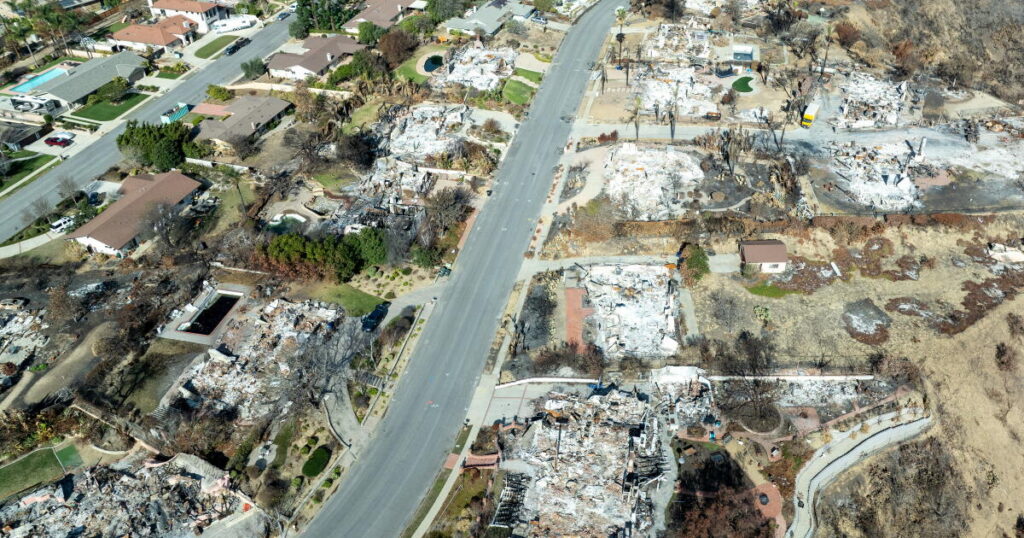
As these winds increasingly coincide with dry conditions due to erratic rainfall patterns, the potential for wildfires may grow, notes Alexander Gershunov, a meteorologist at UC San Diego’s Scripps Institution of Oceanography. He refers to the January 2025 L.A. fires as indicators of the growing wildfire risk in a warming climate.
The Formation of Santa Ana Winds
Originating from the Great Basin’s deserts, Santa Ana winds develop as the cooling autumn ground increases air pressure. Meanwhile, coastal air remains warm due to the ocean, creating a pressure difference that sends the high-pressure air rushing towards the coast. This journey heats the air, allowing it to absorb moisture from vegetation, a process that primes the region for fires.
Advancements in Wind Research
The L.A. fires have catalyzed extensive research into the dynamics of the Santa Ana winds. Scientists face challenges in linking global climate change to these local weather patterns. A high-resolution model developed by NOAA reduced pixel size to 240 square miles, predicting a 10% reduction in Santa Ana events by the century’s end. Meanwhile, a UCLA study achieved a 30 square mile resolution, focusing on weaker wind events.
The Threat of Santa Ana-Induced Fires
Jack Cohen, a retired U.S. Forest Service fire scientist, recalls the 1980 Panorama fire as a stark example of the Santa Ana winds’ destructiveness. These winds can carry embers over large distances, overwhelming firefighters and threatening entire communities.
Prioritizing Fireproofing Measures
In response, fire officials focus on helping Southern Californians protect their homes from embers. The “home ignition zone,” as coined by Cohen, emphasizes maintaining defensible space around properties. This includes removing flammable materials and hard-scaping near homes, along with using ember-resistant building materials.
The proactive approach to fireproofing offers a measure of control, as Cohen notes, “That’s where we have the greatest control, through preparation.”
Original Story at www.latimes.com