In a world increasingly focused on sustainable energy, recent shifts in global energy policies have begun to redefine what was once considered a catastrophic climate outcome. Climate scientists are now suggesting that the most severe climate change scenarios might be off the table, thanks to the global pivot towards clean technologies.
This significant shift in projections comes amid controversy, as former President Donald Trump inaccurately stated that scientists admitted mistakes in their climate forecasts. This claim was comparable to arguing that the end of a pandemic negates its previous impact.
However, the study also warns that the optimal climate scenario is nearly unattainable, and maintaining current practices poses substantial risks. These include potential species extinction, heat-related health issues, and the spread of diseases like malaria.
Progress in Climate Efforts
Developed two decades ago, the RCP8.5 scenario represented a high-emission future. According to research from 2010, it was intended to cover a broad range of possible outcomes, not as a definitive prediction. The scenario outlined a future of rapid population growth and continued fossil fuel reliance.
Despite policies under the Trump administration favoring high birth rates and coal dependency, global initiatives over the last decade have moved us away from this path, making RCP8.5 less likely. These changes are largely due to global agreements like the 2015 Paris Climate Agreement and the declining costs of renewable energy.
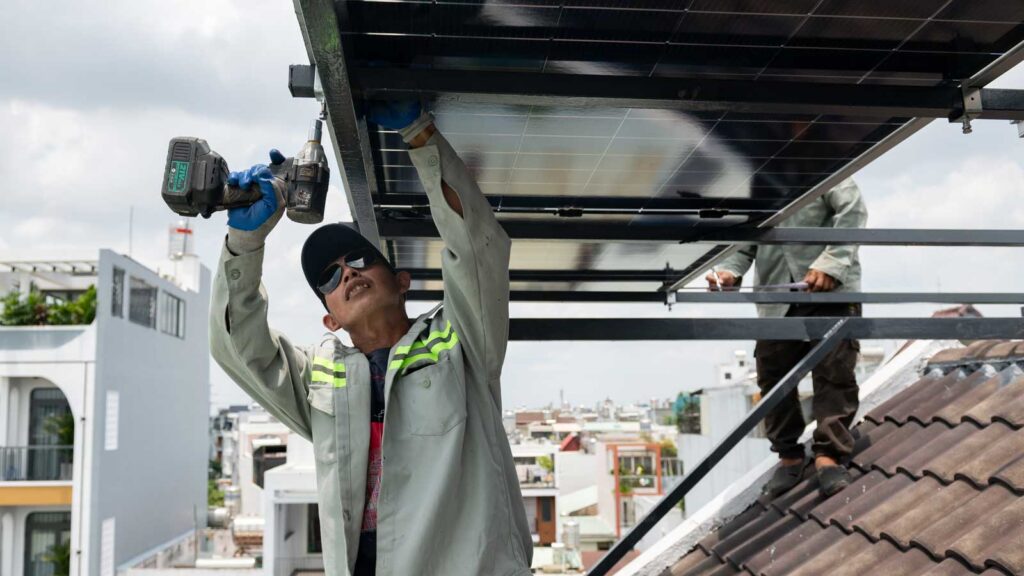
According to Ember and the International Energy Agency, clean energy sources, especially solar, have recently met the entirety of global electricity demand growth.
The geopolitical landscape, including conflicts like the Iran crisis, has further accelerated the shift towards renewable energy. The resulting increase in fossil fuel prices has pushed countries to reduce their dependence on oil and gas. China has seen a surge in exports of solar panels, batteries, and electric vehicles, particularly to Southeast Asia and Latin America. The International Energy Agency also notes a peak in coal consumption worldwide.
For more insights, read: What the Iran conflict means for gas prices, clean energy, and the climate

Revised Climate Projections
The Intergovernmental Panel on Climate Change is preparing its next series of reports, promoted by the Scenario Model Intercomparison Project. Their new report introduces six scenarios, from “very low emission” to “high-emission” projections.
These scenarios underline the increasing difficulty of meeting the Paris Agreement targets, as emissions continue to rise. A moderate policy approach could still lead to severe weather impacts and species decline.
A scenario contemplating a rollback of climate policies could lead to devastating climate outcomes.
Potential Futures: A Spectrum of Outcomes
The high-emission scenario warns that weakened climate policies could mirror American concerns, such as local opposition to renewable projects and job security in fossil fuel industries.
Climate experts Zeke Hausfather, Glen Peters, and Piers Forster describe this scenario as “a more Trumpian future where current policy is rolled back and clean energy deployment slows.”
If this scenario unfolds, carbon dioxide levels could rise from today’s 430 ppm to around 700 ppm by 2100, with temperatures increasing by approximately 3.5°C above preindustrial levels. This outcome is less severe than the 936 ppm and nearly 5°C warming predicted in the RCP8.5 scenario by 2100.
The new medium-emission and very-low emission scenarios follow similar paths to their predecessors, RCP4.5 and RCP2.6, respectively.
The medium-emission path assumes current policies persist, leading to a slight decline and subsequent stabilization of emissions, with potential warming of 3°C by 2100.
The very-low emission scenario underscores the challenge of limiting warming to below 2°C, requiring rapid emissions reductions to achieve net-zero by 2050. The older scenario allowed for slower reductions, aiming for net-zero by the 2070s due to the longer timeline available at its inception.
Original Story at yaleclimateconnections.org