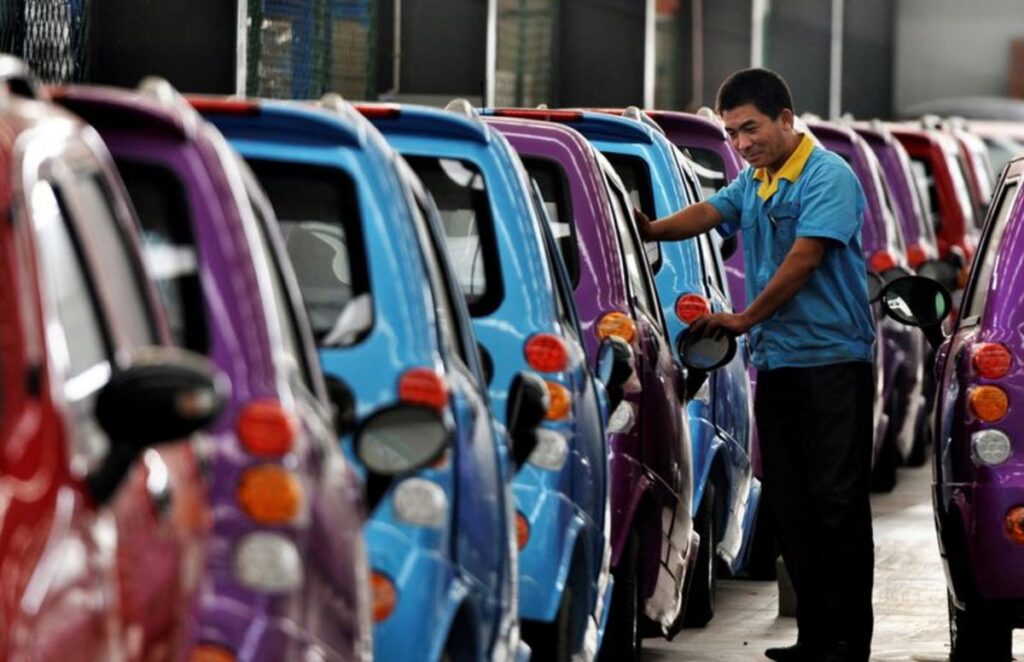
In a significant move towards global environmental sustainability, China emerged as a leading contributor to clean technology investments in developing countries, with a staggering $132 billion directed to these nations last year. This substantial sum marks China as the largest benefactor in efforts to reduce carbon emissions.
According to a Reuters analysis, China’s investment in green technology parallels the total financial aid provided by all wealthy nations combined to developing countries in 2024 for combating climate change. This aid, established at a 2009 United Nations climate conference, was based on the notion that developed countries, having contributed significantly to climate change, possess the resources to assist poorer nations.
While most international climate finance primarily consists of loans—often at market interest rates that eventually benefit rich nations—China has adopted a different strategy. By heavily subsidizing its green energy sectors, China has advanced its manufacturing capabilities both domestically and internationally, leading to major gains in the clean tech market.
China’s rapid advancements in manufacturing have notably increased its market share in solar panels, batteries, electric vehicles, wind turbines, and other eco-friendly products. Despite being the largest emitter of greenhouse gases due to its vast industrial base and coal dependency, China’s clean tech exports have positioned it as a significant player in global emission reduction efforts.
Using customs data, the Reuters analysis evaluated Chinese exports of clean technologies to countries identified by the Organisation for Economic Cooperation and Development as developing nations. These exports are projected to prevent 257 million metric tons of carbon dioxide emissions annually, an amount comparable to France’s yearly emissions, as per analysis by Lauri Myllyvirta from the Centre for Research on Energy and Clean Air. Current projections for China’s exports indicate a potential to prevent 337 million metric tons of CO2 emissions in the Global South this year.
The Organisation for Economic Co-operation and Development (OECD) reported that a fifth of all climate finance from rich countries in 2024 originated from the private sector. Additionally, Mathias Larsen and Xiaokang Xue from the London School of Economics compiled data showing that China’s climate contribution includes approximately $40 billion in foreign direct investment into clean-tech projects in developing countries.
While China’s contributions largely involve commercial transactions focused on clean energy, traditional climate finance also supports projects like climate-resilient agriculture or disaster recovery. This highlights China’s growing influence on the global energy transition, as noted by Li Shuo from the Asia Society Policy Institute.
EXPORT GIANT, DIPLOMATIC MOUSE
Despite its economic prowess, China has not aggressively pursued a leadership role in global climate diplomacy, especially since the U.S. withdrawal from climate agreements in 2025. As nations prepare for the upcoming UN COP31 climate conference in Turkey, China’s role in international climate negotiations is expected to draw attention.
China’s Ministry of Commerce emphasized its contribution to global green transformation, noting that its wind and solar exports have significantly reduced emissions over the past five years. The ministry affirmed China’s commitment to collaborating with other nations to promote sustainable development.
FORCING OUT FOSSIL FUELS
China’s manufacturing expansion has made renewable energy more accessible in developing regions. Ethiopia, for instance, banned the import of combustion-engine vehicles in 2024, opting for electric vehicles primarily to reduce fuel import costs. Similarly, Pakistan imported 17GW of solar power from China last year to provide affordable and reliable energy.
However, wealthier nations like the United States and parts of Europe have imposed tariffs on Chinese clean technologies to protect domestic industries. The U.S., for instance, has tariffs exceeding 100% on Chinese electric vehicles, reflecting a shift from climate concerns to trade and competitiveness issues, as noted by André Corrêa do Lago, a seasoned climate negotiator.
Original Story at www.yahoo.com