Chicago’s Deep Tunnel Faces Unprecedented Capacity Amid Heavy Rainfall
In an unprecedented event, Chicago’s extensive Deep Tunnel system, designed to manage floodwaters, approached its full capacity following a deluge over the weekend. This vast network, built over several decades, channels excess water from Chicago and its suburbs through over 100 miles of tunnels into three reservoirs, safeguarding local water bodies such as the area rivers and Lake Michigan.
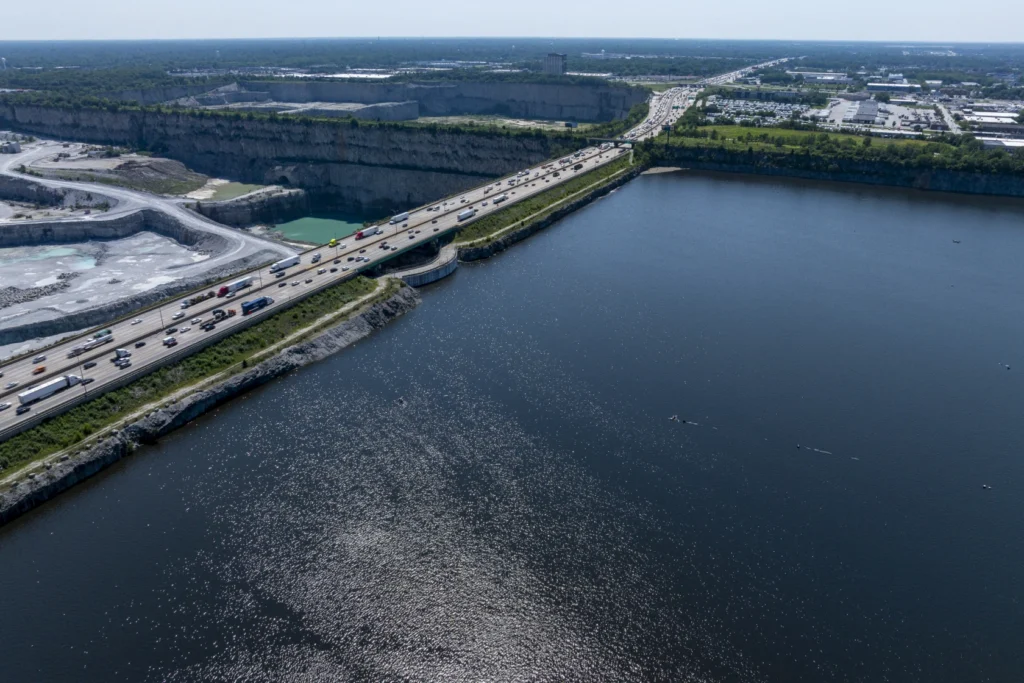
The Thornton reservoir, located in South Holland, reached 94% of its capacity on Monday, while the McCook reservoir in Bedford Park fluctuated between 96% and 100%. Together, these two reservoirs are currently holding approximately 11 billion gallons of water.
Historically, the Thornton reservoir has never exceeded 55% capacity, a peak it reached in June 2019. Conversely, the smaller McCook reservoir has filled multiple times this year, with the most recent instance on June 26.
Meanwhile, the Majewski reservoir in Elk Grove Village, significantly smaller in size, contributes less than 3% to the system’s total 13 billion-gallon capacity.
Officials have raised concerns about potential river flooding in 11 south suburban communities, including Blue Island, Calumet City, and South Holland, among others.
During this period, Chicago experienced sewer overflows into the Chicago River. The city utilizes a combined sewer system, which handles both stormwater and wastewater.
The city’s 311 system logged nearly 400 basement flooding complaints and around 600 street flooding reports from Thursday to Monday afternoon, surpassing previous records from a June 12 storm.
According to the Metropolitan Water Reclamation District, the tunnel and reservoir system is filled after recording over 8 inches of rain in the past month. Notably, more than 3 inches fell on July 3 and 4 alone.
Recent years have seen heavy rainfall events of 8 inches or more due to climate change, but sustained rainfall has compounded the situation.
Illinois State Climatologist Trent Ford stated, “We have inundated soils and nearly full reservoirs, meaning that the region-wide flood risk is higher, even from rain that is not particularly heavy.”
Experts argue that the Deep Tunnel alone is insufficient for flood prevention, advocating for increased greenspace and innovative water storage solutions. Margaret Frisbie of Friends of the Chicago River emphasized, “We need to blanket the region with natural areas. This kind of rain is going to keep on coming.”
Onlookers, including local resident Jeff Melone, gathered at the Thornton reservoir on Monday to witness the rare spectacle. Melone remarked, “I’ve never seen anything like this before. I didn’t think this was possible.”
Despite being over 50 years in the making, the Deep Tunnel project remains incomplete, with plans to expand the McCook reservoir by 2032. Notably, McCook reached capacity six times this year, surpassing its frequency between 2021 and 2025.
Water management efforts include pumping from the Thornton reservoir to the Calumet water treatment plant and from McCook to the Stickney wastewater plant. Post-treatment, water re-enters the waterways, eventually reaching the Mississippi River and the Gulf of Mexico.
As weather forecasts predict more rain on Thursday, the reservoirs may remain near capacity.
This article originally appeared in the Chicago Sun-Times and is republished with permission. Contributing: Tyler Pasciak LaRiviere
Original Story at insideclimatenews.org