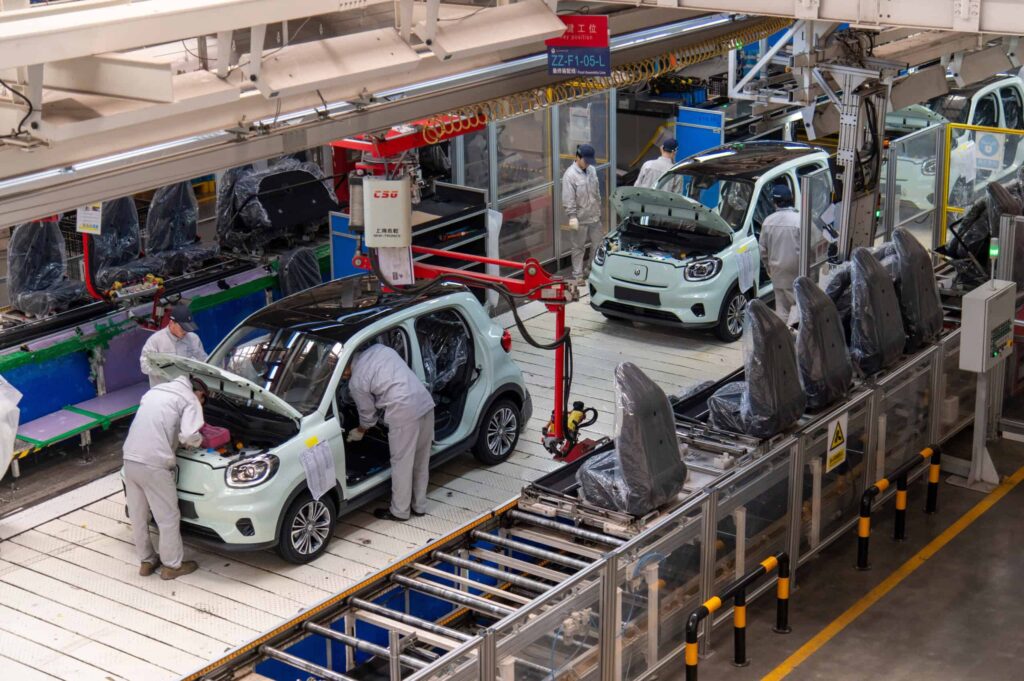
Canada Welcomes Chinese Electric Vehicles Amid U.S. Concerns
As Canada prepares to welcome Chinese electric vehicles (EVs) to its roads, tensions with the United States over data security and cross-border policies may rise. The Canadian government’s decision to import Chinese-made connected cars could lead to complications, given the U.S. ban on such vehicles.
Under the Biden administration, the U.S. has prohibited Chinese connected vehicles, citing concerns over the extensive data collection capabilities of these cars. Despite this, Canada is set to import 49,000 Chinese EVs this year, following a new agreement. This move could widen the policy gap between Ottawa and Washington, potentially affecting consumers if U.S. border officials restrict these vehicles from entering the country.
U.S. ambassador to Canada, Pete Hoekstra, emphasized this point in an interview with Rebel News, stating, “That car driving around from China — it’s a great gobbler of data and information… Those cars can come… into Canada, but they’re not going to cross the border into the U.S.”
Leapmotor and the Stellantis Connection
Leapmotor, a Chinese company partially owned by European auto giant Stellantis, is in discussions with the Canadian government to manufacture EVs at a shuttered Stellantis plant in Ontario. This development comes even as Leapmotor’s past ties with Dahua Technology, a controversial Chinese surveillance firm, raise eyebrows. Dahua has faced international bans, including from the U.S. and EU, over alleged involvement in human rights abuses in Xinjiang.
Despite Dahua selling its direct stake in Leapmotor in 2023, commercial connections between the two firms persist. Leapmotor’s chairman, Zhu Jiangming, and several vice presidents have roots in Dahua. Notably, the two companies co-developed China’s first AI chip for autonomous driving, embedded in many of Leapmotor’s vehicles.
U.S. Policy and Market Dynamics
The U.S. has been cautious about Chinese EVs, focusing not only on market share but also on national security. Elizabeth Cannon, formerly of the U.S. Commerce Department, highlighted concerns regarding data privacy and risks from autonomous driving systems. She noted, “Think about how much information a car collects on you, from facial data to voice recognition to information about patterns of life and where you’re going every day.”
There are also ongoing efforts to replace Chinese-written software in U.S. vehicles, as mandated by the Commerce Department. This has led to various compliance strategies among U.S. automakers, from software updates to thorough safety analyses.
Canadian Response and Future Implications
While Canada has not yet established new policies on connected vehicles, it is engaging with various stakeholders to develop cybersecurity guidelines. However, without matching U.S. regulations, Canada and the U.S. could face divergent standards, potentially complicating cross-border vehicle transactions.
With the import of 50,000 Chinese EVs representing a small fraction of the 18 million vehicles crossing the U.S.-Canada border annually, the immediate risk appears minimal. Nevertheless, the situation underscores the need for Canada to address cybersecurity concerns proactively to avoid future diplomatic and commercial conflicts.
Original Story at www.thewirechina.com