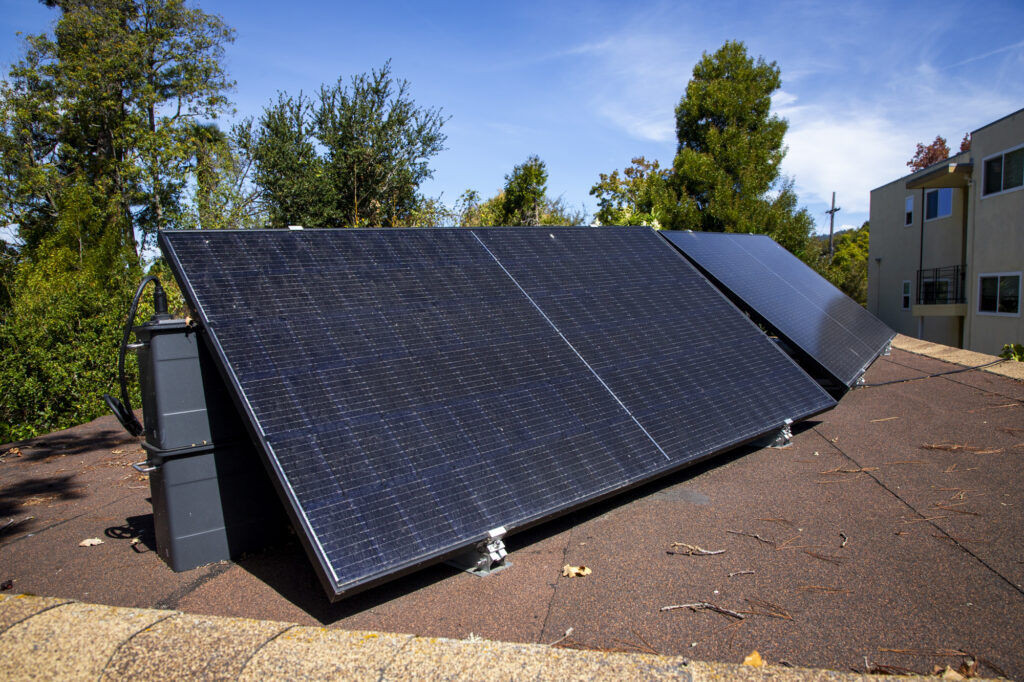
Imagine cutting down your electricity expenses by simply acquiring a kit, registering online, and connecting it to a standard outlet. This could become a reality in California with the recent legislative push towards legalizing plug-in, or balcony, solar systems.
The California state assembly and senate have passed SB 868, a bill that officially permits these small-scale solar units. These systems, requiring no rewiring or hefty installation fees, are now one step away from approval by the governor.
Balcony solar systems, which can be installed in various places such as backyards or rooftops, range from $300 to $2200. This new bill aims to make solar energy accessible to renters, individuals with unsuitable roofs, and those unable to afford traditional rooftop installations, which can be significantly more expensive.
Bernadette Del Chiaro, senior vice president at the Environmental Working Group, remarked, “There’s no question SB 868 is the most exciting clean energy and energy affordability bill right now up for consideration in California.”
The surge in state legislation supporting balcony solar in the last 18 months indicates a growing interest in this technology in the U.S., with states like Utah, Colorado, and Virginia already implementing similar laws. California’s potential market is immense, inspired by Germany’s widespread use of balcony solar panels.

While some Californians have already adopted plug-in solar panels, utilities require them to complete an interconnection agreement, which could cost between $100 and $800. Advocates argue that this process undermines the simplicity and cost-effectiveness of the technology.
The newly passed bill stipulates certain requirements for these systems: they must generate no more than 1,200 watts, connect to a standard outlet, comply with state and national codes, and be certified for safety. Additionally, they must prevent electricity from feeding back into the grid during power outages.
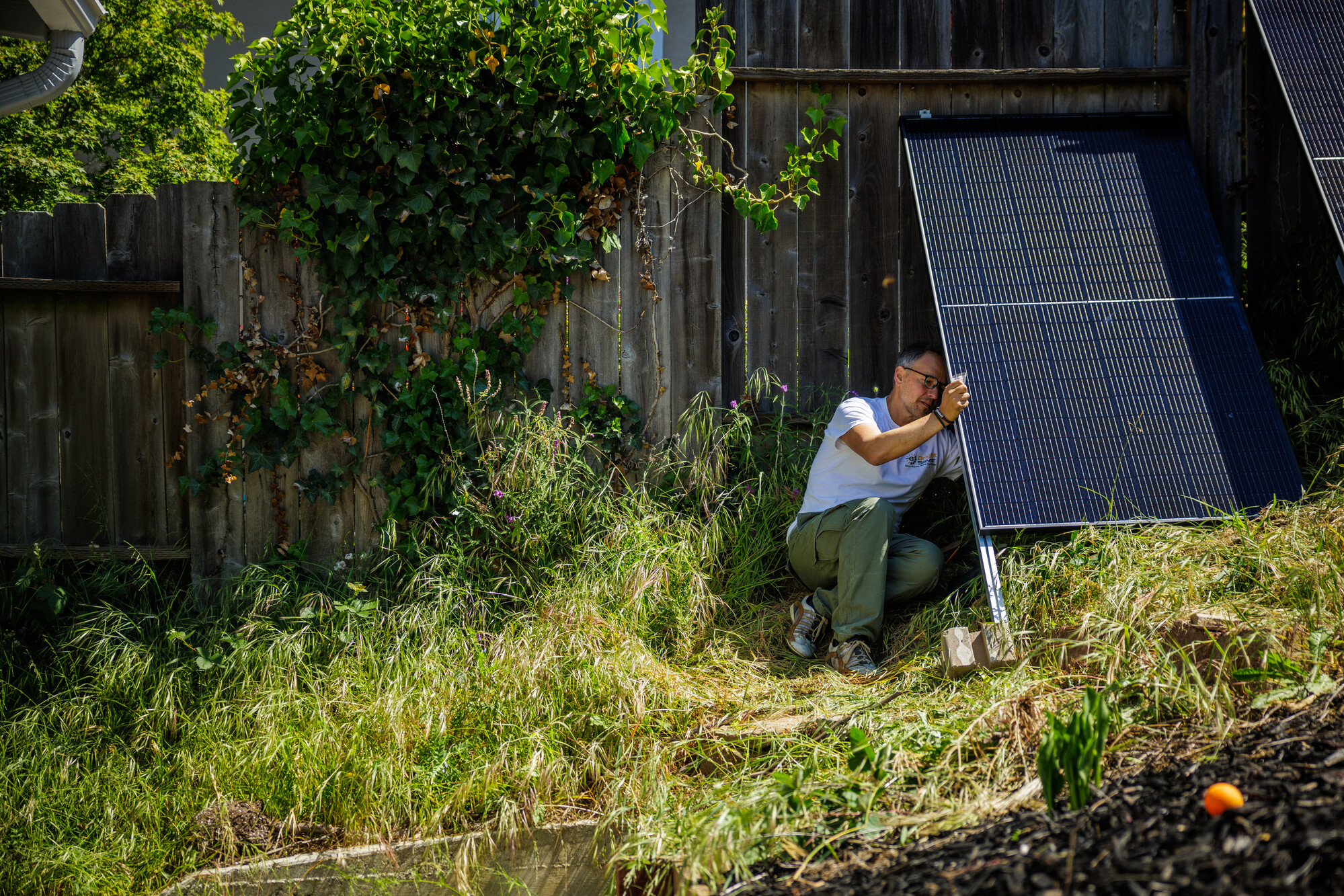
Currently, existing plug-in solar systems do not meet these criteria, but companies are developing compliant models. The bill’s author, state Sen. Scott Wiener, emphasized its aim to reduce power costs and simplify the process for Californians.
Del Chiaro projects that a single 400-watt panel could save renters about $250 annually, covering 14% of an average apartment’s electricity bill. A larger system could even power a window air conditioner, which would be particularly beneficial during hot weather.
Many environmental and community organizations, along with cities, have shown support for the bill. However, Cora Stryker, co-founder of Bright Saver, noted that while the bill is a positive step, certain amendments might hinder the growth of the balcony solar market.
The financial forecast for the bill estimates an annual cost of $200,000 to $500,000 for the state. If approved by Governor Newsom, compatible solar kits may become available by spring 2027.
Original Story at www.kqed.org