Revolutionary “Breathing” Crystal Promises New Horizons in Clean Energy and Electronics
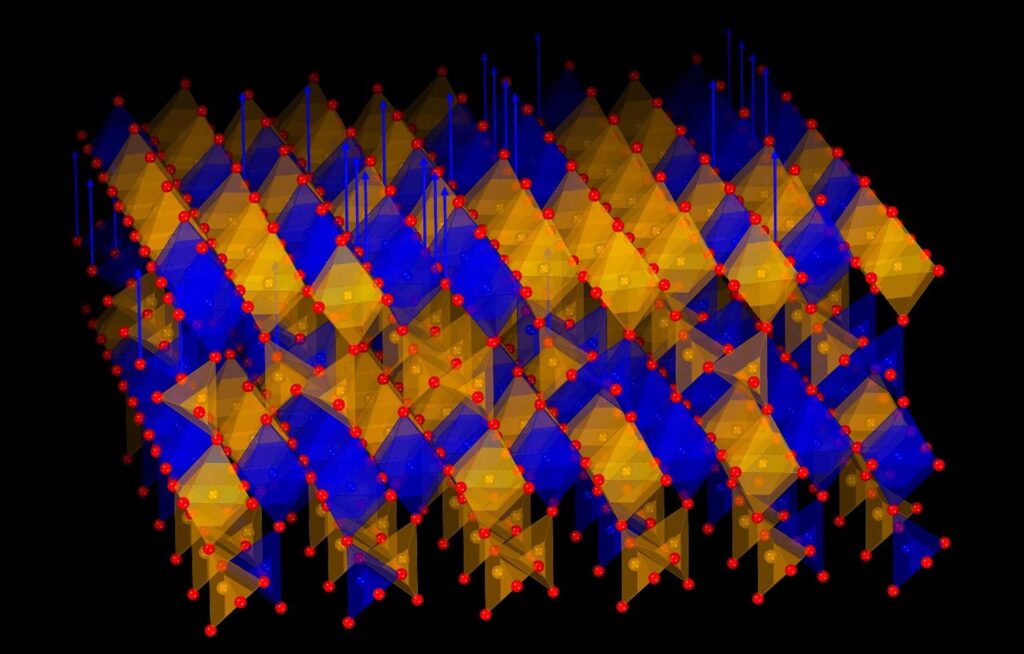
In an extraordinary development, scientists from Korea and Japan have introduced a novel crystal that can absorb and release oxygen, mimicking the function of living lungs. This groundbreaking material stands out due to its robustness and ability to operate under mild conditions, potentially transforming clean energy and smart technology applications.
A New Era for Clean Energy Components
The innovative crystal, crafted from strontium, iron, and cobalt, has been engineered to endure repeated cycles of oxygen absorption and release at relatively low temperatures. This feature is pivotal for advancing technologies like fuel cells, thermal devices, and smart windows that are sensitive to external temperatures.
Remarkably, the crystal maintains its structural integrity through these cycles, making it a promising candidate for real-world applications. It operates efficiently when exposed to a simple gas environment, which further enhances its practicality.

From Theoretical Concept to Practical Utility
Under the leadership of Professor Hyoungjeen Jeen at Pusan National University, and in collaboration with Professor Hiromichi Ohta from Hokkaido University, the research findings were published in Nature Communications on August 15, 2025. Prof. Jeen emphasized the crystal’s dynamic capability, stating, “It is like giving the crystal lungs and it can inhale and exhale oxygen on command.” This control over oxygen flow is crucial for the development of efficient devices such as solid oxide fuel cells and thermal transistors.
Unlike previous materials that were either fragile or required extreme conditions, this new crystal is both durable and operational under less demanding environments. Prof. Jeen explained that the discovery is notable because it involves only the reduction of cobalt ions, forming a stable crystal structure that can revert to its original form, highlighting its reversible nature.
Prof. Ohta remarked on the significance of this achievement, noting, “This is a major step towards the realization of smart materials that can adjust themselves in real time.” Potential applications for this material extend across clean energy, advanced electronics, and sustainable building materials.
For more detailed information, refer to the study: “Selective reduction in epitaxial SrFe0.5Co0.5O2.5 and its reversibility” by Joonhyuk Lee et al., published in Nature Communications, with the DOI: 10.1038/s41467-025-62612-1.
Stay updated on the latest scientific breakthroughs: Join the SciTechDaily newsletter.
Original Story at scitechdaily.com