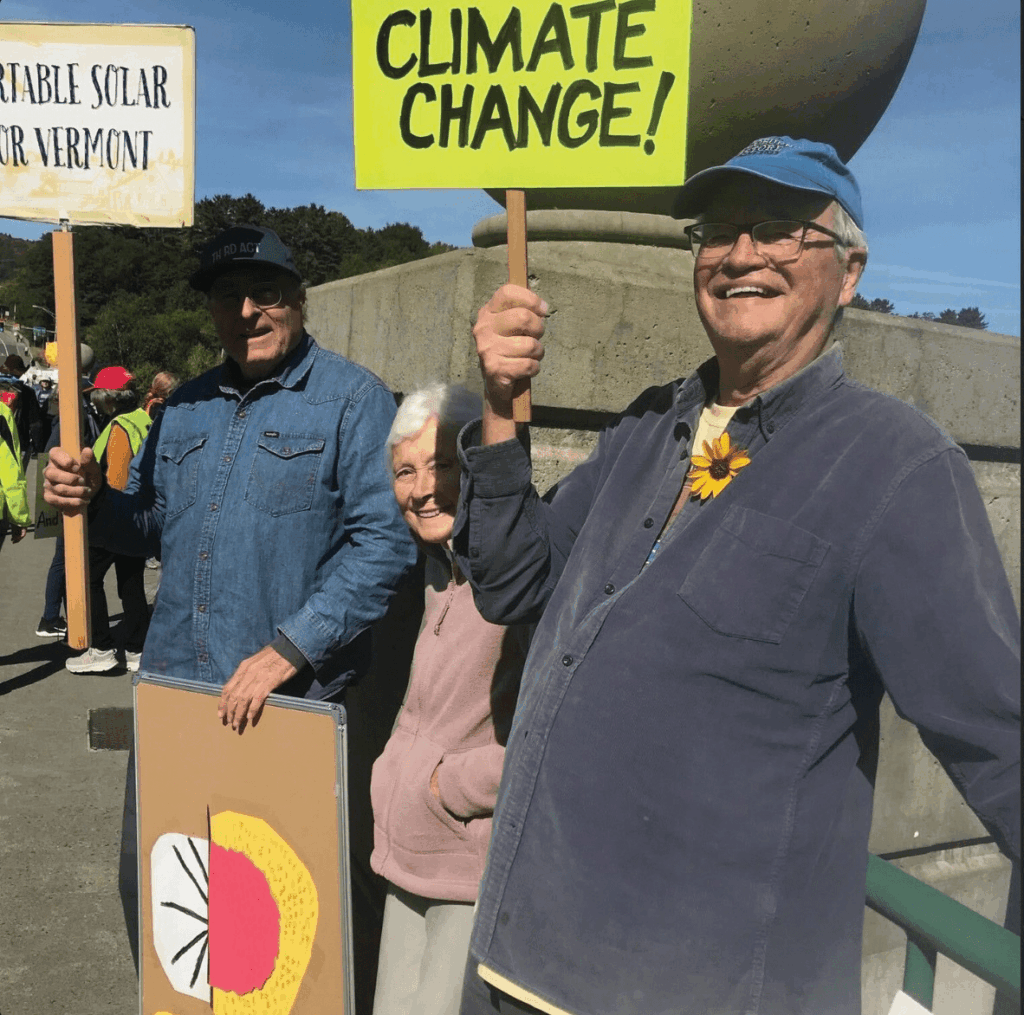
Bill McKibben Highlights the Urgency of Renewable Energy at UConn Lecture
In a compelling lecture at the University of Connecticut, renowned environmentalist Bill McKibben emphasized the critical role renewable energy must play in addressing the climate crisis. The event, held on April 2 at the Student Union Theater, drew an impressive audience of over 200 attendees.
The talk, titled “Back to the Wall, Face to the Sun: The Climate Crisis and the Renewable Answer,” marked the concluding lecture of the Edwin Way Teale Lecture Series for the 2025-2026 academic year. This series is organized by UConn’s Institute of the Environment and Energy to promote discussions on environmentalism and conservation.
McKibben, the founder of “350.org” and “Third Act,” began his discussion by acknowledging Edwin Way Teale’s literary work on natural seasons, noting how drastically different such accounts would be if written today due to climate change. He highlighted the increasing severity of seasonal extremes, such as warmer winters with less snowfall impacting river water levels and hotter summers.
“Climate change is by far the biggest thing that humans have ever done,” McKibben stated. “And it is now beginning to reach the point where it is doing not just the kind of daily trauma of fire and flood, but now systemic damage to basic systems of the planet.”
McKibben discussed the geopolitical implications of renewable energy, particularly how solar and wind power have become economically viable solutions compared to fossil fuels. He noted that it became cheaper to harness solar and wind energy than fossil fuels approximately five years ago.
“We have an extraordinary opportunity right now, an opportunity to break free from all of that,” McKibben said. “If we can continue this rapid, rapid deployment of renewable energy, then the world will be a different place in relatively short [time.]”
He pointed out the advancements in renewable energy use in countries like China, the Middle East, and parts of Africa, contrasting these with what he called the U.S. government’s “deeply unpatriotic” hesitation to invest in such technologies. McKibben stressed that the U.S. must not lag behind in the global transition to renewable energy.
Following the lecture, McKibben answered audience questions, identifying solar power, wind power, and lithium batteries as promising energy sources for the future. He also acknowledged the environmental impact of lithium mining and land clearing for solar farms.
Attendees like Gabby Wincherhern and Jonathan He appreciated McKibben’s insights, especially his global perspective on renewable energy efforts. Wincherhern noted, “When I learned about this kind of stuff in my classes, it’s usually focused on Connecticut or America or something like that, but he was talking about like China and like Indonesia, India a lot.”
For more details on the Teale Lecture Series and its past speakers, visit the Institute of the Environment and Energy website.
Original Story at dailycampus.com