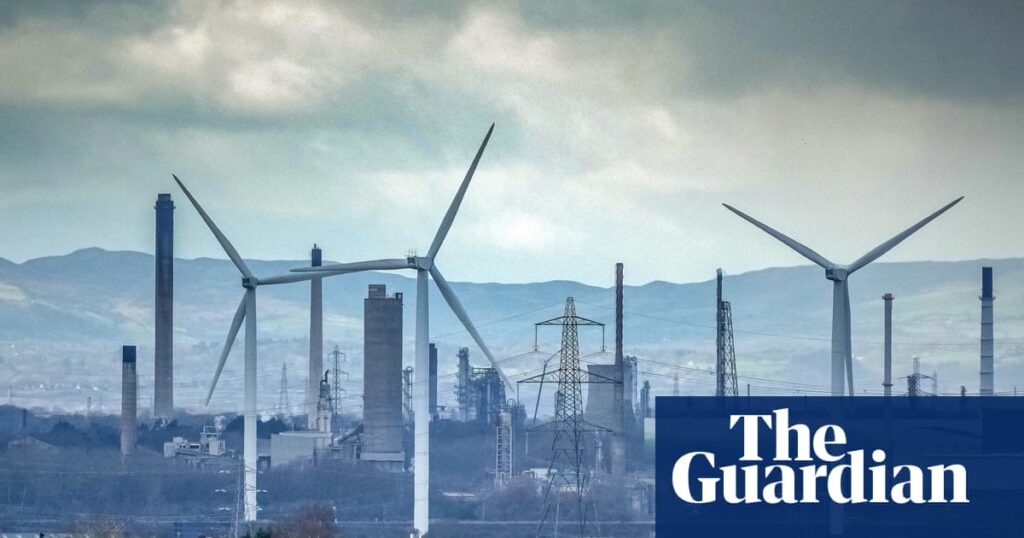
As the global focus on climate change intensifies, a notable shift is occurring in the stance of major industries and governments regarding net zero commitments. This shift is marked by a growing reluctance among some businesses and political figures to adhere to ambitious carbon reduction targets, prioritizing economic gains over environmental goals.
Over the past year, the momentum behind net zero commitments has faced significant challenges. Several companies have scaled back their promises to reduce carbon emissions, opting to emphasize shareholder returns instead. In the UK, political dynamics have shifted, with Nigel Farage’s Reform UK party influencing the debate and challenging the consensus that had previously driven strong climate policies. The Conservative party, under Kemi Badenoch’s leadership, recently abandoned the goal of achieving net zero by 2050 as an official policy, while Labour has had to defend its stance in light of criticism from former leader Tony Blair.
Notably, certain sectors, such as retail and automotive, have also been revisiting their commitments, raising concerns about the potential impact on climate change efforts. While some countries, most notably China, continue to invest heavily in renewable energy—surpassing coal in energy generation this year—there is a contrasting trend of decreased enthusiasm for net zero among influential corporations and nations.
Automotive Industry Adjustments
The automotive sector has seen a decline in its initial post-pandemic enthusiasm for transitioning to electric vehicles (EVs). Despite initial promises, the anticipated shift has not materialized as expected, with disappointing battery car sales contributing to the stalling momentum. In the US, EU, and UK, lobbying efforts have successfully pushed for more lenient regulations. Donald Trump’s administration has rolled back EV subsidies and eased emissions standards, prompting companies like Ford to reevaluate their strategies and scale back electric vehicle production.
In April, the UK government announced plans to relax its zero-emission vehicle mandate, allowing for more hybrid vehicles. Similarly, the EU has permitted up to 10% of car sales to be petrol or diesel after 2035, pleasing traditional car manufacturers but disappointing those focused on electric vehicles. As Chris Heron of E-Mobility Europe notes, “While China accelerates, Europe is hesitating, and hesitation is not a strategy.”
Aviation’s Slow Progress
In the aviation industry, progress toward net zero has been sluggish. Major manufacturers like Airbus and Boeing continue to focus on gas turbine engines powered by kerosene. Airbus has delayed its plans for a zero-emission hydrogen plane, while sustainable aviation fuel remains scarce compared to global demand. UK government policy has not inspired confidence, with significant airport expansion plans approved, potentially increasing flight numbers and emissions.
Energy Sector Challenges
The energy sector faces a mixed landscape. While Labour’s commitment to a carbon-free electricity system by 2030 provides some optimism, setbacks like Ørsted’s cancellation of a major offshore wind project highlight the challenges. Oil giants BP and Shell have shifted focus back to oil and gas production, with BP’s recent leadership change unlikely to alter this course. Meanwhile, Shell plans to increase oil and gas output while reducing green investments.
Financial Sector Retreat
The financial industry has also seen a retreat from climate commitments. The collapse of the Net-Zero Banking Alliance, following the withdrawal of major banks like JP Morgan and HSBC, underscores this trend. HSBC has delayed key climate goals by 20 years, while investment firms Vanguard and BlackRock have left the Net Zero Asset Managers initiative. Concerns persist that Labour may soften plans requiring FTSE 100 companies to implement credible climate transition strategies.
Retail Industry Reassessments
Rising costs have led retailers and suppliers to reconsider their net zero ambitions. Morrisons, for instance, postponed its target year by 15 years, while the British Retail Consortium’s roadmap faces challenges in meeting its milestones. Despite reductions in store emissions, progress is hampered by reliance on suppliers and complex energy transitions.
Local Government Actions
Local authorities, historically proactive on climate issues, are experiencing varied responses to the evolving political climate. Some councils, influenced by Reform UK, are reversing net zero commitments, while others remain dedicated to aggressive climate action. The Green Party, with significant representation in local councils, continues to advocate for accelerated environmental efforts.
Original Story at www.theguardian.com