The Bay Area Air District began the year by warning residents of San Francisco’s nine surrounding counties: using a fireplace, wood stove, or outdoor fire pit could require a course on wood smoke’s health effects or result in a fine.
By mid-January, an extended spare-the-air alert was issued to address the Bay Area’s seasonal air quality decline. This decline often occurs in winter when dry, still conditions trap harmful particles from residential wood fires, traffic, and industry, creating a dense haze near the ground.
Pollution patterns from fine particles, or PM2.5, and other sources vary significantly across the Bay Area.
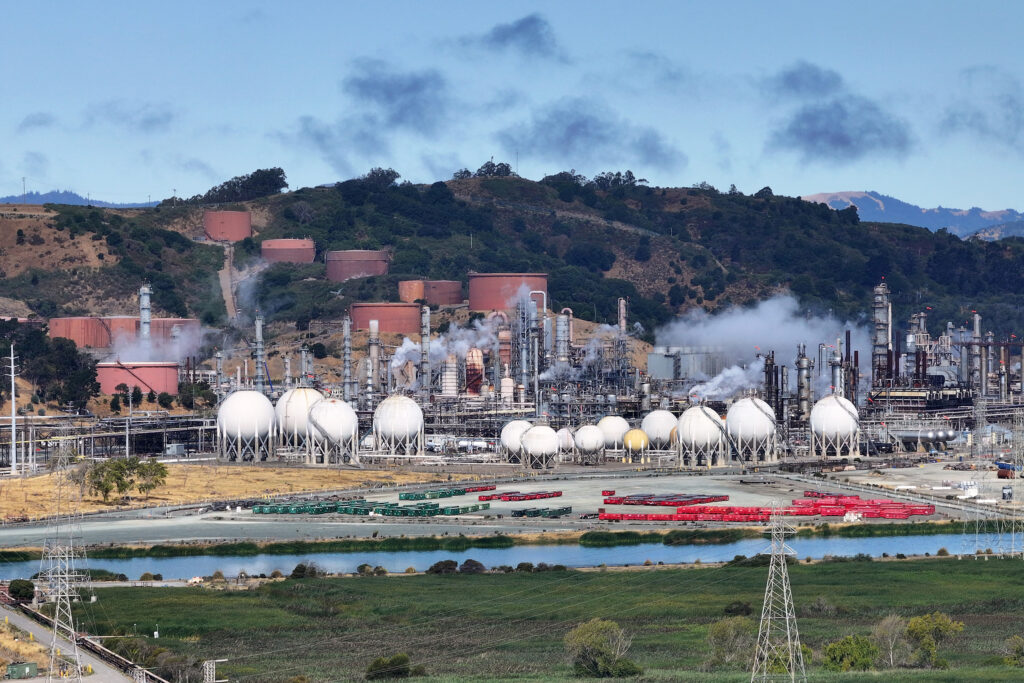
In Contra Costa County, located east of San Francisco, wood smoke and vehicle emissions combine with high levels of greenhouse gases from local oil refineries. The Environmental Protection Agency’s data indicates that several refineries in the northern region are among California’s top polluters, contributing to 68% of nearly 500 air quality violations since January 2025.
Air pollution and extreme heat are expected to worsen in Contra Costa as the planet warms, increasing health risks.
Addressing these threats requires precise data on where they overlap, but the air district currently monitors PM2.5 in only a few locations. A recent report by PSE Healthy Energy and UC Berkeley scientists filled in these gaps over nearly two years.
The researchers deployed 50 low-cost PM2.5 sensors across the county and analyzed data from hundreds of Purple Air monitors. Census data helped assess demographic differences in exposure based on race, age, income, and the prevalence of outdoor workers.
Purple Air monitors, costing a few hundred dollars, are more common in affluent areas. To address this, researchers installed low-cost sensors in disadvantaged neighborhoods, working with local representatives to identify census tracts with high environmental and socioeconomic burdens. Monitors were placed in homes, schools, and local institutions.
Research highlights hyperlocal air-quality trends, noted Sebastian Rowland, a study co-author. “This scale reveals neighborhood differences in PM2.5 exposure.”
The study found air-pollution hotspots in cities like Richmond and San Pablo, home to significant refinery operations.
Even short-term air pollution exposure raises death risk for those with heart and lung issues.
The study found that Hispanic and Black residents experience higher PM2.5 and heat exposure than white or Asian counterparts. Children under five, adults over 65, and outdoor workers face similar risks.
Researchers measured one pollutant, but noted that PM2.5 emitters often release additional contaminants. “Vehicles emit PM2.5 and nitrogen oxide, forming ozone,” noted Karan Shetty, a report co-author. “These emissions tend to impact the same locations and people.”
Shoshana Wechsler from the Sunflower Alliance praised the study’s localized approach, highlighting its focus on community input. “It provides the most accurate pollution impact portrait in Contra Costa to date,” she said.
Synergistic Effects
As global temperatures rise due to fossil fuel use, wildfires have increased, and heat waves are more frequent. Wildfire smoke compounds pollution from traffic and industry, elevating PM2.5 levels linked to health issues.
“Simultaneous exposure to heat and pollution intensifies effects,” Rowland noted. “It’s more detrimental than each factor alone.”
Studies indicate that concurrent extreme heat and pollution exposure sharply raises mortality risk. The team initially aimed to study birth outcomes relative to heat and PM2.5 but lost funding when the Environmental Protection Agency canceled their grant, explained John Balmes, a lead analyst.
“EPA funding for climate and health was cut under the Trump administration,” Balmes said. However, UC researchers won a lawsuit that reinstated funding. Despite this, it was too late to analyze prenatal exposure impacts thoroughly.
Nevertheless, Balmes emphasized the report’s comprehensive mapping of Contra Costa’s environmental health impacts. “We anticipated that low-income, minority communities faced the highest risks, and our findings confirmed this,” he explained.
Eastern Contra Costa is experiencing rising temperatures and frequent heat events compared to the western regions, raising concerns for resident health and well-being.
Urban areas like Antioch, Oakley, and Pittsburg face high pollution and extreme heat, with limited resources to mitigate risks. These areas also lack tree cover for shade, and poverty restricts access to air conditioners and purifiers.
The Bay Area Air District expressed support for the project, noting its contribution to highlighting local environmental disparities.
Reducing Risks
The team explored community perspectives on risk-reducing interventions. This study combined air pollution and heat exposure data at fine scales, integrating community input.
Community involvement was integral throughout the project, from choosing monitor locations to tailoring resilience strategies.
“PSE Healthy Energy embraced a foundational environmental justice approach by listening to the community,” Wechsler remarked, emphasizing the study’s inclusive methodology. She also highlighted its alignment with Contra Costa’s Climate Action and Adaptation Plan.
However, federal grant cancellations have hindered environmental justice priorities, affecting local initiatives.
The Trump administration canceled grants aimed at enhancing environmental quality and resilience, including a $19 million grant for Richmond.
In 2020, Contra Costa County declared a climate emergency, emphasizing the need for urgent action. County plans aim to improve air quality and address extreme weather impacts, with strategies like increasing tree canopy and enhancing resilience hubs.
Diesel emissions from freeways and the Port of Richmond contribute significantly to chronic PM2.5 pollution, said Balmes. He advocates for an accelerated transition to electric vehicles and providing portable air purifiers for affected residents.
The team views the report as a starting point for addressing climate threats, recommending more community “listening sessions” to understand local challenges better.
The Air District plans to enhance air quality monitoring near refineries, focusing on neighborhood-specific systems to provide clearer air quality insights.
Balmes emphasized the report’s core message: “Climate change is real. It magnifies heat and pollution issues, necessitating clean transportation and power solutions.”
Original Story at insideclimatenews.org