
Wired for Profit: Exploring Alabama Power’s impact on electric rates, renewable energy, pollution, and politics in Alabama.
MCCALLA, Ala.—Mary Rosenboom is frustrated with rising electricity costs.
Like 1.5 million Alabamians, Rosenboom faces increasing electricity bills from Alabama Power, approved by the state’s Public Service Commission. She pays hundreds monthly, with concerns that a proposed hyperscale data center nearby could worsen costs.
Rosenboom, a sales professional, often avoids using her air conditioner to manage bills, sometimes relying on high-interest credit cards to pay for electricity. “I’m robbing Peter to pay Paul,” she stated.
Rosenboom’s situation is not isolated.
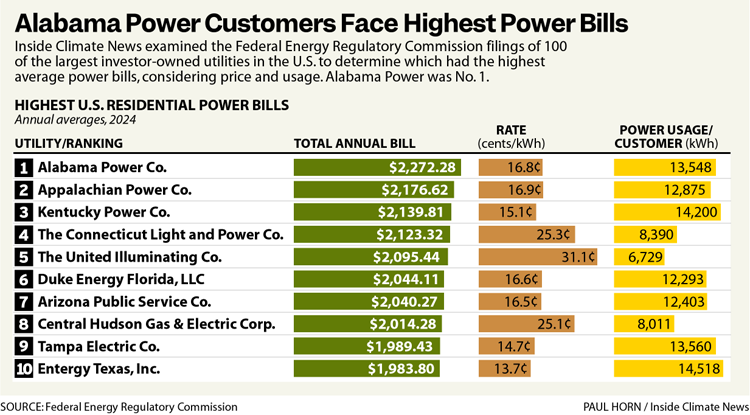
Alabama Power reports the highest average residential electric bills among 100 major U.S. utilities.
In one of the poorest states, customers face significant financial burdens, according to the U.S. Department of Energy. RMI analysis shows low-income Alabamians spend nearly 25% of income on electricity, the highest in the U.S.
So why are power bills so high?
Experts blame lax regulation by the Alabama Public Service Commission, responsible for overseeing Alabama Power. Robert Blanton, chair of Political Science and Public Administration at the University of Alabama at Birmingham, studies how Alabama Power achieves record profits in a poor state.
Blanton notes Alabama Power’s “capture” of the PSC, where regulators favor the entities they regulate over public interest. The PSC often regulates Alabama Power privately, granting high profit margins. In 2023, Alabama Power’s return on equity was 11%, according to S&P Global.
Kent Chandler, former Kentucky Public Service Commission chairman, now at R Street Institute, stated, “No utility would complain about an 11% ROE.”
Alabama Power and its parent, Southern Co., have reported record profits. “For 78 years, Southern Company has consistently increased dividends to shareholders,” the company stated.
Alabama Power argues its rates are fair, citing high per capita electricity usage, the seventh-highest in the nation, as justification. The company claims its residential rate, not the total bill, reflects affordability.
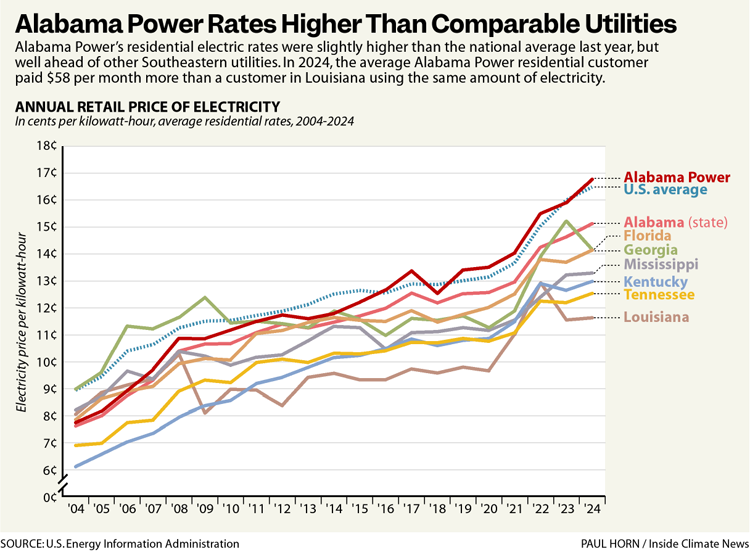
In 2024, Alabama Power charged 16.77 cents per kilowatt-hour, above the national average of 16.48 cents. Despite higher rates, Alabama’s electricity usage ranks among the top five, leading to the highest total residential bills last year.
Alabama Power’s reliance on electric heat, incentivized by the company, contributes to higher usage. Louisiana, with the highest per capita use, had electric rates averaging 11.64 cents/kWh in 2024, 30% lower than Alabama’s. Alabama Power customers paid $189 monthly, $58 more than Louisiana counterparts.
Rates in neighboring states—Mississippi, Tennessee, Georgia, and Florida—are 15-25% lower than Alabama Power’s.
The R Street Institute ranked Alabama lowest in electricity competition. Alabama Power, the sole investor-owned utility in the state, charges significantly more than Mississippi Power and Georgia Power, both Southern Co. subsidiaries.
Alabama Power’s profitability drives high rates. From 2013 to 2024, the company’s profit doubled to $1.4 billion. Alabama Power credits this growth to system investments for reliability and compliance.
Almost No Public Participation
Unlike most states, Alabama hasn’t held a formal rate case for Alabama Power since 1982. These cases permit public scrutiny of rate changes, but Alabama Power’s rate proposals avoid public forums.
Christina Tidwell, attorney at the Southern Environmental Law Center, noted, “Public participation ensures informed decisions impacting customers’ lives.”
Kent Chandler emphasized the value of rate cases in giving a comprehensive view of utility revenues and costs, benefiting consumers. Without reviews, utilities might overspend, he argued.
S&P Global’s 2024 report ranked Alabama atop for regulatory safety, indicating utility profits are secure.
The last PSC commissioner advocating for formal rate hearings, Terry Dunn, lost his position after a campaign associating him with environmentalists. He described it as a “smear campaign.”
Chris Beeker Jr. replaced Dunn, with support from former Mississippi Gov. Haley Barbour, linked to Alabama Power’s parent company. Beeker left the PSC due to health issues, succeeded by his son, Chris Beeker III.
PSC President Cynthia Lee Almond has prioritized transparency, but the PSC has limited public input. Written statements are often the only response to inquiries.
The PSC warned reporters: “Responses may not be quoted without APSC permission.”
A Profitable Change
The 2013 Rate Stabilization and Equalization (RSE) formula change allowed Alabama Power to increase profits by rewarding higher equity ratios. Commissioners expected lower rates, but rates rose 45%, outpacing the national average increase of 29%.
Profit nearly doubled despite reduced electricity production since 2013. The PSC denies correlation between profit growth and the 2013 formula change, crediting authorized system investments for growth.
“If That’s Not Regulatory Capture…”
Blanton sees the PSC’s lack of rate cases and high electricity rates as regulatory capture indicators. Campaign finance plays a key role, with 55% of donations to PSC commissioners linked to fossil-fuel interests.
Blanton highlights information dominance and cultural capture, where industry viewpoints align with regulators, limiting outside perspectives.
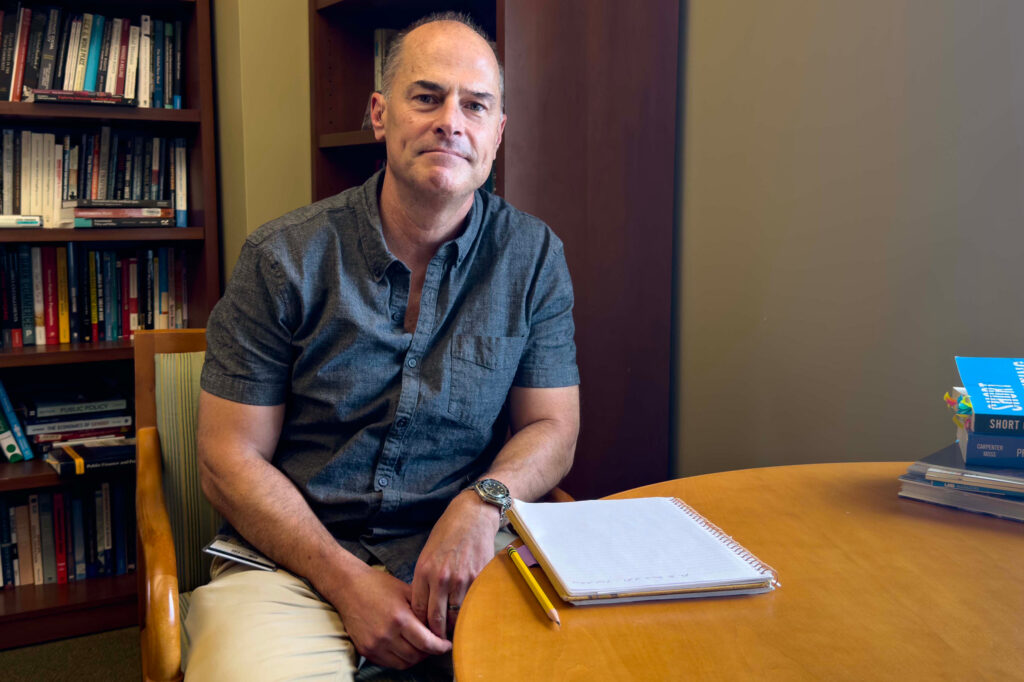
Alabama’s unique position, with high rates and no clear justification, suggests regulatory capture, Blanton argues.
Data Center Angst
Customers, including Rosenboom, fear data centers will raise electricity costs. Despite assurances that costs won’t transfer to customers, Alabama Power declined to disclose agreements.
Data centers will “pay the full, fair cost,” Alabama Power stated. The PSC approves large-load contracts and investments.
Rosenboom, near a proposed Bessemer data center, anticipates cost increases. The center could raise state demand by 10% if built to capacity.

Brenda Small, a nearby resident, said, “My power bill’s already not affordable.”
Reliant on Fossil Fuels
Alabama Power’s energy is costly and environmentally damaging. The PSC approved expensive upgrades to coal plants and greenlit natural gas additions, increasing reliance on fossil fuels.
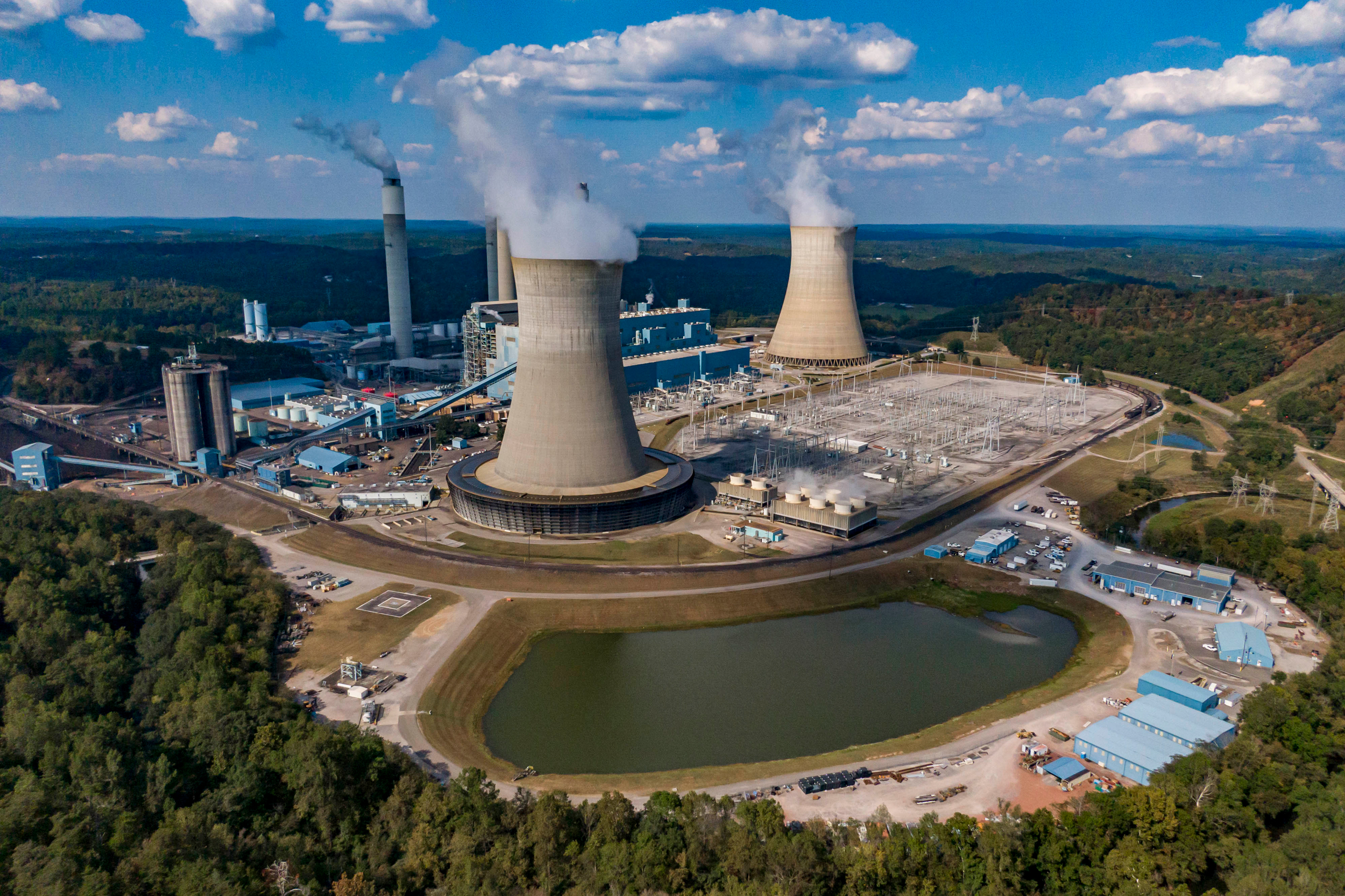
The James H. Miller Jr. Electric Generating Plant near Birmingham is the nation’s largest greenhouse gas source for nine years. Alabama Power charges fees for solar panel installation, hampering renewables, and ranks low in energy efficiency.
Coal ash ponds remain an environmental concern, with hazardous waste left in unlined areas.

A New Profit Formula Review—With No Public Input
The PSC reviews the RSE formula every six years. The 2019 review retained the rate structure. The current review is ongoing, without public input, conducted privately with Alabama Power and the state attorney general.
Tidwell argues for public participation in utility regulation, questioning how the PSC can protect customer interests without it.
Original Story at insideclimatenews.org