Climate Change Poses Immediate Threats to Africa’s Health Systems
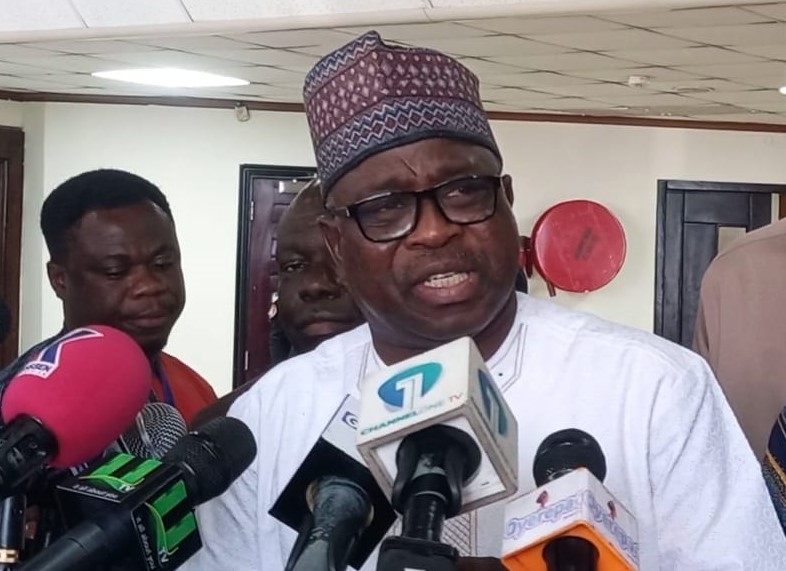
African nations are witnessing firsthand the devastating effects of climate change, which are exacerbating health crises, food shortages, and straining medical infrastructures, according to Alhaji Baba Seidu Issifu, the Minister of State for Climate Change and Sustainability.
At the launch of the Climate and Health Science and Policy Consortiums in Africa, held at the Kwame Nkrumah University of Science and Technology (KNUST) in Accra in collaboration with Wellcome Trust, Mr. Issifu emphasized the need for collaborative efforts among governments, researchers, and development partners to create evidence-based policies for protecting vulnerable populations.
This initiative has led to the creation of two consortiums, one in West Africa spearheaded by KNUST and another in Southern Africa, to enhance research and policy-making regarding the intersections of climate change and public health.
Mr. Issifu highlighted the impact of increasing temperatures, floods, droughts, and air pollution on disease outbreaks, which are putting additional stress on Africa’s fragile health systems.
He pointed to recent floods in Accra and other parts of Ghana as demonstrations of how climate change can disrupt healthcare services, contaminate water supplies, displace communities, and affect education and livelihoods.
“Climate change is no longer a projection. It is a present-day public health emergency,” he stressed.
According to World Health Organisation estimates cited by Mr. Issifu, climate change could result in an additional 250,000 deaths globally each year from 2030 to 2050, with Africa facing the greatest challenges.
He further noted, “We cannot adapt our way out of this without science, and we cannot act on science without policy.”
Mr. Issifu praised the consortiums’ launch as a crucial step in prioritizing African scientists in generating evidence that addresses the continent’s unique challenges. “For too long, the global conversation on climate and health has spoken about Africa, but not always with Africa in the lead. This is African-led science for African realities with African solutions,” he added.
Professor David Asamoah, Pro Vice-Chancellor of KNUST, noted that although Africa contributes minimally to global greenhouse gas emissions, the continent remains one of the most susceptible to climate change impacts.
He pointed out that malaria, responsible for nearly 600,000 deaths annually, predominantly among African children under five, is increasingly affected by changing climate conditions.
Prof Asamoah explained that flooding can lead to cholera outbreaks, while drought can exacerbate food insecurity and malnutrition, further taxing health systems.
“The evidence is clear, the risks are growing, and the cost of inaction is far too high. But this moment also presents an opportunity, an opportunity for Africa to lead with knowledge, innovation, and coordinated action,” he remarked.
Ms. Modi Mwatsama, Head of Capacity and Field Development, Climate and Health at Wellcome Trust, highlighted recent climate events as a call to action for strengthening climate and health research on the continent.
She noted that the UK experienced its third heatwave of the summer, while recent flooding in Accra left 12 dead and displaced around 55,000 people.
Ms. Mwatsama warned of a predicted El Niño weather pattern likely to bring increased temperatures and reduced rainfall to Southern Africa, more flooding in East Africa, and delayed rains and drought in West Africa.
“The recent floods are a reminder that climate change affects all of society, health, lives, livelihoods, infrastructure, and the economy. The health sector alone cannot solve this problem,” she concluded.
Despite the escalating climate-related risks, climate and health research in sub-Saharan Africa remains limited, leaving policymakers with few tested solutions to guide interventions.
Source: GNA
Original Story at www.ghanabusinessnews.com