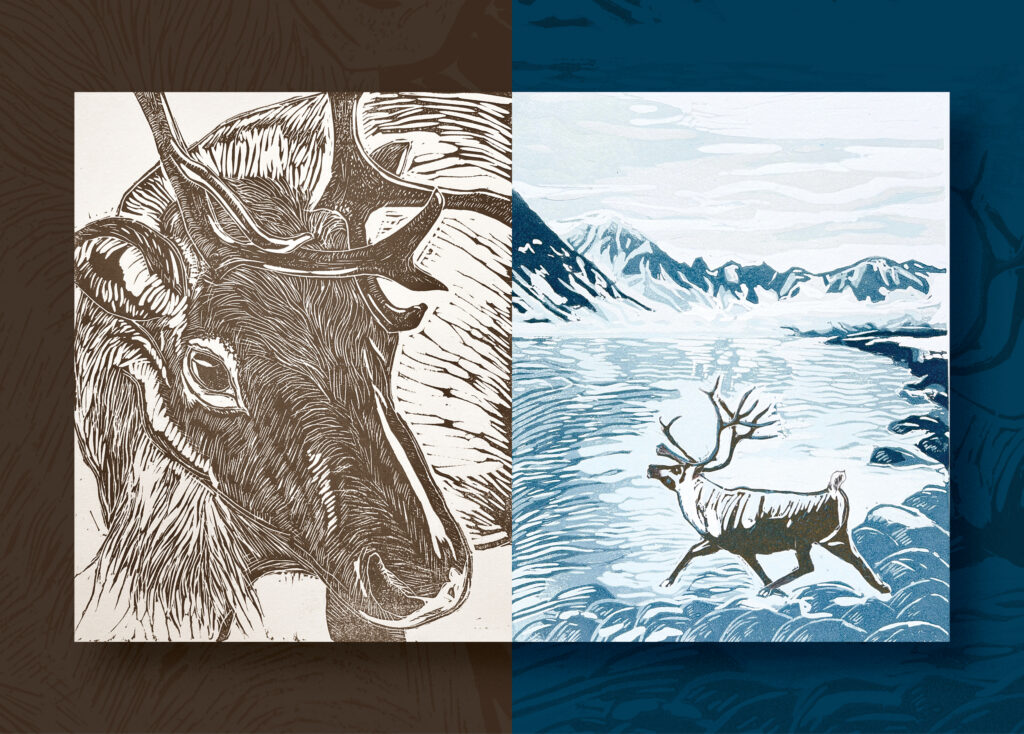
In the Arctic wilderness of Svalbard, reindeer are not merely surviving; they are adapting and evolving in the face of climate change. These resilient creatures, distinct from the mythical flying reindeer of folklore, have carved out a niche in one of the planet’s most unforgiving environments. As the climate warms more rapidly here than in most other places on Earth, scientists and explorers are keenly observing how these animals continue to thrive.
Reindeer: Beyond the Myth
Unlike their mythical counterparts, Svalbard reindeer are robust, goat-sized animals that have adapted to the archipelago’s harsh conditions. They navigate through nutrient-poor soil and sparse vegetation, surviving on grasses, forbs, and tiny willow shrubs during the brief summer. However, the winter months pose significant challenges, as reindeer must dig through snow to find lichens, their primary food source, while avoiding the threat of freezing rain that can create impenetrable ice layers.
These reindeer are not passive victims of climate change. Instead, they are dynamic agents of adaptation. They explore new food sources, alter their behaviors, and pass survival knowledge to their offspring. This capacity for change challenges the simplistic narrative that warming climates spell doom for Arctic species.
Observations from the Field
During a month-long stay in Svalbard, including time on the research vessel Antigua, a diverse group of artists, scientists, and journalists, including myself, observed the reindeer’s remarkable resilience. At Mary-Ann’s Polarrig, a unique guesthouse in Longyearbyen, conversations with glaciologists and reindeer herders shed light on the intricate web of life that sustains these animals.
Despite being isolated for millennia, Svalbard’s reindeer face a climate paradox. Warmer temperatures extend the summer growing season, enabling reindeer to build fat reserves. Yet, when winter arrives, rain can freeze into thick ice, blocking access to lichens. As a result, reindeer may starve if they cannot break through the ice, and the ripple effects of this scarcity extend to other species in the ecosystem.
Historical Adaptations and Challenges
The reindeer’s journey to Svalbard is a tale of ancient migrations and survival. Genetic and archaeological evidence suggests that reindeer originated in what is now Russia, crossing vast distances over pack ice to reach Svalbard. The reindeer’s story is intertwined with human history, as European hunters and industrial pressures severely depleted their numbers. However, these animals have consistently demonstrated resilience, adapting to changes and even reestablishing populations when given the opportunity.
The reindeer’s adaptations are not limited to their physical form. Their behaviors have evolved as well, with reindeer exhibiting increased mobility in response to environmental pressures. As winter rains become more common, some reindeer have begun migrating to coastal areas to forage on kelp, a behavior previously unseen.
Ecological Interactions
Svalbard’s food web is a delicate balance of interactions among various species. Little auks, for instance, fertilize the tundra with their droppings, supporting vegetation that reindeer consume. In turn, the presence of reindeer influences the landscape and supports other species like Arctic foxes.
Interestingly, the decline of bowhead whale populations due to whaling inadvertently benefited little auks, which thrived on the increased availability of zooplankton. This boom in little auk populations subsequently enriched the tundra, illustrating nature’s ability to adapt and reconfigure after disruption.
Future Outlook
The story of Svalbard reindeer is one of ongoing adaptation. As climate change reshapes their habitat, these animals continue to demonstrate remarkable flexibility. Their ability to innovate and share knowledge with their young may prove crucial for their survival, offering a glimmer of hope in the narrative of climate change.
As we continue to study and learn from these resilient creatures, it is essential to provide them with the space to migrate and adapt. The Svalbard reindeer, through their story of survival and adaptation, remind us of the importance of flexibility and resilience in a changing world.
Excerpted from Reindeer: A Tale of Nature and Survival in a Changing North (Yale University Press, 2026)
Enjoying Nautilus? Subscribe to our free newsletter.
Lead Image: Nancy Langston, original linocut print, 2025
Original Story at nautil.us